Kuala Lumpur City Hall (DBKL) has launched a comprehensive overhaul of its governance and administrative systems, implementing 16 distinct reform initiatives over the past six months in response to an alarmingly low corruption ranking. The drastic action follows DBKL's dismal performance in the Public Service Corruption Ranking under the 2025 Local Authority Star Rating System, where the authority scored merely 0.08 per cent out of a possible 5 per cent allocation for the assessment category.
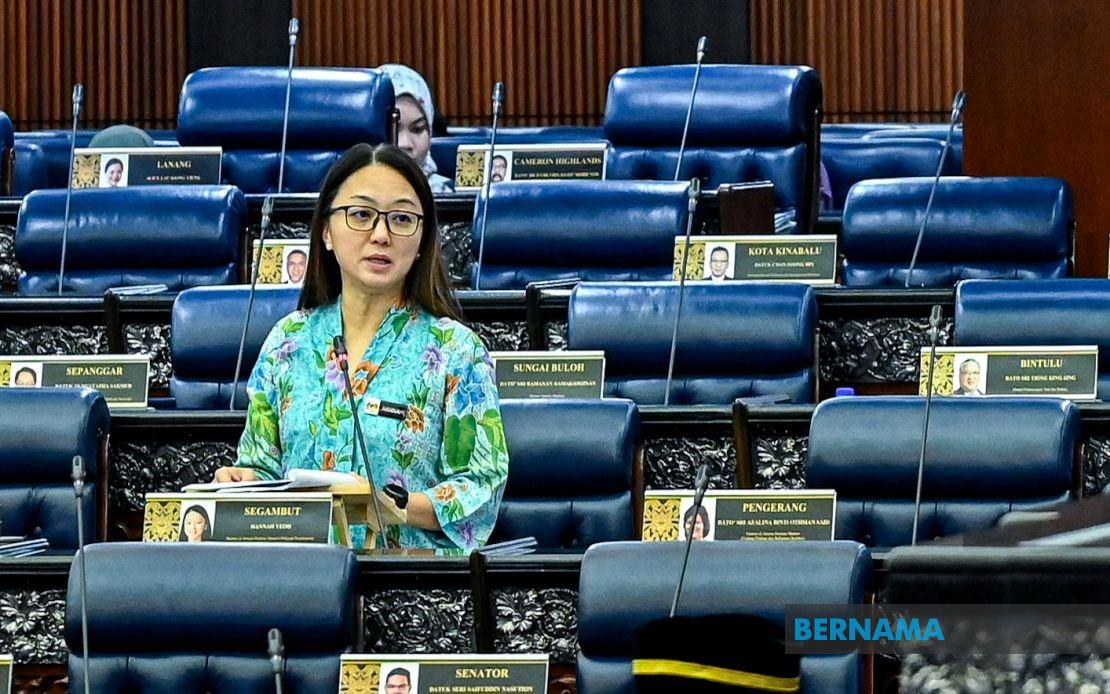
Hannah Yeoh, Minister in the Prime Minister's Department overseeing Federal Territories, revealed the scale of DBKL's integrity crisis and the urgency with which the administration has responded. The poor result served as a wake-up call, prompting leadership to recognise that fundamental changes to institutional culture and decision-making processes were essential. The minister, who represents the Segambut constituency, provided details of the reform agenda during parliamentary Question Time, addressing concerns raised by Tan Kok Wai, the Cheras member of parliament.
The reform programme was developed following an engagement session with Federal Territory parliamentarians on March 2, with analytical support from the International Islamic University Malaysia (IIUM). That study identified four overarching recommendations designed to strengthen DBKL's administrative framework, governance structures, institutional integrity, and service delivery mechanisms. The first category addressed five specific procedural vulnerabilities that the Malaysian Anti-Corruption Commission (MACC) had flagged during its examination of DBKL's operations.
These procedural weaknesses spanned multiple critical functions: the mismanagement of a radio studio broadcast content production project, irregular allocation practices for Ramadan Bazaar sites, insufficient oversight of contracts related to various business licensing services, poor governance arrangements surrounding the Malaysian Statutory Bodies Association Sports Championship, and inadequate controls on rental collection processes for public and people's housing projects. Each area had represented a potential avenue for corrupt practices or administrative malfeasance, suggesting a systemic lack of transparency and accountability across DBKL's core operations.
Among the most significant structural changes, DBKL has abolished the Special One Stop Centre (OSC) Committee, a move designed to enforce clearer separation of powers and minimise opportunities for political interference in development approval processes. This institutional adjustment represents a deliberate shift away from centralised, personality-driven decision-making towards more distributed and formalised governance structures. Additionally, all Members of Parliament representing Federal Territory constituencies have been granted direct access to the OSC 3.0 Plus Portal, enabling them to review pending development applications and submit formal feedback to the mayor before approvals are issued. This transparency measure serves as an external check on municipal discretion.
Financial controls have also been significantly tightened. The mayor's unilateral authority to approve departmental or institutional contributions has been capped at RM3,000, with any larger requests requiring approval from DBKL's Top Management Committee. This constraint directly restricts opportunities for individual officials to make discretionary financial decisions that might benefit favoured parties or enable corrupt arrangements. The establishment of several new governance bodies—the Audit Committee, the Governance and Integrity Committee, and the Mayor's Contributions Committee—further distributes decision-making authority and creates overlapping layers of scrutiny.
A particularly notable structural change involves the transfer of the Audit Committee chairmanship away from the mayor to an independent party, eliminating a conflict of interest that previously allowed the chief executive to oversee scrutiny of their own decisions. DBKL has introduced mandatory job rotation for officers working in sensitive positions, a practice designed to disrupt the development of corrupt relationships or entrenched patronage networks. The authority will also begin rolling out body-worn cameras for enforcement officers beginning in the fourth quarter of this year, implementing staged deployment across the organisation.
The digitalisation agenda forms the backbone of DBKL's long-term integrity strategy. As of July, the authority had operationalised 170 online application and service delivery systems, with a target of 180 end-to-end digital services by year-end and comprehensive digitalisation of all application processing by 2030. This technological transformation eliminates human intermediaries—historically a vector for corruption—and creates permanent digital audit trails. The e-Lesen digital licensing system has been particularly transformative, eliminating the traditional role of document runners who previously mediated between applicants and officials, thereby reducing informal payment demands.
The e-Lesen platform has been integrated with DBKL's Departmental Enforcement System (SPJ), creating a unified digital infrastructure for licensing management. A revised licensing renewal policy implemented on July 1 extended licence validity periods from shorter renewal cycles to three years, reducing transaction frequency and associated administrative friction. These cumulative changes fundamentally alter the mechanics through which DBKL citizens conduct business with the authority, moving from paper-dependent, face-to-face transactions vulnerable to informal demands towards streamlined, documented digital interactions.
Hannah characterised the broader reform agenda as a deliberate cultural transformation, moving DBKL's decision-making framework from individualised authority—where single officials wielded significant discretion—towards collective, institution-based decision-making rooted in documented procedures and integrity safeguards. This philosophical reorientation acknowledges that corruption often flourishes where power is concentrated, procedures are opaque, and individual officials possess extensive unilateral authority. By distributing decision-making across committees, introducing transparency mechanisms, and eliminating informal channels, DBKL aims to create an environment where corrupt practices become more difficult to conceal and more likely to be detected.
The magnitude of DBKL's reform effort reflects both the severity of the institutional integrity problem and political pressure from Federal Territory residents and their representatives who have grown concerned about governance standards in the nation's capital. For Malaysian stakeholders, DBKL's struggles and remedial measures offer insights into vulnerabilities that may exist across other local authorities and municipal corporations. The comprehensive nature of the reforms—spanning structural governance changes, financial controls, technological transformation, and cultural reorientation—suggests that addressing systemic corruption requires simultaneous intervention across multiple institutional dimensions rather than isolated anti-corruption initiatives.
The success of DBKL's reform programme will ultimately be measured through improvements in future corruption rankings and, more substantially, through measurable changes in service quality, public satisfaction, and independent auditing of institutional compliance. The authority's willingness to embrace external oversight, distribute previously concentrated authority, and invest in technological systems that reduce opportunities for personal discretion provides a potentially replicable model for governance improvement across Malaysian public administration, particularly as similar integrity concerns emerge in other municipal or local authority contexts.

