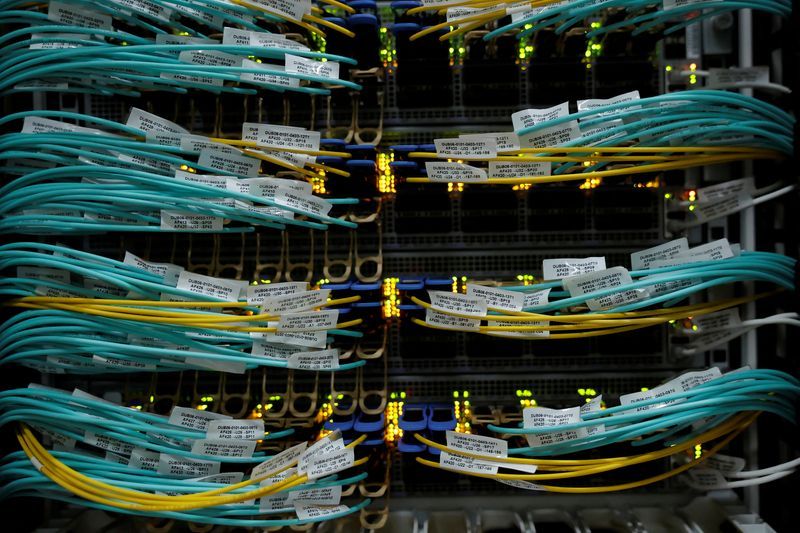
The global enthusiasm for artificial intelligence development is colliding with sobering realities about infrastructure capacity and environmental cost. Across multiple continents, policymakers are taking decisive action to restrict or ban new data centre construction, signalling a fundamental shift in how nations will manage the computational demands of the AI era. The restrictions reflect growing alarm among authorities about unsustainable pressure on electricity grids, depleting freshwater resources, and community opposition to massive industrial facilities in populated areas. This emerging pattern suggests that unrestricted data centre expansion may no longer be politically or practically viable, even in technology-friendly jurisdictions.
New York has become the first U.S. state to implement a comprehensive moratorium on data centre development. Governor Kathy Hochul imposed a one-year freeze on construction of facilities consuming 50 megawatts or more of electrical power, a threshold that captures most hyperscale operations serving major cloud and AI companies. During this suspension, the state's Department of Environmental Conservation will withhold new discretionary permits while officials establish rigorous standards to evaluate how data centres affect the environment. The move represents a significant departure from the American approach of minimising regulatory barriers to technology infrastructure, reflecting the severity of concerns about grid stability and resource depletion in densely populated regions.
Maine came close to similar restrictions but ultimately fell short of enacting formal constraints. Governor Janet Mills rejected bipartisan legislation that would have created an 18-month moratorium on data centres using more than 20 megawatts of power—a threshold lower than New York's and therefore more restrictive in scope. Though Mills acknowledged supporting a moratorium in principle, she vetoed the measure because lawmakers refused to create an exemption for a specific project proposed in the Town of Jay. This episode illustrates the competing pressures states face: balancing environmental and community concerns against economic development interests and the possibility of attracting corporate investment and employment.
California's Monterey Park has taken the most aggressive stance of any American city to date. Residents voted in June 2026 to permanently ban data centres within municipal boundaries following sustained public anger over a proposed facility. This ballot-box decision represents an unprecedented moment in U.S. data centre politics, where ordinary citizens directly vetoed infrastructure that developers and some local officials supported. The city had previously imposed a one-year moratorium in 2019, then extended restrictions through 2030 in April 2025, demonstrating how initial caution can harden into permanent policy when communities mobilise opposition and local leaders respond to constituent pressure.
The Netherlands has embedded data centre restrictions into national policy through a 2022 hyperscale ban that designates only two locations nationwide where large facilities may be developed. This centralised approach concentrates AI infrastructure in specific areas where authorities can manage environmental and grid impacts more predictably. However, the policy's effectiveness has been tested by corporate ingenuity: Microsoft obtained approval in January 2026 for a project designed across three separate towers, each sized individually beneath the regulatory threshold while collectively delivering hyperscale computational capacity. This workaround reveals how companies may navigate restrictions through technical compliance, prompting questions about whether current regulations can genuinely constrain growth or merely redirect it.
Ireland implemented one of the first and most stringent data centre freezes, originating from grid stability concerns rather than environmental or land-use objections. Dublin's grid operator effectively halted new data centre connections around the capital from 2021 onwards after analysis showed these facilities were exceeding the electrical network's reliable capacity. The freeze persisted for four years until December 2025, when restrictions were lifted—but with a critical modification. New data centre operators must now provide their own on-site power generation capacity, shifting responsibility for grid stability from public infrastructure to private facilities. This approach may represent a viable compromise model: permitting continued expansion while ensuring facilities do not depend entirely on national grids already stretched by residential and industrial demand.
These diverse regulatory responses across geographies reveal no single global consensus but rather a shared recognition that data centre expansion cannot continue at its previous pace without serious consequences. Electricity consumption by data centres, already substantial, faces exponential growth as AI model training and inference operations scale. Water consumption presents an equally pressing concern, as many hyperscale facilities require enormous quantities for cooling systems, creating particular stress in water-scarce regions. Communities hosting data centres frequently report concerns about noise, visual impact, and opportunity costs—land devoted to computational infrastructure cannot serve agricultural, residential, or recreational purposes.
The political economy of data centre restrictions deserves close attention for Southeast Asian policymakers. Major technology companies view the region as a growth frontier for cloud services and AI capabilities, with countries including Singapore, Malaysia, and Vietnam actively courting investment. As restrictions tighten in Europe and North America, some operators may redirect projects toward jurisdictions perceived as more permissive. Governments in the region face a strategic choice: proactively establish environmental and capacity standards now, or absorb infrastructure challenges after rapid, unmanaged expansion. Singapore, with limited land and water resources, has already begun integrating sustainability requirements into data centre approvals. Malaysia and Vietnam should consider whether current regulatory frameworks adequately protect public resources and community interests as AI infrastructure investment accelerates.
The restrictions emerging across developed economies also reflect deeper questions about who bears the costs and captures the benefits of AI development. Data centres generate employment and tax revenue, providing genuine economic gains to host communities and nations. Yet electricity costs, environmental degradation, and infrastructure strain are borne by broader populations, including those far from facility locations who consume power from shared grids. This distributional tension helps explain why restrictions gain political traction: residents increasingly recognise that concentrated corporate gains do not justify dispersed public burdens. Policymakers worldwide are beginning to internalise these costs into licensing decisions, pricing approvals and permitting requirements in ways that more accurately reflect true social expense.
The trajectory of data centre policy over the coming years will substantially influence how rapidly artificial intelligence infrastructure can expand globally. If restrictions proliferate and tighten, companies will face genuine capital allocation challenges and geographic constraints that could slow deployment of new capabilities. If restrictions remain patchy and unevenly enforced, a two-tier global system may emerge where developed nations with strong regulatory capacity constrain local expansion while developing economies absorb disproportionate infrastructure burden. For Malaysia and the Southeast Asian region, the decisions made now about data centre policy will determine whether AI development becomes an engine of controlled, sustainable growth or a source of resource depletion and infrastructure strain that benefits a narrow sector while imposing diffuse costs on broader society.

