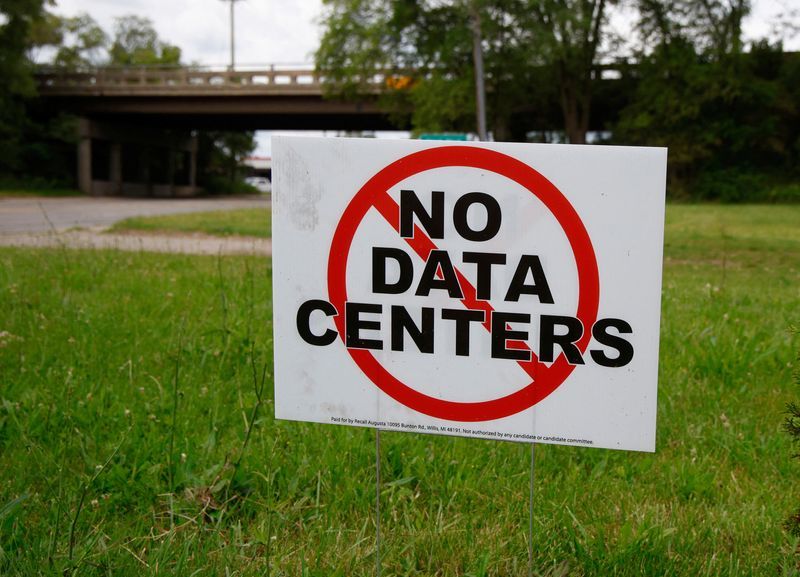
A wave of organised opposition to data center construction is reaching critical mass in the United States, with grassroots activists preparing coordinated demonstrations across at least 125 locations on a single Saturday. The nationwide push marks a turning point in local resistance efforts that have intensified over the past twelve months, transforming what began as neighbourhood-level pushback into a broad political movement capable of influencing electoral dynamics at state and federal levels.
The orchestration comes from HumansFirst, a grassroots coalition helmed by figures with experience in high-profile American political organising. The group's co-founder has drawn explicit comparisons between the energy galvanising data center opponents and the Tea Party movement that roiled Republican politics in 2009, suggesting a similar potential for reshaping political landscapes. However, organisers emphasise that opposition to data center proliferation cuts across traditional ideological boundaries in ways that few contemporary issues manage, presenting a genuinely non-partisan challenge to policymakers accustomed to polarised debates.
Local and regional governments have emerged as unexpected focal points in this conflict, with municipalities discovering themselves at odds with technology companies over infrastructure decisions that carry profound implications for water supplies, electrical grids, and community character. In numerous instances, development has proceeded despite residents' concerns, sometimes facilitated by confidentiality agreements that prevented public scrutiny. This dynamic has exposed gaps in regulatory oversight and raised uncomfortable questions about whose interests local officials prioritise when corporations with significant resources make their intentions known.
Public sentiment presents a formidable obstacle to continued data center expansion at current velocities. Recent polling data reveals that merely one-third of Americans endorse the current pace of data center construction, a telling indicator of widespread unease. More strikingly, only 14 per cent of respondents indicated willingness to support data center development aimed at supporting artificial intelligence operations for major technology firms including Meta, Alphabet, Amazon, Microsoft, and xAI. These figures suggest that the industry faces a credibility crisis rather than a temporary public relations challenge.
The geographic distribution of planned protests illustrates which states and regions have become flashpoints for this conflict. Texas, which has attracted substantial data center investment and emerged as a centre for computing infrastructure development, is bracing for 16 separate demonstrations. Georgia, a politically competitive state of increasing importance in national elections, faces 11 protests, whilst California, Florida, and Pennsylvania each expect seven protests apiece. The concentration of activity in politically significant jurisdictions suggests that data centers may indeed emerge as meaningful electoral issues.
Energy consumption and water depletion represent the most prominent grievances animating activist concerns. In water-stressed regions, particularly the American Southwest, proposed projects have triggered alarm among communities already grappling with scarcity. One controversial development in Imperial County, California, would consume approximately 260 million gallons annually from the Colorado River, a figure that highlights the collision between massive computational infrastructure needs and finite natural resources. These concerns resonate particularly strongly in regions where water security affects agricultural productivity and residential reliability.
The organisers themselves represent a cross-section of American civic participation, from long-time activists to first-time organisers motivated by specific local threats. Their stated objectives extend beyond simple opposition to encompassing genuine governance reform. Demands include transparent development processes that allow genuine community participation, environmental and resource protections enforceable through law, meaningful community benefits including union employment opportunities, and accountability mechanisms ensuring developers fulfil their promises. These substantive proposals distinguish the movement from purely reactionary opposition.
Interestingly, the coalition maintains nuanced positions on existing policy approaches. Whilst acknowledging concerns raised by Democratic-led moratoriums in New York, organisers insist they seek regulatory frameworks that balance development and protection rather than blanket prohibitions. This pragmatic stance reflects political sophistication among grassroots leaders who recognise that sustainable solutions require building broader coalitions rather than pursuing ideological purity.
The data center industry, represented through its lobbying association, has maintained relative silence regarding the protests, previously offering generic assurances about responsible community engagement. Industry representatives have downplayed water consumption concerns, arguing that data centers consume less water than many alternative industries. However, this messaging has failed to persuade a sceptical public increasingly attuned to cumulative environmental impacts and the scale of artificial intelligence infrastructure buildout required to support generative AI applications.
For Malaysian and Southeast Asian observers, these American developments carry strategic relevance. The data center boom reflects global competitive pressures to position nations as AI hubs, dynamics increasingly visible across Asia. Several Southeast Asian countries have attracted investment from major technology firms seeking geographically diverse infrastructure. If American precedent holds, organised community opposition to proposed projects could emerge in Malaysian states and other regional jurisdictions, complicating investment timelines and project viability. Policymakers considering data center incentives would benefit from anticipating the governance challenges now surfacing in the United States.
The movement's emergence across ideological lines suggests something more significant than opposition to specific infrastructure. It reflects genuine anxiety about whether technological development serves broad societal interests or primarily benefits corporations and wealthy investors. As artificial intelligence systems become increasingly central to economic competition, questions about who bears environmental costs and who reaps financial benefits will intensify. The data center protests represent an early mobilisation around these fundamental justice questions that will likely shape technology policy debates for years ahead.
State and national politicians are beginning to grapple with voter anger on this issue, recognising that dismissing community concerns risks electoral consequences. Some observers predict data centers could emerge as defining election issues in November's midterm contests and the 2028 presidential race. If that prediction proves accurate, American approaches to data center governance may shift substantially, potentially creating policy models that other nations examine when confronting their own infrastructure dilemmas.

