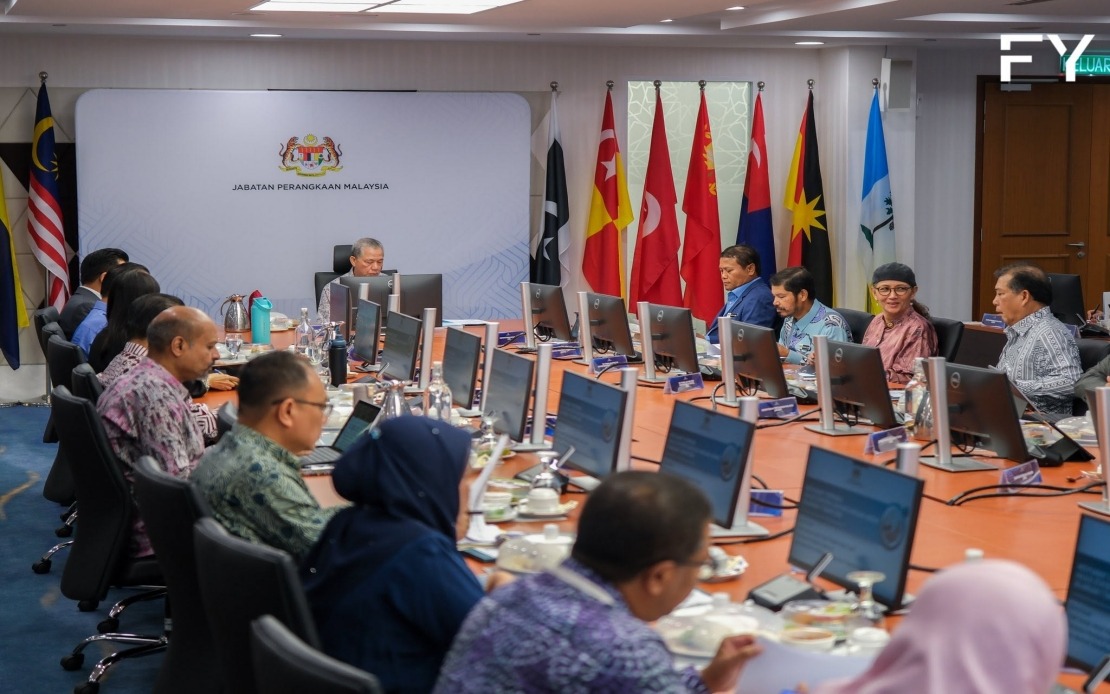
Deputy Prime Minister Datuk Seri Fadillah Yusof has highlighted data analytics and artificial intelligence as essential foundations for the successful implementation of the 13th Malaysia Plan (13MP) 2026-2030, signalling the government's commitment to transforming how policy decisions are formulated and executed across the country. Speaking after chairing a high-level meeting of the National Statistics and Data Council (MSDN) on June 18, Fadillah stressed that Malaysia's ability to harness quality information and technological innovation will determine whether development initiatives deliver meaningful improvements to citizens' lives and strengthen national resilience in an increasingly complex global environment.
The deputy premier framed data and artificial intelligence not as mere administrative conveniences but as strategic national assets that fundamentally reshape how government operates. In an era marked by economic volatility, geopolitical tensions, accelerating digital change, environmental pressures and rapid technological disruption, decision-makers require access to reliable, comprehensive information systems capable of processing vast amounts of information quickly and accurately. Without such infrastructure, Fadillah argued, Malaysia risks formulating policies based on incomplete understanding, resulting in wasted resources and missed opportunities.
Central to Fadillah's vision is the notion that the 13MP cannot succeed without quality, integrity and timely data supporting every stage of policy work—from initial planning through implementation, monitoring and evaluation. This represents a significant shift in how Malaysian government approaches development planning, moving away from historical reliance on assumptions and anecdotal evidence towards evidence-based governance underpinned by robust statistical foundations. The approach has already demonstrated dividends, with Malaysia recording gross domestic product expansion of 5.4 per cent in the first quarter of 2026, a performance Fadillah attributed directly to development policies informed by sound data analysis.
The meeting Fadillah chaired brought together cabinet-level representatives from critical ministries, including Works Minister Datuk Seri Alexander Nanta Linggi, Deputy Health Minister Datuk Hanifah Hajar Taib, Deputy Communications Minister Teo Nie Ching, Deputy Digital Minister Datuk Wilson Ugak Kumbong and Deputy Economy Minister Datuk Mohd Shahar Abdullah, alongside chief statistician Datuk Seri Dr Mohd Uzir Mahidin. This high-level participation underscores the cross-sectoral nature of statistical reform, requiring coordination across government portfolios to succeed. No single ministry can implement effective data governance; instead, the initiative demands genuine collaboration spanning economic development, health, infrastructure, communications and digital transformation agencies.
Fadillah emphasised that strengthening the National Statistical System (SNSS) demands sustained engagement with multiple stakeholders beyond government itself. The private sector, universities, research institutions and state governments all possess valuable data and analytical capabilities that, if properly integrated and leveraged, can amplify the government's capacity to understand complex challenges and devise responsive solutions. This collaborative approach acknowledges that contemporary governance increasingly depends on ability to weave together information from diverse sources—corporate datasets, academic research, administrative records and ground-level observations—into coherent analytical frameworks.
The digital era presents both opportunities and challenges in this regard. Fadillah highlighted the critical importance of developing capacity to integrate data from multiple sources in secure, ethical and effective ways. This touches on sensitive issues around data privacy, cybersecurity and appropriate governance frameworks ensuring that technological power serves public interest rather than enabling surveillance or misuse. Malaysia must therefore develop sophisticated data management protocols protecting individual privacy while enabling the aggregation and analysis necessary for evidence-based policymaking.
Beyond general governance improvements, Fadillah identified strategic sectors requiring particular emphasis on comprehensive data support. Energy transition, climate change response, water sector transformation and sustainable development initiatives all demand rich information ecosystems enabling government to monitor progress, identify emerging problems and adjust course before ineffective policies consume substantial resources. In energy transition particularly, accurate data on consumption patterns, renewable energy potential and grid capacity becomes essential for designing policies supporting Malaysia's shift towards cleaner energy systems.
The MSDN meeting reviewed several concrete initiatives reflecting this strategic vision. These included standardising official statistical standards across agencies, enhancing data governance frameworks, integrating administrative records previously held in isolated government silos, developing databases tracking science and technology talent availability, leveraging data to support youth development programmes and managing national road asset information. Each represents a practical step towards building what Fadillah termed a more integrated, high-integrity and development-oriented national data ecosystem.
For Malaysian readers, these developments carry implications extending beyond technical administrative reforms. A strengthened statistical system and expanded artificial intelligence deployment promise more effective public services, better-targeted development spending and policies more closely aligned with actual citizen needs rather than bureaucratic assumptions. However, these benefits depend on government successfully navigating substantial technical, organisational and governance challenges. Building data capacity requires sustained investment in technology infrastructure and human expertise. Institutional coordination remains notoriously difficult in Malaysian bureaucracy. Privacy protections must be robust enough to maintain public trust without paralyzing analysis.
The emphasis on data-driven governance also reflects Malaysia's positioning within broader global trends. Advanced economies increasingly centre technological innovation and analytical capacity in development strategies. For Malaysia to remain competitive, particularly as a middle-income nation aspiring towards high-income status, matching such approaches becomes essential. This extends beyond government itself; businesses, universities and civil society organisations increasingly expect and require access to reliable statistical information.
Fadillah's framing of data as strategic national assets acknowledges that information asymmetries create power imbalances. Governments with sophisticated analytical capabilities can craft policies that serve particular interests effectively while public constituencies lack information to assess whether policies serve broader public good. Transparent, accessible data systems can help counterbalance such asymmetries, enabling informed public debate about policy choices and their consequences. Whether Malaysian implementation will achieve this democratising potential remains to be seen.
The 13MP period 2026-2030 will test whether these aspirations translate into institutional reality. Success requires not merely rhetorical commitment but sustained investment in statistical capacity, genuine inter-ministerial collaboration, willingness to act on data-driven insights even when findings contradict established preferences, and appropriate governance frameworks protecting data integrity while respecting privacy. For Malaysian stakeholders—from policymakers to businesses to ordinary citizens—the outcomes of this experiment in data-driven governance deserve close attention.