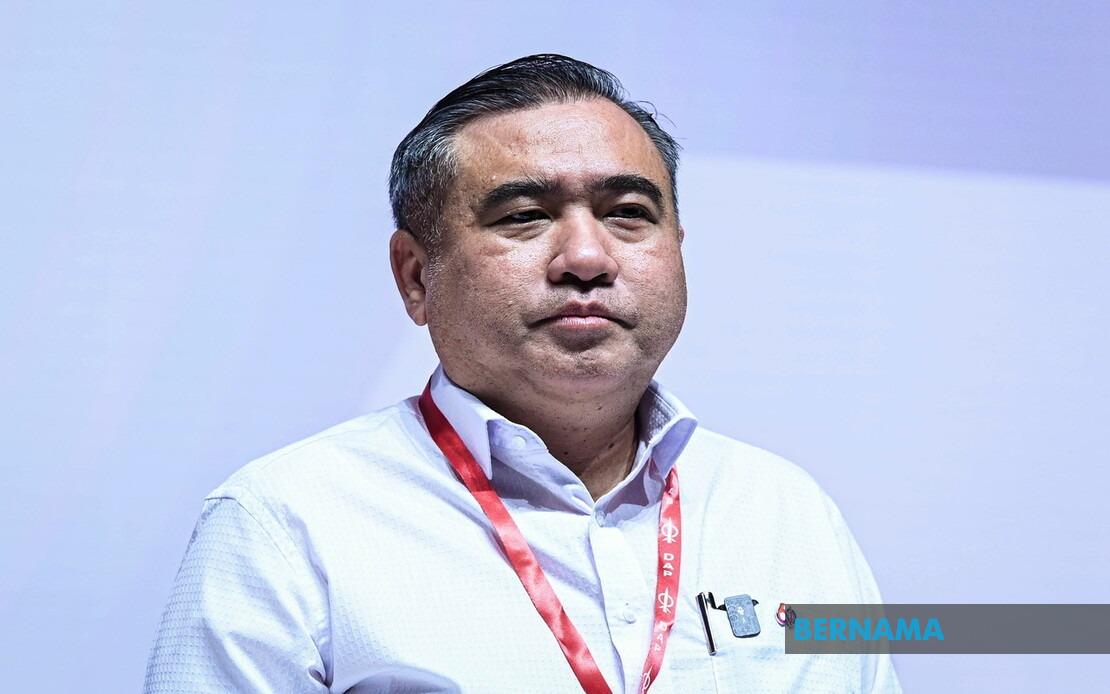
The Democratic Action Party has pledged to bring critical feedback from its membership directly into government decision-making through established Cabinet channels, following the completion of its 2026 Party Conference in Putrajaya. Speaking at a press briefing held at the Putrajaya International Convention Centre, party secretary-general Anthony Loke acknowledged that delegates had expressed concerns about the pace and boldness of government action, yet emphasised that such feedback would be processed through formal governmental structures rather than pursued as partisan pressure.
The party conference itself became a testing ground for internal democratic engagement, with delegates afforded the opportunity to voice criticisms of both party direction and government performance in an open debate format. Rather than suppressing dissent, DAP's leadership chose to frame these exchanges as valuable input that would inform the party's broader strategy within the coalition arrangement. Loke indicated that the delegates' aspirations, drawn from grassroots organisations and party members across the country, would be compiled and formally presented to the government, ensuring that criticism did not remain confined to internal party forums.
The catalyst for this commitment came through a binding vote on whether DAP should remain part of the Unity Government. An overwhelming majority of delegates, representing 88 per cent of those who cast ballots, voted to maintain the party's participation in the coalition. Out of 2,106 ballots distributed, 1,857 delegates supported continued involvement while 242 opposed it, with seven votes spoilt. This decisive mandate provides Loke and the party leadership with clear authorisation to continue negotiating within government structures, while also demonstrating that a non-negligible minority harbours reservations about the current arrangement.
Loke's treatment of the 12 per cent opposition vote reflected a deliberate emphasis on inclusive governance within the party itself. Rather than characterising dissenters as malcontents or fringe elements, he framed them as legitimate voices expressing alternative perspectives within a democratic framework. This stance carries significance for Malaysian political discourse, where internal party management frequently involves marginalising dissenting voices. By openly acknowledging minority positions and pledging them protection from repercussions, DAP signals a commitment to procedural legitimacy that extends beyond mere rhetorical commitment.
The specific concerns raised by delegates concerning government decisiveness and assertiveness reflect broader frustrations within the coalition about the pace of reform implementation. Malaysia's Unity Government, formed to provide political stability after the 2022 elections, has faced persistent questions about whether it prioritises consensus-building at the expense of substantive change. For DAP, positioning itself as a vector for grassroots demands for more vigorous action allows the party to maintain pressure for reform while preserving the coalition's structural integrity.
Loke moved to reframe several proposed reforms as joint commitments rather than partisan DAP initiatives, a rhetorical move with considerable strategic importance. The separation of Attorney-General and Public Prosecutor roles, the limitation of prime ministerial tenure to two terms, and intensified anti-corruption measures have all been characterised as consensus positions agreed upon within Pakatan Harapan at the coalition level and subsequently accepted by the broader Unity Government. By locating these reforms within shared manifesto commitments from the previous election campaign, Loke sought to neutralise opposition accusations that DAP was using the party conference as a mechanism to impose its particular agenda upon the government.
This framing addresses a persistent criticism from opposition quarters and some government coalition partners that DAP wields disproportionate influence within the Unity Government despite not being the largest component by parliamentary representation. By insisting that reform measures represent agreed-upon government business rather than DAP diktat, the party secretary-general attempted to pre-empt narratives portraying DAP as hijacking the government's agenda. The claim that these initiatives were endorsed during the previous election cycle provides what DAP regards as democratic legitimation beyond the party's own structures.
The context of intra-coalition tensions adds weight to DAP's careful navigation of internal party democracy and external political messaging. The Unity Government comprises ideologically diverse partners, ranging from DAP's centre-left liberalism to UMNO's Malay-Muslim conservative base, alongside smaller parties representing various constituencies. Within this environment, DAP's decision to channel delegate concerns through Cabinet procedures rather than public pressure campaigns demonstrates sophisticated coalition management. The party recognises that excessive external advocacy could provoke defensive responses from coalition partners feeling squeezed or outmanoeuvred.
For Malaysian readers and regional observers, DAP's approach illuminates broader questions about how multi-ethnic, ideologically diverse coalitions can sustain both internal party democracy and collective governance responsibility. The conference vote and subsequent commitment to relay feedback represent an attempt to reconcile these potentially competing demands. Delegates demanded more assertive government action while affirming continued coalition participation, creating a mandate for DAP to push for bolder policies without threatening the government's survival.
The implications extend beyond DAP's internal workings to the broader stability of Malaysia's political system. If the Unity Government can incorporate criticism and adapt to grassroots demands without fragmenting, it suggests that coalition governance in Malaysia need not mean the suppression of dissent or the subordination of democratic process to elite consensus. Conversely, if Cabinet channels prove unresponsive to DAP's delegation of delegate concerns, the party faces pressure to escalate advocacy, potentially destabilising the coalition arrangement.
Look ahead, the party conference outcomes establish benchmarks against which DAP's coalition partners and the general public can measure government performance. The delegates' call for decisiveness and assertiveness has been formally registered and will be revisited as a standard against which to evaluate government progress. This creates accountability mechanisms within the coalition itself, distinct from parliamentary scrutiny or electoral cycles. Whether the government responds substantively to these channelled concerns will determine whether DAP's internal democratic exercise translates into meaningful policy adjustment or remains a procedural exercise in managed dissent.

