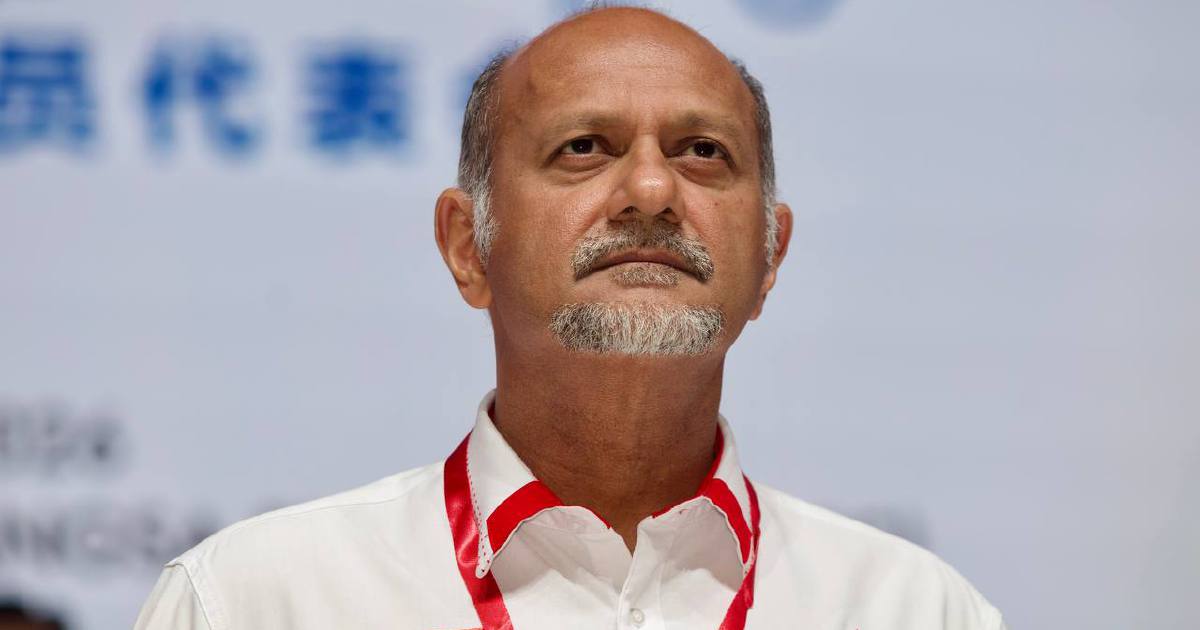
In a pointed intervention that underscores ongoing tensions within Malaysia's ruling coalition, DAP national chairman Gobind Singh Deo has pressed Prime Minister Datuk Seri Anwar Ibrahim to substantially accelerate the pace of institutional and economic reforms. The appeal comes at a significant moment—more than three and a half years into the unity government's mandate—suggesting that the Democratic Action Party sees a need to inject fresh momentum into the administration's transformation agenda.
The timing of Gobind Singh's remarks carries particular weight within the context of Malaysian politics. The unity government, which took office in November 2022 as a broad coalition spanning ideological divides, has long hinged on a shared commitment to systemic reform as its central organizing principle. As the administration enters what many analysts view as its final substantive period before the next general election cycle, DAP's vocal repositioning indicates that key coalition partners are reassessing the government's progress against its founding promises. For opposition figures and voters skeptical of the coalition's staying power, such internal calls for acceleration often signal that delivering tangible results has proven more challenging than anticipated.
The Democratic Action Party occupies a distinctive position within the unity government framework. As the most prominent Chinese-majority party in the coalition and a longtime parliamentary opposition voice before 2022, DAP brings both principled constituencies and pragmatic influence to deliberations over policy direction. Its periodic pushes for deeper reform reflect genuine ideological commitments to anti-corruption, judicial independence, and transparent governance that predate the formation of the current coalition. When DAP voices such demands publicly, it typically signals that internal coalition discussions have not yielded satisfactory momentum on its priority areas.
Economic reform remains a persistent challenge for the Anwar Ibrahim administration. Malaysia's economy has recovered from pandemic disruptions, yet structural vulnerabilities persist, including heavy reliance on commodity exports, regional brain drain of skilled workers, and pressure on the ringgit amid global monetary tightening. The government has pursued various initiatives aimed at diversification and efficiency, but private sector leaders and economic observers frequently note that bureaucratic processes remain cumbersome compared to regional competitors like Singapore and Vietnam. Gobind Singh's call implicitly suggests that DAP views more aggressive economic restructuring—whether through further privatization, deregulation, or institutional streamlining—as essential to Malaysia's competitiveness.
Institutional reform presents an equally vexing frontier. The unity government inherited a judiciary and civil service that had experienced considerable politicization during the preceding administration. While efforts to restore institutional independence and meritocratic norms have proceeded, progress has been incremental and occasionally controversial. Questions surrounding the pace of anti-corruption prosecutions, the independence of enforcement agencies, and the depoliticization of the civil service remain live issues among reform advocates. DAP's emphasis on institutional strengthening likely encompasses demands for more aggressive measures in these domains.
The coalition dynamics underlying such appeals merit careful examination for Malaysian readers and regional observers tracking Southeast Asian politics. The unity government brought together Pakatan Harapan parties—including DAP, PKR, and Amanah—with UMNO and Barisan Nasional components, creating an unusually heterogeneous ruling bloc. While this coalition structure has provided stability and enabled passage of contentious legislation, it has also constrained the pace of change on issues where coalition partners hold divergent views. When DAP publicly urges the Prime Minister to move faster on reform, it is simultaneously signaling to its own supporters that the party is pressing for outcomes they demand, while also pressuring less reformist coalition components to accept faster-paced change.
The Prime Minister's response to such appeals will carry significant implications for coalition cohesion and the government's trajectory toward the next election. Anwar Ibrahim has consistently positioned himself as a reformer, and his personal political credentials rest partly on delivering institutional transformation. However, he also manages a coalition spanning conservative and progressive elements, requiring careful balancing. Public acknowledgment of reform demands followed by accelerated action might strengthen the coalition's reformist wing. Conversely, if the government appears to stall or deprioritize such concerns, DAP may intensify its pressure campaign, potentially destabilizing the unity government's equilibrium.
For Malaysia's business community and international investors, the question of institutional and economic reform goes beyond internal coalition politics. Foreign direct investment decisions increasingly hinge on perceptions of governance quality, regulatory consistency, and enforcement predictability. Countries demonstrating robust institutional frameworks and transparent economic policymaking tend to attract larger and higher-value investment flows. Malaysia's competitive position in Southeast Asia depends partly on its ability to offer institutional advantages over Thailand, Indonesia, and the Philippines, where governance concerns sometimes deter foreign capital. If the government accelerates reform in response to DAP's pressure, it could strengthen Malaysia's investment proposition regionally.
The call for stronger reforms also resonates within a broader regional context. Singapore's persistent institutional excellence and Vietnam's rapid economic modernization through state-directed institutional change have set benchmarks that Malaysian policymakers monitor closely. Within this competitive frame, perceptions that Malaysia is moving backward or stalling on reform carry economic consequences. DAP's public intervention, therefore, should be read partly as an attempt to align government action with regional competitive imperatives that transcend party politics.
As the unity government approaches pivotal moments in its tenure, such interventions from coalition partners like DAP will likely become more frequent and pointed. The intersection of electoral calculations, institutional commitments, and economic pressures creates an environment where reform rhetoric intensifies even as delivering reform remains complicated by coalition management requirements. The coming months will test whether Anwar Ibrahim can accelerate substantive reform while maintaining the delicate coalition balance that has sustained his government to date.

