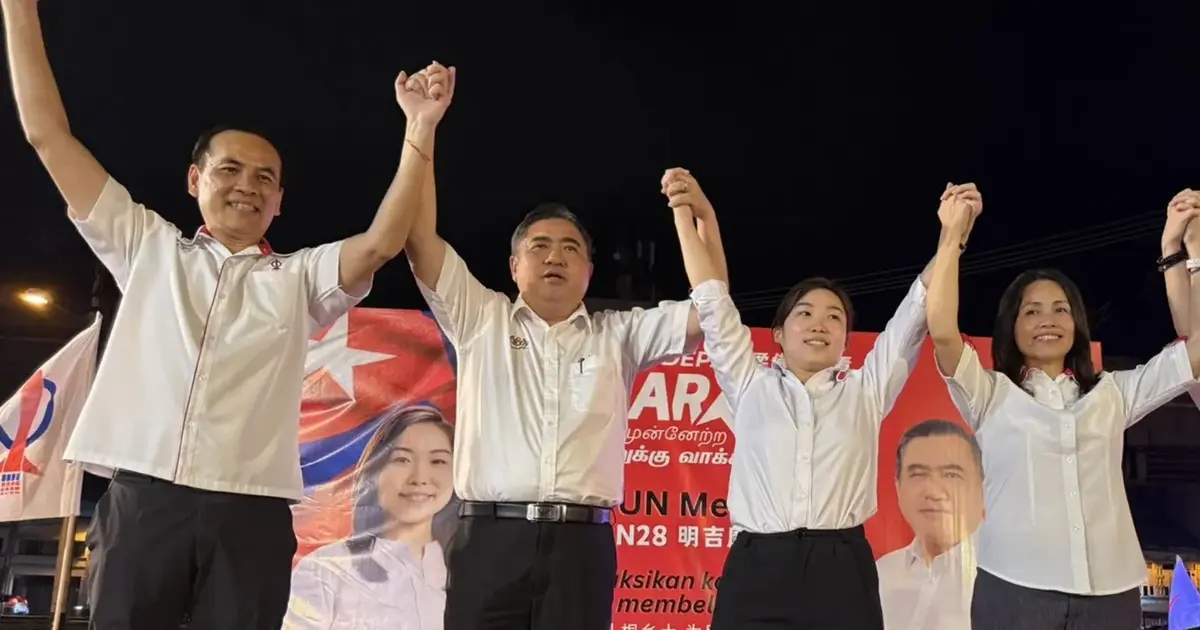
The Democratic Action Party has moved to strengthen its electoral prospects in Mengkibol by unveiling lawyer Chu Poh Yee as its parliamentary candidate for the forthcoming general election, departing from its previous strategy of retaining the same representative. Party secretary-general Loke Siew Fook made the announcement, signalling a deliberate realignment of DAP's candidate roster as the party prepares for what is shaping up to be a competitive national poll.
The decision to field Chu Poh Yee represents a calculated shift in DAP's approach to the Mengkibol constituency, which has been represented by the same lawmaker for two successive parliamentary terms. This rotation pattern reflects broader thinking within the opposition coalition about candidate freshness and the potential advantages of introducing new faces to constituencies while maintaining party organisational coherence. Such moves are commonplace in Malaysian electoral politics, where parties seek to balance incumbent advantage against the energising effect of new candidates.
Chu Poh Yee's professional background in law positions her as part of DAP's broader effort to field candidates with recognised professional credentials and demonstrable expertise. The party has increasingly emphasised the importance of candidates who bring substantive experience to Parliament, particularly in technical and specialised fields where legislative work demands detailed knowledge. A legal background potentially strengthens DAP's capacity in parliamentary committees handling constitutional matters, legislative amendments, and justice-sector oversight.
Mengkibol, a federal constituency that has featured prominently in DAP's electoral calculations, represents the kind of seat the party must defend successfully to maintain its parliamentary footprint. The decision to refresh the candidate while maintaining party control over the nomination process underscores DAP's confidence in its organisational machinery and local support networks within the constituency. Party leadership evidently believes that transitioning to a new representative will not alienate existing voter coalitions but may instead attract additional support through the candidate's professional standing and fresh campaign approach.
The timing of the announcement reflects the compressed electoral cycle that typically precedes Malaysian general elections. Political parties must balance the need to provide sufficient campaign runway for new candidates with the imperative to maintain internal unity around nomination decisions. By making the announcement through party secretary-general Loke Siew Fook, DAP ensured that the message carried formal institutional weight, signalling that the choice reflected considered party strategy rather than ad-hoc decision-making.
For Malaysian voters in Mengkibol specifically, the candidate change potentially signals DAP's assessment of local political dynamics and voter sentiment. Constituencies do not exist in isolation; they reflect broader state and national trends that shape electoral outcomes. DAP's strategic recalculation in Mengkibol may indicate that party strategists believe a fresh candidate can better position the party against anticipated competitive challenges from other political groupings contesting the seat.
The candidate announcement also carries implications for how DAP manages relationships with its allies and competitors in the broader opposition ecosystem. Other opposition parties scrutinise DAP's candidate selections for signals about the party's competitive intentions and its likely positioning on potential coalition arrangements. Fielding a strong legal professional in a contested seat demonstrates DAP's commitment to serious electoral competition and suggests the party is not content to simply retain existing representations but aims to strengthen its parliamentary delegation.
From a Southeast Asian perspective, Malaysia's electoral dynamics continue to reflect the region's broader pattern of competitive multi-party democracy. Opposition parties such as DAP, which have maintained organisational coherence through multiple electoral cycles, typically approach candidate selection with considerable strategic sophistication. The choice to refresh candidates while maintaining party discipline reflects professional political management and the operational capabilities that allow opposition movements to function as credible alternative governments.
The selection of Chu Poh Yee also speaks to the evolving composition of Malaysian politics, where professional women increasingly feature as candidates in competitive constituencies. DAP has historically positioned itself as a champion of meritocratic politics and gender equality in candidate selection, and Chu's nomination aligns with these stated commitments. Her candidacy reflects broader generational shifts in how Malaysian political parties construct their public-facing leadership and parliamentary delegations.
Moving forward, the effectiveness of DAP's candidate strategy in Mengkibol will become apparent only when electoral outcomes materialise. Candidate selection represents one element of successful parliamentary campaigns; on-ground organisation, resource allocation, and the broader national political climate also shape results decisively. Nevertheless, Loke's formal announcement of Chu Poh Yee demonstrates that DAP continues to approach electoral competition with institutional seriousness and strategic calculation, treating each parliamentary seat as worthy of careful attention and deliberate candidate selection rather than assuming automatic retention of existing representatives.

%22%2F%3E%3C%2Fpattern%3E%3C%2Fdefs%3E%3Crect%20width%3D%22100%25%22%20height%3D%22100%25%22%20fill%3D%22url(%23ph3sufhg)%22%2F%3E%3Crect%20width%3D%22100%25%22%20height%3D%22100%25%22%20fill%3D%22url(%23ph3sufhp)%22%2F%3E%3Ctext%20x%3D%2250%25%22%20y%3D%2250%25%22%20text-anchor%3D%22middle%22%20dominant-baseline%3D%22central%22%20fill%3D%22rgba(255%2C255%2C255%2C0.95)%22%20font-family%3D%22Georgia%2C%20'Times%20New%20Roman'%2C%20serif%22%20font-weight%3D%22700%22%20font-size%3D%22272%22%20letter-spacing%3D%22-0.02em%22%3EPerak%3C%2Ftext%3E%3C%2Fsvg%3E)