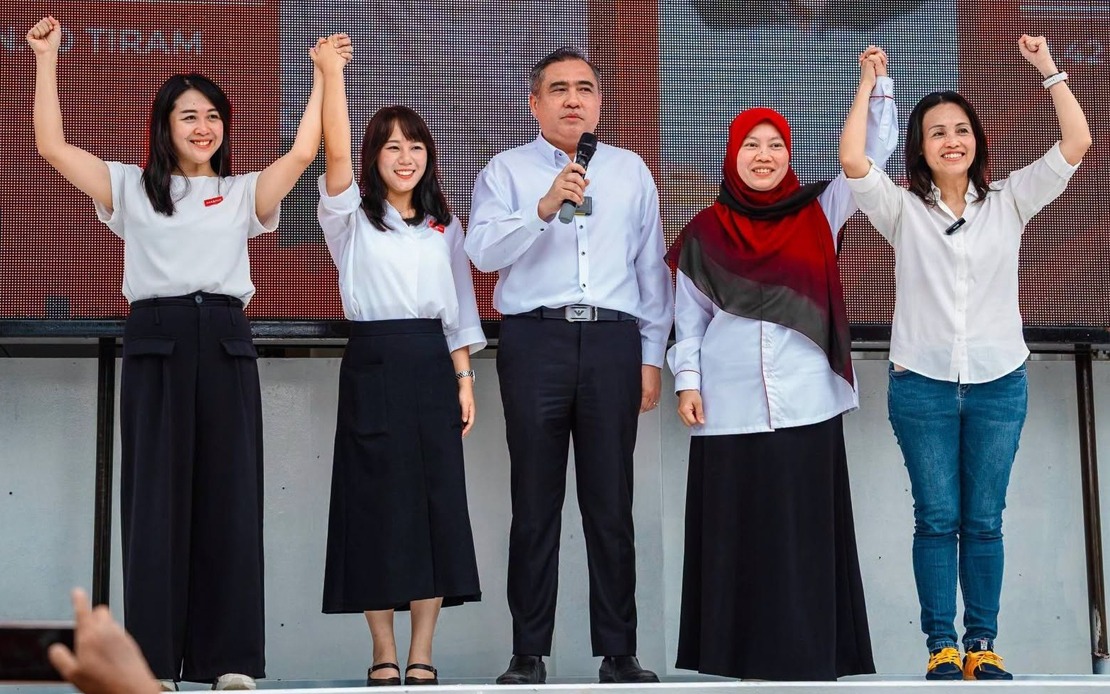
The Democratic Action Party has announced its slate of four candidates contesting in the Johor state election scheduled for July 11, signalling the coalition's determination to expand its foothold in Malaysia's southern industrial heartland. The unveiling, conducted by party secretary-general and Transport Minister Anthony Loke Siew Fook at a ceremony in Johor Bahru on June 20, represents a calculated repositioning ahead of a tightly contested electoral battle that will test Pakatan Harapan's grip on the state.
Nor Zulaila Abd Ghani, a 38-year-old private secretary to the Deputy Finance Minister, has been selected to pioneer DAP's challenge in Tiram, a mixed-composition state seat with a predominantly Malay voter base. This represents uncharted territory for the party in this particular constituency, reflecting an aggressive broadening of its electoral strategy beyond its traditional urban and Chinese-majority strongholds. Her candidacy signals DAP's willingness to contest in constituencies where demographic composition has historically favoured other political forces.
The party's youth wing has also been mobilised, with Lee Wern Yiing, 30, the chief of Johor DAP Socialist Youth, tasked with capturing Johor Jaya. Her selection underscores the party's emphasis on generational renewal and youth representation in an electorate increasingly conscious of long-term governance and fresh perspectives. The emphasis on younger candidates reflects broader trends across Malaysian politics as parties seek to appeal to voters concerned about developmental priorities and economic opportunity.
For the Bukit Permai state seat, DAP has nominated Mohamad Shafwan Ani, a 33-year-old special assistant to the Kulai MP. His lengthy presence in the constituency—spanning nine years of grassroots engagement—provides him with accumulated networks and community familiarity that could translate into electoral advantage. Meanwhile, incumbent assemblyman Wong Bor Yang, 40, will seek re-election in Senai, leveraging the incumbency advantage that typically benefits defending candidates with established administrative track records.
The strategic architecture underlying these candidacies extends beyond individual contests. Loke articulated Pakatan Harapan's overarching objective: securing all three state assembly seats within the Kulai parliamentary constituency. This coordinated approach reveals sophisticated electoral planning, as the coalition seeks to convert parliamentary representation into state-level dominance. By already holding Senai and Bukit Batu—the latter contested by PKR, the coalition partner—the addition of Bukit Permai through DAP would complete the alliance's control of this geographically concentrated political zone.
The timing of DAP's territorial expansion into Tiram merits careful analysis. Loke's confidence in Nor Zulaila's capacity to attract voter support suggests internal polling data pointing toward receptiveness among Tiram's electorate. This assertion carries weight, as contesting in Malay-majority seats remains challenging for DAP, which has historically concentrated resources in constituencies where Chinese voters form substantial portions of the electorate. The party's willingness to field a candidate in Tiram indicates either genuine competitive opportunity or strategic positioning for long-term demographic and political shifts.
The electoral timeline compressed within a three-week window adds urgency to campaign mobilisation. The Election Commission designated June 27 as nomination day, allowing validated candidates roughly two weeks for campaign activities before early voting commences on July 7, with general polling on July 11. This compressed schedule favours parties with well-established organisational machinery and candidate recognition—conditions that generally benefit incumbents and established parties over insurgent challengers.
Johor's electoral importance transcends its state-level significance. As Malaysia's second-largest state by population and a crucial economic contributor, the outcome carries implications for federal-level political calculations. A strong Pakatan Harapan showing would reinforce the coalition's narrative of voter confidence, potentially influencing calculations for future federal elections. Conversely, setbacks would invite scrutiny regarding the coalition's capacity to retain voter support in peripheral regions beyond Peninsula urban centres.
The composition of DAP's chosen candidates reflects deliberate demographic and professional diversification. Three of the four nominees possess professional or administrative backgrounds—characteristics that the party evidently believes resonate with contemporary voter preferences for technocratic competence. This contrasts with traditional patronage-based candidate selection, suggesting DAP's assessment that Johor voters increasingly prioritise qualifications and track records over party seniority or factional positioning.
Johor DAP chairman Teo Nie Ching and deputy Wong Shu Qi's presence at the announcement ceremony underscored the party's organisational commitment to these contests. Their participation signalled that DAP's state-level leadership has invested political capital in validating the chosen candidates before the broader membership and press. This public endorsement from established party figures could facilitate smoother integration of candidates into existing organisational networks and reduce internal dissatisfaction among candidates who failed to secure nominations.
The election assumes additional significance given Johor's complex political landscape. The state has historically witnessed shifting coalitions and electoral volatility, with voters demonstrating willingness to vote across communal and partisan lines. DAP's expansion into new electoral territory suggests calculated confidence that contemporary political realignment has created openings in constituencies previously considered impregnable bastions of opposing parties. Whether this confidence proves warranted will become evident once nomination papers are formally submitted and campaign dynamics fully crystallise over the coming weeks.

%22%2F%3E%3C%2Fpattern%3E%3C%2Fdefs%3E%3Crect%20width%3D%22100%25%22%20height%3D%22100%25%22%20fill%3D%22url(%23ph4thk3g)%22%2F%3E%3Crect%20width%3D%22100%25%22%20height%3D%22100%25%22%20fill%3D%22url(%23ph4thk3p)%22%2F%3E%3Ctext%20x%3D%2250%25%22%20y%3D%2250%25%22%20text-anchor%3D%22middle%22%20dominant-baseline%3D%22central%22%20fill%3D%22rgba(255%2C255%2C255%2C0.95)%22%20font-family%3D%22Georgia%2C%20'Times%20New%20Roman'%2C%20serif%22%20font-weight%3D%22700%22%20font-size%3D%22320%22%20letter-spacing%3D%22-0.02em%22%3EMMC%3C%2Ftext%3E%3C%2Fsvg%3E)