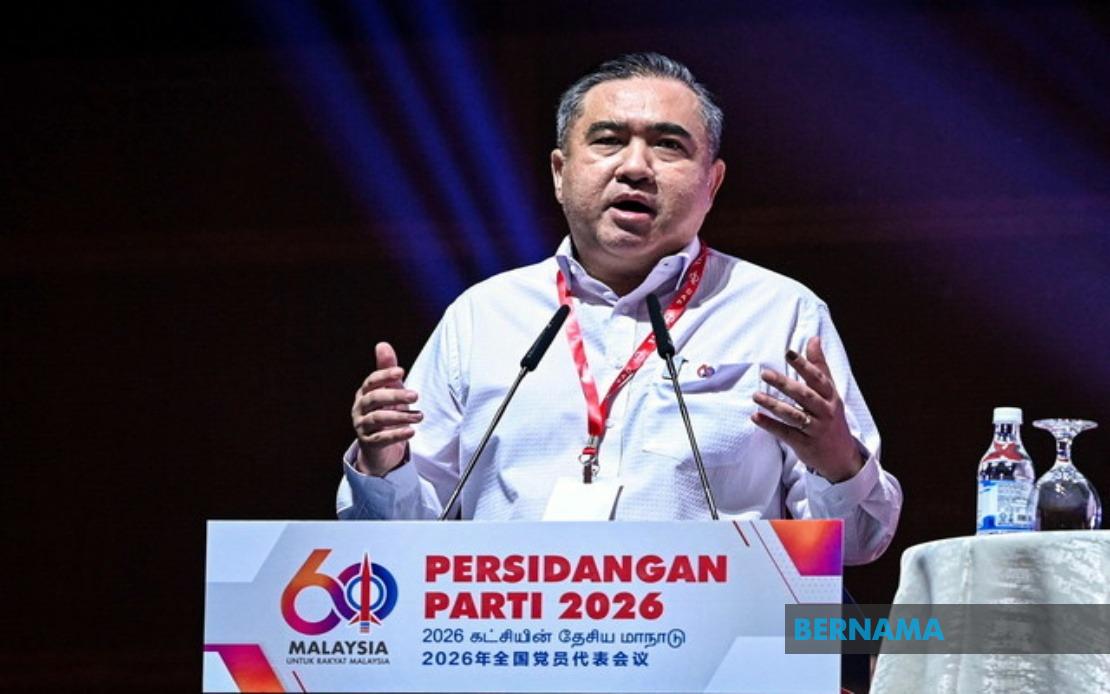
The Democratic Action Party has signalled its intention to maintain its role in Malaysia's federal coalition government for the remainder of the 15th Parliamentary term. The commitment emerged from a special motion presented by party secretary-general Anthony Loke during the 2026 DAP Party Conference held at the Putrajaya International Convention Centre, where party delegates were given the opportunity to weigh in on the party's political future.
The motion secured overwhelming backing from the party rank-and-file, with 1,857 delegates voting in favour of continued participation in the unity government formation against 242 who preferred an exit, out of 2,106 ballots cast. This substantial margin—representing 88.2 per cent support among those present—provided the party leadership with a clear mandate to pursue its existing coalition strategy. Conference Speaker Cha Kee Chin announced the results, which were derived from a secret ballot process designed to protect voter integrity and ensure transparency throughout the proceedings.
DAP's decision to remain within the government reflects the party's assessment of its current political standing and influence. The party occupies a significant position within the cabinet structure, holding five ministerial portfolios. Anthony Loke serves as Transport Minister, while Steven Sim oversees Entrepreneur and Cooperatives Development. Gobind Singh Deo manages the Digital portfolio, Nga Kor Ming handles Housing and Local Government responsibilities, and Hannah Yeoh represents the Prime Minister's Department and Federal Territories division within the cabinet.
Beyond ministerial ranks, DAP has secured substantial representation at the deputy ministerial level, where seven party members hold positions across key government departments. This layered presence in the executive branch underscores the party's institutional integration into the current administration. Teo Nie Ching serves as deputy minister for Communications, while Datuk Chan Foong Hin manages Agriculture and Food Security. Wong Kah Woh oversees Education matters, and Liew Chin Tong holds the Finance deputy ministerial position. Additional deputy ministers include M. Kulasegaran in the Prime Minister's Department handling Law and Institutional Reform, Lim Hui Ying managing Women, Family and Community Development, and Mordi Bimol in Youth and Sports.
The voting process itself demonstrates DAP's commitment to democratic procedures within its own organisational structure. Rather than relying on traditional methods such as voice votes or show of hands, which can be subject to interpretation or challenge, the party opted for secret ballot voting. This approach provided individual delegates with the assurance that their positions would remain confidential, potentially encouraging more candid expression of their views on the government participation question.
The conference drew participation from an extensive cross-section of the party organisation nationwide. According to preliminary data cited by Cha, approximately 4,264 delegates from 1,704 branches across Malaysia were eligible to participate in the conference proceedings and casting their votes. This widespread delegate representation suggests that the mandate to remain in government reflects substantial grassroots support rather than merely representing the preferences of the party's central leadership.
DAP's continued participation in the unity government carries implications for Malaysia's broader political stability. As one of the more established opposition-turned-coalition partners in Malaysia's recent political history, the party's commitment to remaining in the government formation through the parliamentary term provides a degree of predictability for the administration's legislative agenda. The party's presence and voting strength in parliament remain essential for maintaining government control of parliamentary proceedings.
The party's decision also reflects pragmatic considerations regarding political capital and policy influence. Remaining within the government allows DAP to advance specific policy objectives and constituency-focused initiatives through the portfolios it controls and influences. For Malaysian voters, particularly those in DAP-represented constituencies, the party's continued ministerial participation may translate into prioritised attention to development projects, regulatory implementations in their sectors, and legislative advocacy aligned with their departmental remits.
From a Southeast Asian perspective, DAP's commitment to stable coalition governance contributes to Malaysia's political continuity during a period when regional stability remains important for economic and security considerations. The party's strategic calculation balances its role as a guardian of democratic principles and accountability with the pragmatic benefits of wielding executive authority to implement its policy agenda and serve its voter base more directly.
The overwhelming delegate support—with only 11.8 per cent voting to depart the government—suggests limited internal dissension regarding the coalition strategy, at least among the active party members attending the conference. This internal consensus provides DAP's leadership with clear authorisation to navigate government relationships and parliamentary negotiations through the end of the current term without facing significant internal pressure to reconsider the fundamentals of its political positioning.

