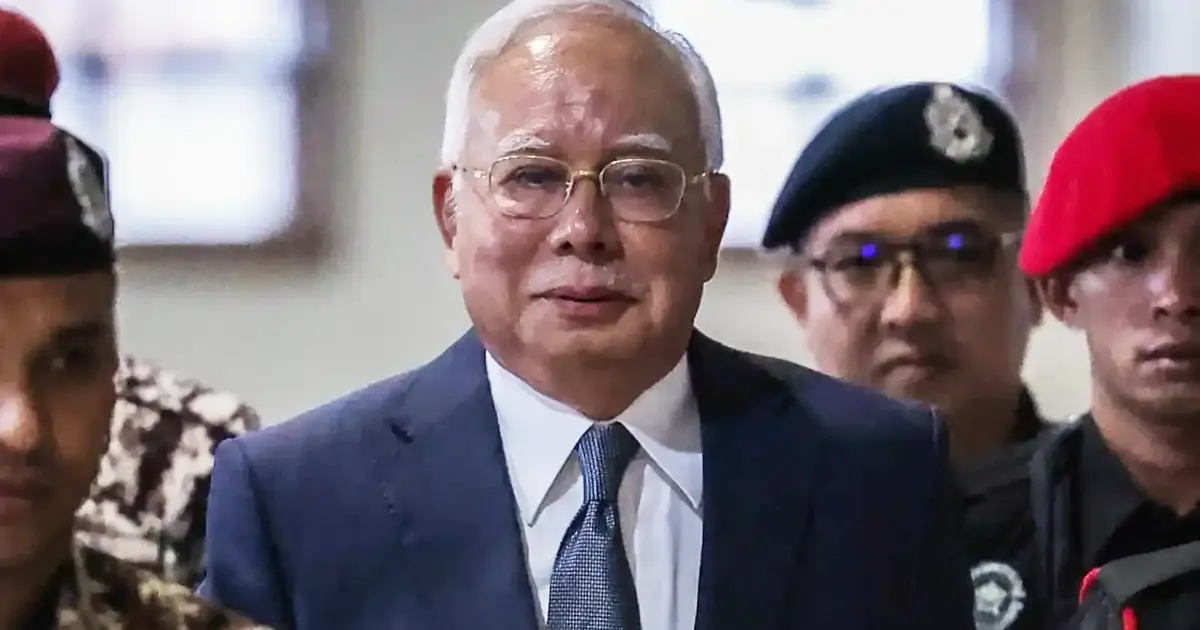
The question of whether Malaysia's Chinese-majority coalition partner supports efforts to secure a pardon for Najib Razak has emerged as a test of unity within the government alliance, with DAP politician Ong Hui Xue demanding clarity from MCA as Umno leaders intensify their campaign. The call highlights growing tensions within the ruling Pakatan Harapan and Barisan Nasional coalitions, where differing views on the former premier's legal status threaten to expose cracks in the administration's support base.
Najib remains imprisoned following his conviction in 2023 on charges related to the 1Malaysia Development Berhad (1MDB) scandal, one of the most significant financial misconduct cases in recent Malaysian history. His imprisonment has become a rallying point for sections of Umno, where party figures have increasingly voiced demands for executive clemency. The movement reflects broader factional struggles within the Malay-Muslim dominated party, where loyalists have sought to restore Najib's political standing and rehabilitate his public image ahead of anticipated electoral contests.
Ong's intervention signals DAP's discomfort with what it perceives as MCA's muted response to these pardon campaigns. By publicly questioning MCA's position, the DAP legislator is attempting to force the issue into clearer political focus, recognising that silence could be interpreted as tacit acceptance or agreement. This strategy reflects DAP's broader emphasis on rule of law and anti-corruption standards, principles that have historically differentiated the party within Malaysian politics and earned support among urban, educated voters who view institutional accountability as essential.
The pardon question carries significant implications for Malaysia's coalition politics. The government comprises competing ideological blocs, with DAP representing secular, multi-ethnic governance values while Umno, despite its participation in Pakatan Harapan, retains core supporters who view Najib's prosecution as politically motivated persecution rather than legitimate legal process. MCA, positioned between these poles as a Chinese business-oriented party, has traditionally avoided taking strong stances on issues perceived as ethnically sensitive or internally divisive within Barisan Nasional.
Umno's pardon campaign reflects mounting pressure from the party's grassroots and several senior figures who argue that Najib has been punished sufficiently or that his conviction itself lacks legitimacy. Najib's supporters contend that his legal battles constitute a form of political vendetta executed through judicial channels, a narrative that resonates with segments of Umno's base who believe the ex-premier was unfairly targeted. These voices have grown bolder in recent months, suggesting calculations that public opinion may be shifting or that the political environment no longer penalises such advocacy.
MCA's historical reluctance to take clear positions on such matters reflects the party's precarious situation within Malaysian politics. As the largest Chinese party by parliamentary representation but marginalised in actual governing influence, MCA has long sought to maintain coalition partnerships that guarantee ministerial seats and government appointments. Taking strong positions on contentious issues risks alienating potential partners or appearing to challenge Umno's primacy within the Barisan framework. However, silence on matters of judicial independence and political accountability increasingly exposes MCA to criticism from DAP and civil society organisations that question whether the party actively defends democratic principles.
The broader context involves Malaysia's ongoing democratic evolution following the 2018 election that initially brought Pakatan Harapan to power. That historic transition represented widespread public demand for institutional reform, anti-corruption accountability, and stronger rule of law. Najib's prosecution symbolised commitment to these ideals, yet his conviction and subsequent appeals have revealed how deeply Malaysia's justice system remains entangled with political calculations and factional interests. The question of whether he deserves clemency thus becomes a referendum on whether the nation remains committed to the reforms that voters endorsed five years ago.
DAP's challenge to MCA also reflects broader struggles between coalition partners over fundamental governance philosophy. The party has consistently positioned itself as guardian of institutional independence and constitutional propriety, distinguishing itself from traditional Malaysian politics where patronage networks and factional loyalties often supersede formal legal processes. By pressing MCA to take a definitive stance, DAP is attempting to establish a clear dividing line between those who accept the legitimacy of judicial processes and those who view the legal system primarily as an instrument of political advantage.
MCA's response to Ong's questioning will likely prove revealing about the party's strategic direction and actual influence within government circles. Should MCA provide clear support for judicial independence and the rule of law, it would signal commitment to the anti-corruption agenda that justified Pakatan Harapan's original electoral mandate. Conversely, if MCA demurs or suggests sympathy toward the pardon campaign, it would reinforce perceptions that the party prioritises coalition harmony and patronage networks over institutional reform.
The timing of this controversy coincides with broader anxieties about Malaysia's political trajectory. Electoral cycles approach, coalition pressures intensify, and factional struggles within both Umno and Pakatan Harapan accelerate. In this environment, questions about pardon policies for high-profile convicted figures take on heightened significance as indicators of whether Malaysia's governing elite genuinely embraces democratic consolidation or merely performs commitment to reform while prioritising narrow factional interests.

