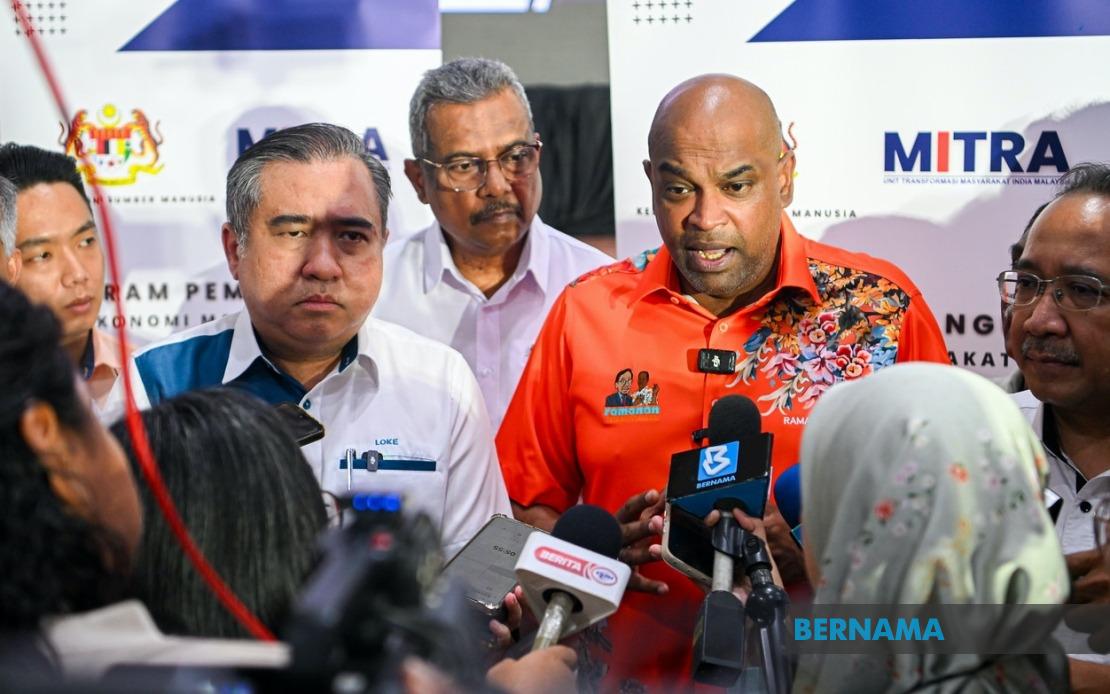
Anthony Loke, secretary-general of the Democratic Action Party, has firmly rebutted recurring allegations that DAP dominates decision-making within Malaysia's federal administration, characterizing such claims as a worn-out political strategy designed to delegitimize Pakatan Harapan. Speaking in Seremban on July 7, the Transport Minister defended the ruling coalition's governance model, which he described as fundamentally collaborative rather than hierarchical in nature.
Loke explained that the cabinet-level decision-making process at both federal and state levels operates through structured consultation among all component parties within the governing coalition. Rather than any single organisation steering policy outcomes, he stressed that governmental resolutions emerge only after representatives from DAP, UMNO, PKR and other partners have been afforded meaningful opportunity to articulate their positions. This inclusive framework, he contended, reflects a mature political arrangement distinct from the zero-sum competition that characterised pre-2018 Malaysian governance.
The minister pointedly questioned whether critics possessed substantive grounds for their assertions or whether they simply retreated to blaming DAP as a convenient rhetorical default. He acknowledged that each coalition component inevitably contributes perspectives during deliberations, noting that UMNO advances its policy preferences and PKR articulates its priorities with equal legitimacy. However, Loke emphasised a critical distinction: whilst all partners hold genuine influence in the consultative phase, ultimate executive authority resides with Prime Minister Datuk Seri Anwar Ibrahim, whose role remains to synthesise competing interests and pronounce final determinations. This concentration of decisive power within the Prime Minister's office, he implied, prevents any subordinate party from wielding disproportionate control over governmental machinery.
Loke extended his defence of collaborative governance to the state level, citing the administrative approach adopted in Negeri Sembilan under Menteri Besar Datuk Seri Aminuddin Harun. He described Aminuddin's practice of seeking input from all coalition constituents before implementing major decisions as consistent with the federal model, suggesting that decentralised consultation has become the default operating procedure across PH-administered jurisdictions. This consistency, he suggested, demonstrates institutional commitment to principles of collective responsibility rather than party-based authoritarianism.
The minister also addressed a subsidiary accusation frequently levelled against the Pakatan Harapan administration: that Malays and their interests face systematic marginalisation under the current dispensation. Loke countered this narrative by noting that Negeri Sembilan remains administered by a Malay Menteri Besar, implicitly suggesting that the mere presence of DAP in coalition structures does not precipitate the displacement of Bumiputera leadership. He pointed to continuity in policies and programmes ostensibly benefiting Malay and Muslim communities since PH assumed control of the state apparatus in 2018, arguing that safeguarding community interests across ethnic lines remains embedded within governmental operations.
Loke's characterisation of threats-to-Malays accusations as recycled political tactics reflects growing frustration within the ruling coalition at what its members perceive as intractable opposition messaging. By describing these claims as "tired narratives" and "the same old tactic," he positioned critics as intellectually exhausted, reliant upon rhetorical tropes rather than substantive critique. This rhetorical move simultaneously signals to PH's base that opponents lack cogent arguments whilst potentially deflating media coverage of such allegations by dismissing them as predictable partisan theatre.
The underlying tension that Loke addressed relates to broader anxieties within Malaysia's multiethnic democracy regarding power-sharing between Bumiputera-dominated parties and non-Bumiputera organisations. The Democratic Action Party, as a predominantly Chinese-majority party, has historically functioned as a lightning rod for concerns among Malay constituencies about dilution of constitutional protections and Bumiputera prerogatives. The presence of DAP within the federal cabinet, therefore, carries symbolic weight exceeding its actual ministerial portfolios, as it represents a departure from the implicit racial hierarchies that governed pre-2018 coalition arrangements. Loke's defence attempts to normalise DAP's role within executive structures whilst maintaining that Bumiputera interests and Malay leadership remain fundamentally secure.
For Malaysian voters and observers in the region, Loke's statements illuminate the delicate equilibrium required to maintain a multiparty coalition spanning divergent ethnic and ideological constituencies. The Pakatan Harapan arrangement, which emerged from the 2018 electoral watershed, represents an experiment in power-sharing that differs substantially from the Barisan Nasional model, which relied upon explicit hierarchical arrangements favouring UMNO and Bumiputera parties. That experiment continues to face resistance from actors invested in the previous order, and Loke's rebuttals, however forcefully articulated, suggest that foundational questions regarding the coalition's legitimacy and governance philosophy remain contested within Malaysian political discourse.
The minister's emphasis on Prime Ministerial decisiveness as the ultimate arbitrating mechanism within the coalition also merits consideration. By positioning Anwar Ibrahim as the final authority whose determinations supersede party-level preferences, Loke seeks to reassure constituencies concerned about DAP influence whilst simultaneously reinforcing the federal government's executive prerogatives against any assertion of party dominance. This framing preserves hierarchical authority within a nominally collegiate structure, a compromise that reflects the inevitable tensions between genuine power-sharing and the practical necessity of decisive executive leadership in complex governance environments.
Loke's intervention contributes to an ongoing debate within Southeast Asian democracies regarding the governance models best suited to multiethnic states. Malaysia's experience with coalition arrangements offers instructive parallels and contrasts with similar arrangements in Thailand, Singapore and Indonesia, where tensions between majority and minority political communities frequently resurface. The question of whether ostensibly equal partners within governing coalitions can genuinely exercise proportional influence, or whether structural inequalities inevitably emerge, remains contested among scholars and practitioners alike. Malaysia's current experiment, with DAP occupying a more prominent role than historically precedented, provides a test case for whether institutional mechanisms can successfully mediate such tensions.

