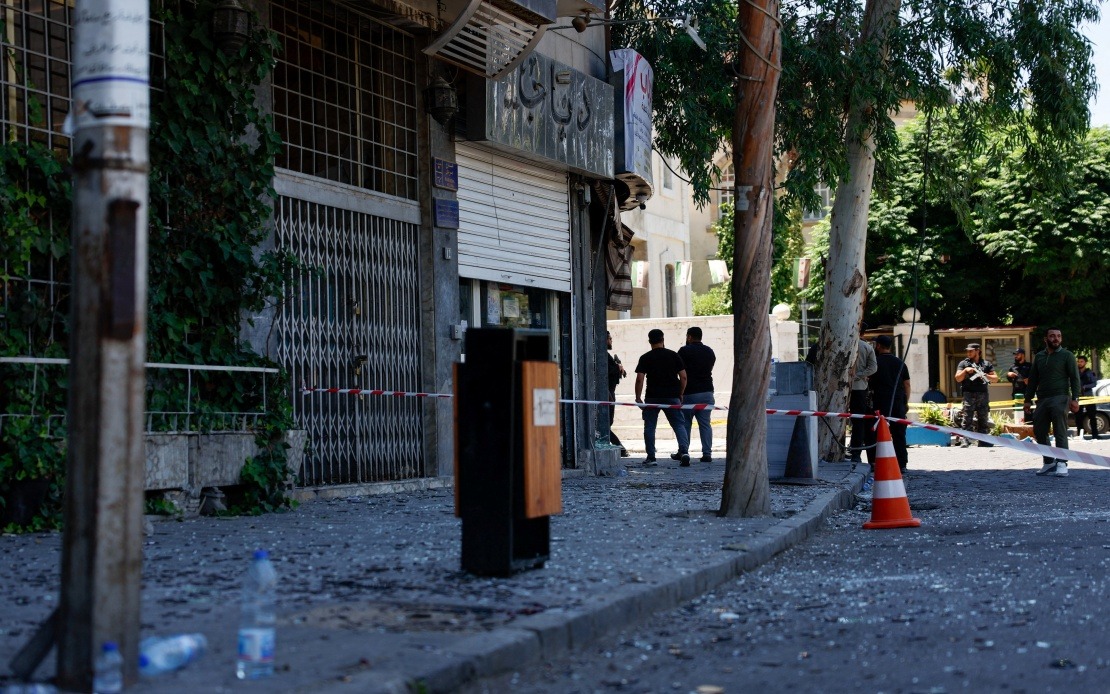
A coordinated bombing attack struck central Damascus on Tuesday afternoon, leaving at least 18 people injured including four members of the security forces, according to Syria's Interior Ministry. The twin explosions, described by international monitors as two separate improvised explosive devices detonated in quick succession, sent shockwaves through the Syrian capital and escalated security concerns surrounding the high-profile visit of French President Emmanuel Macron, who arrived in the country just hours earlier.
The Syrian Observatory for Human Rights, an independent British-based group that monitors developments across Syria, provided eyewitness characterizations of the attack sequence. According to the monitoring organization, an initial blast was followed within seconds by a substantially more powerful second detonation, both occurring in close proximity to the hotel accommodating the visiting French delegation. The rapid succession and coordinated nature of the explosions suggested premeditation rather than a random incident, raising fresh questions about security arrangements during the presidential visit.
Macron's presence in Damascus represents a significant diplomatic shift in European engagement with Syria. The French leader's arrival on Monday evening made him the first European Union head of state to visit the country since 2010, a break with years of European reluctance to engage directly with the Syrian government. This diplomatic opening came amid broader discussions about Syria's international rehabilitation, making the security breach during his visit particularly sensitive for all parties involved. The Élysée Palace in Paris swiftly confirmed that Macron had not been harmed in the explosions, providing reassurance to his government and international observers tracking the visit.
Following the blasts, Macron remained secured at the presidential palace where he was conducting bilateral discussions with Syrian counterparts. According to statements from the French presidency, detailed talks between delegations from both nations continued despite the security incident, suggesting that neither side wished to abandon the diplomatic initiative. This determination to proceed signals the importance both France and Syria attach to re-establishing high-level political dialogue after years of international isolation for Damascus.
Emergency response teams mobilized rapidly following the detonations, with ambulances and emergency personnel rushing to the blast sites to assist the injured. The speed of the emergency services' deployment helped contain casualties to the 18 wounded, though the full extent of injuries remained under assessment in the hours following the attack. Initial reports suggested a range of injury severities, from minor wounds to more serious trauma requiring hospitalization.
Security forces immediately cordoned off the affected areas and launched investigations to determine the perpetrators and their motives. The surrounding neighborhoods were sealed off as military and police personnel secured the perimeter, preventing civilian access and protecting evidence. Such coordinated security responses highlighted the heightened alert status maintained by Syrian authorities during the visit of a major Western leader.
The explosions reverberated through Damascus's civilian population, creating considerable alarm among residents unaccustomed to such incidents in the capital in recent months. The blasts served as a stark reminder of Syria's fragile security situation despite official narratives of stability and normalization. For many Syrians and regional observers, the timing of the attack during a European leader's presence underscored ongoing vulnerabilities and potential opposition to reconciliation efforts.
For Southeast Asian observers, the Damascus bombing carries implications regarding regional stability and diplomatic engagement with countries emerging from conflict. Malaysia and other Association of Southeast Asian Nations members maintain varying relationships with Syria and have interests in understanding how major powers navigate engagement with nations recovering from internal strife. The willingness of France to proceed with high-level diplomacy despite security risks reflects calculations that dialogue serves long-term stability better than continued isolation.
The incident also highlights persistent security challenges facing Syria even as the government asserts control over most of the country. The ability of actors to execute a coordinated bombing near a protected diplomatic delegation suggests either sophisticated anti-government networks or criminal elements capable of sophisticated operations. This technical capability raises questions about intelligence assessments conducted by international partners considering deeper engagement with Damascus.
Macron's visit itself represented a strategic recalibration of European policy toward Syria, signaling potential shifts in how the continent approaches nations recovering from internal conflict. The French president's willingness to visit despite ongoing tensions and security risks indicates a conviction that engagement offers better prospects than continued ostracism. However, the bombing attack complicated this narrative by demonstrating that security improvements remain incomplete and risks to high-level visitors persist.
The injured, including security personnel protecting the diplomatic delegations, required immediate medical attention across Damascus's healthcare facilities. The distribution of casualties among both civilians and uniformed personnel underscored the indiscriminate nature of the bombing attack. Initial casualty figures provided by the Interior Ministry did not specify hospitalization numbers or severity distributions, leaving uncertainties about the full human toll of the explosions.

