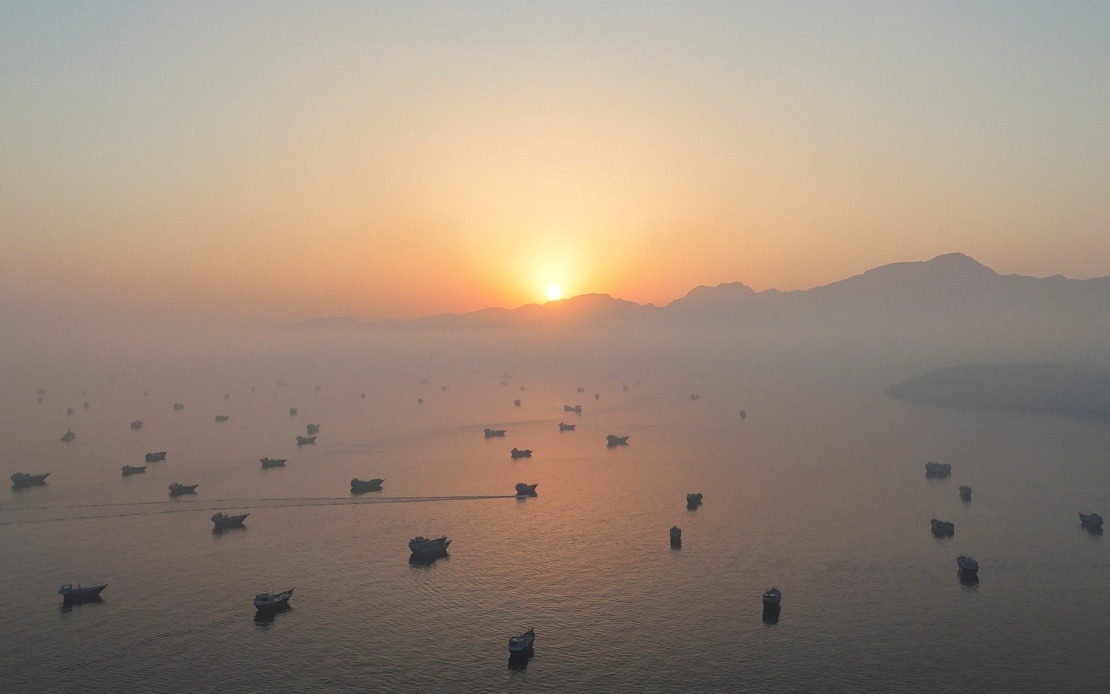
The Comprehensive and Progressive Agreement for Trans-Pacific Partnership, a major regional trade coalition representing 12 economies, has thrown its support behind recent diplomatic moves to ease US-Iran tensions and restore stability in one of the world's most strategically vital waterways. Following a virtual ministerial gathering on Friday, CPTPP members issued a joint statement emphasising their backing for steps aimed at reopening the Strait of Hormuz and guaranteeing safe maritime passage, reflecting deep anxiety across the bloc about the cascading effects of supply chain disruptions on energy trade and broader economic stability.
The 12-member grouping, which includes Australia, Brunei, Canada, Chile, Japan, Malaysia, Mexico, New Zealand, Peru, Singapore, the United Kingdom and Vietnam, framed its position around a stark economic reality: any prolonged interference with shipping through the Hormuz Strait threatens the lifeblood of modern industrial economies. The ministers singled out the critical importance of uninterrupted flows of crude oil, refined petroleum products such as diesel, liquefied natural gas, petrochemical derivatives and essential fertiliser shipments that transit the waterway en route to markets across Asia, Europe and beyond.
For Malaysia and other Southeast Asian nations dependent on Middle Eastern energy imports, the stakes are particularly high. The Strait of Hormuz remains the chokepoint through which roughly one-third of global maritime trade in crude oil passes annually, making any prolonged closure or instability an existential threat to the region's energy security and manufacturing competitiveness. Malaysian manufacturers, refineries and power plants have absorbed elevated costs during periods of heightened tension in the region, and the CPTPP ministers' explicit commitment to restoring normal operations signals an effort to prevent further economic damage.
The statement underscores a shared commitment to defending what the bloc terms the principles of open and secure sea lanes, freedom of navigation, and safe transit passage guaranteed under international maritime law. Ministers specifically referenced the United Nations Convention on the Law of the Sea (UNCLOS), the cornerstone treaty governing maritime rights and responsibilities globally, as the legal framework underpinning their position. This invocation of UNCLOS carries symbolic weight in Southeast Asia, where territorial disputes and freedom of navigation concerns have long shaped regional geopolitics and trade policy.
Beyond the immediate imperative to secure Hormuz, the CPTPP statement reflects a broader ideological commitment to market-driven energy trade unencumbered by geopolitical manipulation. The ministers explicitly reaffirmed their determination to maintain free and open markets for energy and other affected commodities, characterising such openness as foundational to economic security and national prosperity. They further pledged not to resort to trade-restrictive measures on energy products and called on other nations to exercise similar restraint, implicitly cautioning against unilateral sanctions or trade weaponisation that might destabilise markets.
The bloc also acknowledged growing momentum behind regional initiatives designed to strengthen energy supply chain resilience, particularly the Partnership On Wide Energy and Resources Resilience Asia (POWERR Asia). This emerging framework seeks to deepen coordination between energy-producing and energy-consuming nations, fostering diversification and reducing over-reliance on any single supplier or route. For import-dependent Southeast Asian economies, such initiatives offer pathways to insulate themselves from future supply shocks by developing more balanced sourcing arrangements and investing in alternative energy infrastructure.
A notable concern raised in the ministerial statement centres on the vulnerability of small-island developing states, particularly those in the Pacific rim, which lack geographical diversity in energy sourcing and face elevated costs and logistical challenges in securing reliable supplies. The CPTPP's acknowledgement of these vulnerabilities signals recognition that energy security cannot be treated as a uniform challenge; smaller and more geographically isolated economies require tailored support and cooperative mechanisms. This has implications for Pacific island nations within the grouping and underscores the interconnected nature of energy security across the Indo-Pacific region.
The statement's emphasis on trade diversification as a tool for reducing vulnerability speaks to a broader strategic lesson from recent global disruptions. Supply chain fragmentation during the pandemic, combined with geopolitical tensions and port congestion, has prompted policymakers across CPTPP to reassess overdependence on single sources or routes. Malaysia, as a diversified trading economy with stakes in energy, manufacturing and logistics, stands to benefit from such diversification efforts, provided they remain consistent with rules-based trade principles and do not devolve into protectionism.
Crucially, the ministers reframed their collective position not as a partisan intervention in bilateral disputes but as a pragmatic response to genuine economic disruption. By grounding their support for the US-Iran agreement in the language of supply chain resilience and rules-based order, CPTPP sought to present its stance as economically rational rather than politically motivated. This framing matters for members like Malaysia and Vietnam, which maintain complex diplomatic relationships across multiple global powers and seek to avoid entanglement in great-power rivalries.
The virtual format of the ministerial meeting itself reflects post-pandemic norms in international economic governance, though it also signals that despite geographic dispersion, these 12 economies view their shared commercial interests as sufficiently compelling to warrant coordinated action. The breadth of the coalition—spanning North America, Latin America, Asia-Pacific and Europe—gives considerable heft to the statement and suggests alignment among otherwise diverse trading partners on energy security as a priority.
Looking forward, the CPTPP's backing for a reopened and stable Hormuz Strait creates political capital for supporting the US-Iran agreement and provides diplomatic cover for member nations that might otherwise face pressure to take sides in regional conflicts. For Southeast Asian members, this collective stance offers insulation from direct confrontation over Middle Eastern affairs while simultaneously affirming the principle that maritime trade routes must remain inviolable and free from disruption. The ministers' reaffirmation of their commitment to addressing supply chain disruptions collectively demonstrates that even as geopolitical tensions persist globally, economic interdependence and shared vulnerability can generate multilateral consensus around pragmatic solutions.

