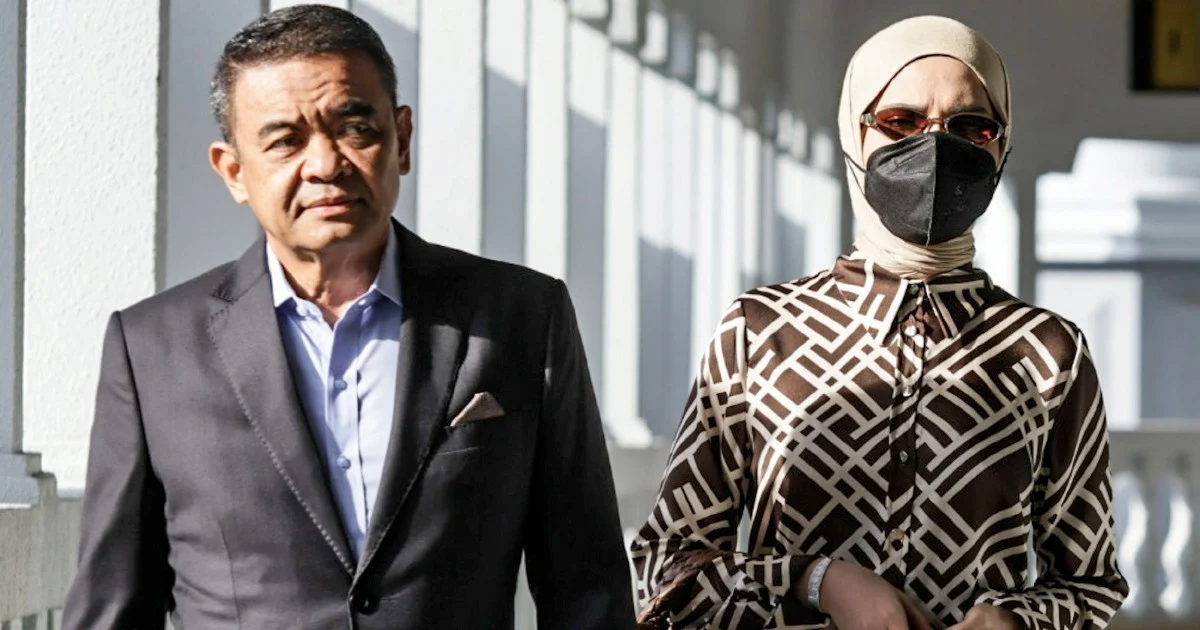
A Malaysian court has ruled that 23 Rolex watches and 15 pieces of jewellery seized by the Malaysian Anti-Corruption Commission must be transferred to state ownership. The high-value items were recovered during an investigation connected to the sister-in-law of General (Rtd) Tan Sri Muhammad Hafizuddeain Jantan, who formerly commanded the Malaysian Armed Forces.
The forfeiture decision marks a significant outcome in the MACC's ongoing efforts to identify and recover assets suspected of being acquired through irregular means. Such cases typically involve financial investigations that examine the lifestyle and spending patterns of individuals connected to those holding positions of public trust and authority. The recovery of luxury goods—particularly branded timepieces worth thousands of ringgit each—underscores the commission's focus on tracing tangible wealth that may indicate unexplained sources of income.
Rolex watches represent one of the most recognizable luxury brands globally, with individual pieces often commanding prices between RM15,000 and RM100,000 or more depending on the model and condition. The seizure of 23 such watches suggests a pattern of significant expenditure that prompted closer scrutiny by anti-corruption authorities. Jewellery items, similarly, indicate substantial purchasing power and lifestyle choices that warrant investigation when held by individuals whose declared income may not readily justify such acquisitions.
The involvement of a family member rather than the retired general himself reflects the MACC's increasingly sophisticated approach to asset tracing. International experience shows that high-ranking officials often distribute valuable items among trusted relatives to shield assets from scrutiny or complicate recovery efforts. Malaysian anti-corruption authorities have grown more adept at following financial and material chains through family networks, understanding that wealth can be concealed across multiple individuals with varying degrees of direct involvement in alleged misconduct.
This case occurs within a broader context of Malaysia's anti-corruption initiatives, which have expanded significantly in recent years. The MACC operates under increasing public and political pressure to demonstrate effectiveness in recovering state assets and holding the connected and powerful accountable. Court-ordered forfeitures provide tangible evidence of successful investigations and reinforce public confidence in the institution's capability to penetrate layers of concealment that sophisticated wealth-hiding schemes typically employ.
The timing and nature of such recoveries carry symbolic weight in Malaysia's ongoing governance narrative. The retirement status of the individual in question—and the focus on his family rather than himself—raises questions about the period during which these purchases occurred. If acquisitions took place during his tenure in active military service, they become particularly relevant to public interest discussions about whether such luxury consumption reflected appropriate alignment between official responsibilities and personal conduct standards.
Forfeited assets typically enter government coffers through the Consolidated Fund or designated recovery accounts. The proceeds from selling seized items occasionally support law enforcement operations, social programmes, or contribute to general revenue. Malaysia has experimented with various mechanisms for deploying recovered assets, balancing the need for transparent use of state resources with administrative efficiency in liquidating specialized goods like luxury watches.
The judicial approval of forfeiture represents a critical stage in anti-corruption proceedings. Courts must be satisfied that seized items are properly connected to suspected misconduct and that procedures followed during seizure met legal standards. This judgment therefore signals that investigators presented sufficient evidence to convince the judiciary that the luxury goods were appropriately recovered and should not be returned to previous custodianship.
For Malaysia's broader anti-corruption ecosystem, such cases demonstrate the mechanics of recovery work beyond prosecution and conviction. The system now increasingly recognizes that financial penalties and asset forfeiture—operating independently of criminal outcomes—represent legitimate tools for remedying public losses. This approach acknowledges that some wrongdoing may be difficult to prosecute in court yet still warrants state action to recover benefits obtained through questionable means.
The case also reflects evolving international norms around asset recovery and proceeds of crime. Malaysia participates in regional and global frameworks that coordinate asset tracing across borders and facilitate return of misappropriated wealth to rightful owners—typically the state treasury. Domestic cases involving luxury goods seized from connected individuals reinforce compliance with these international standards and demonstrate Malaysia's commitment to meeting anti-corruption benchmarks expected by overseas partners and trading nations.
Further implications emerge regarding public sector integrity standards in Malaysia's military establishment. The case indirectly raises questions about wealth accumulation patterns among high-ranking defence officials and families, topics that remain sensitive given the Armed Forces' institutional prominence. How military leadership addresses such matters internally, and whether existing oversight mechanisms adequately monitor personal enrichment of serving and retired officers, will likely face renewed scrutiny in political and policy discussions.

