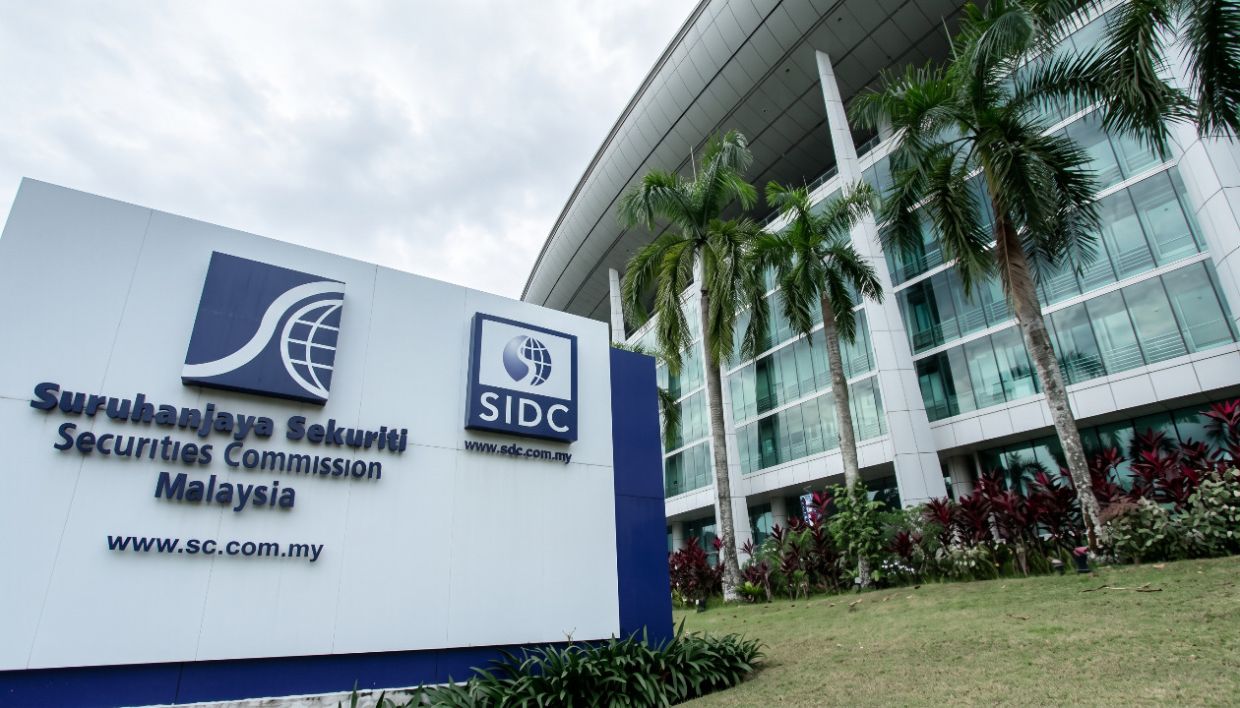
The Court of Appeal has rejected attempts by businessman Wong Shee Kai, known as Ricky Wong, along with associates Teh Sew Wan and their company Wong SK Holdings Sdn Bhd, to overturn a substantial asset freeze ordered by the High Court. The three-member appellate bench, presided over by Justices Datuk Ravinthran N. Paramaguru, Datuk Dr Choo Kah Sing and Datuk Leonard David Shim, upheld the injunction freezing approximately RM169.2mil in assets and properties on Monday. The Securities Commission Malaysia (SC) announced the decision following what has become an extended legal battle spanning more than four years, signalling the regulator's determination to preserve assets in the case while civil proceedings continue.
The original ex parte injunction, granted by the High Court on May 8, 2020, was reinforced when the court issued a formal inter partes injunction on April 28, 2022, providing all parties an opportunity to present their arguments. This distinction is important in Malaysian civil procedure: the first injunction was obtained without Wong's presence, while the second was granted after both sides had their day in court. The appellants' decision to challenge both injunctions at the appellate level therefore represented a substantial escalation of their legal costs and commitment to fighting the freeze. The Court of Appeal's rejection of their petition eliminates a significant avenue through which they might have accessed their frozen funds.
Beyond the financial restraint imposed, the injunction carries profound practical implications. The order explicitly prohibits any person, entity, or organisation from knowingly assisting in or permitting any transactions or dealings involving the frozen assets and properties. This sweeping language means that banks, brokers, lawyers, accountants, and other intermediaries face potential liability if they facilitate any movement of these assets, effectively creating a compliance burden across Malaysia's financial system. For Wong and his co-appellants, this restriction transforms the frozen assets from inaccessible holdings into complete lockdowns, preventing even routine management or routine transactions.
The underlying civil suit, initiated by the SC in 2020, alleges serious violations under Section 179 of the Capital Markets and Services Act 2007, relating to securities fraud. The regulator has not publicly detailed the specific allegations in detail, but the quantum of the freeze suggests allegations of substantial misconduct or misappropriation within Malaysia's securities markets. The case carries significance beyond individual accountability, as it demonstrates the SC's capacity and willingness to pursue civil remedies to protect market integrity and investor interests. The ongoing trial, scheduled to resume on September 1, 2026, indicates that the litigation remains in relatively early phases despite the case originating in 2020, reflecting the complexity and volume of evidence involved.
Wong's status has further complicated matters. He remains at large and has not appeared in the proceedings, suggesting he may be outside Malaysia. This absence adds an international dimension to the case, as locating him and enforcing any eventual judgment will require coordination across borders. Additionally, the SC has indicated that Wong is wanted in connection with criminal charges under the Anti-Money Laundering, Anti-Terrorism Financing and Proceeds of Unlawful Activities Act 2001, as well as further charges under the CMSA. These parallel criminal proceedings suggest that his alleged conduct may have extended beyond securities violations into money laundering concerns, a far more serious category of financial crime that attracts severe penalties in Malaysia and internationally.
The Court of Appeal's decision also ordered the appellants to pay RM200,000 in costs to the SC, a judgment that serves multiple purposes. Beyond compensating the regulator for its legal expenses, the costs order signals judicial disapproval of what the court likely viewed as frivolous or unmeritorious appeals. This financial penalty, combined with the legal representation costs already incurred, compounds the financial burden on the appellants and may constrain their ability to pursue further litigation strategies. The composition of the legal teams involved indicates the case's gravity: the SC deployed its internal counsel alongside appointed external counsel from prominent law firms, while the appellants instructed high-profile senior advocates including Tan Sri Muhammad Shafee Abdullah and Tan Sri Cecil W. M. Abraham.
For Malaysian investors and market participants, this ruling underscores the regulatory and judicial commitment to protecting the integrity of securities markets. The SC's ability to freeze substantial assets and maintain that freeze through appellate challenges demonstrates that the regulator possesses effective tools to prevent asset dissipation during investigations and civil proceedings. This capability is crucial in white-collar cases, where sophisticated perpetrators might otherwise relocate or conceal funds while litigation proceeds. The ruling also sets precedent regarding the threshold for maintaining asset freezes on appeal: the judges found sufficient cause to uphold the injunctions despite the appellants' substantive arguments, suggesting high barriers exist for unfreezing assets mid-litigation.
The case also reflects broader trends in Malaysian regulatory enforcement over the past decade. The SC has increasingly pursued civil actions in tandem with criminal prosecutions, recognising that civil remedies can achieve results where criminal convictions prove difficult or time-consuming to obtain. The availability of both tracks provides flexibility and creates multiple pressure points encouraging settlement or disclosure. Wong's apparent absconding, however, complicates enforcement regardless of which track succeeds. If the SC ultimately prevails in the civil suit, executing a judgment against a defendant outside Malaysia requires recognition by foreign courts, treaties, and cooperation mechanisms that may prove inadequate in jurisdictions lacking strong bilateral arrangements with Malaysia.
The SC's public appeal for information regarding Wong's whereabouts represents a final dimension of the case's evolution. By enlisting public assistance, the regulator acknowledges that traditional law enforcement channels may have limitations and that financial incentives or public pressure might yield leads. This approach, while commonplace in criminal investigations, is less frequently employed in civil regulatory cases, suggesting authorities regard Wong's location as a genuine impediment to case resolution. For Malaysian citizens or expatriates who may possess information, the request creates a civic pathway to participate in addressing financial crime, though the absence of specific rewards or assurances may limit the appeal.
Looking ahead, the case trajectory appears settled for the near term. With the appellate avenue closed and the trial resuming in September 2026, the focus will shift entirely to the substantive civil merits. The SC must prove its allegations regarding securities fraud contraventions, while the appellants will mount whatever defence circumstances permit given Wong's absence. The extended trial schedule suggests the parties have voluminous documentary and testimony evidence to address. Whether the case will ultimately proceed in Wong's absence, and how any judgment might be enforced if he remains outside Malaysia, are questions that may only resolve as the trial progresses and its complexities become apparent.

