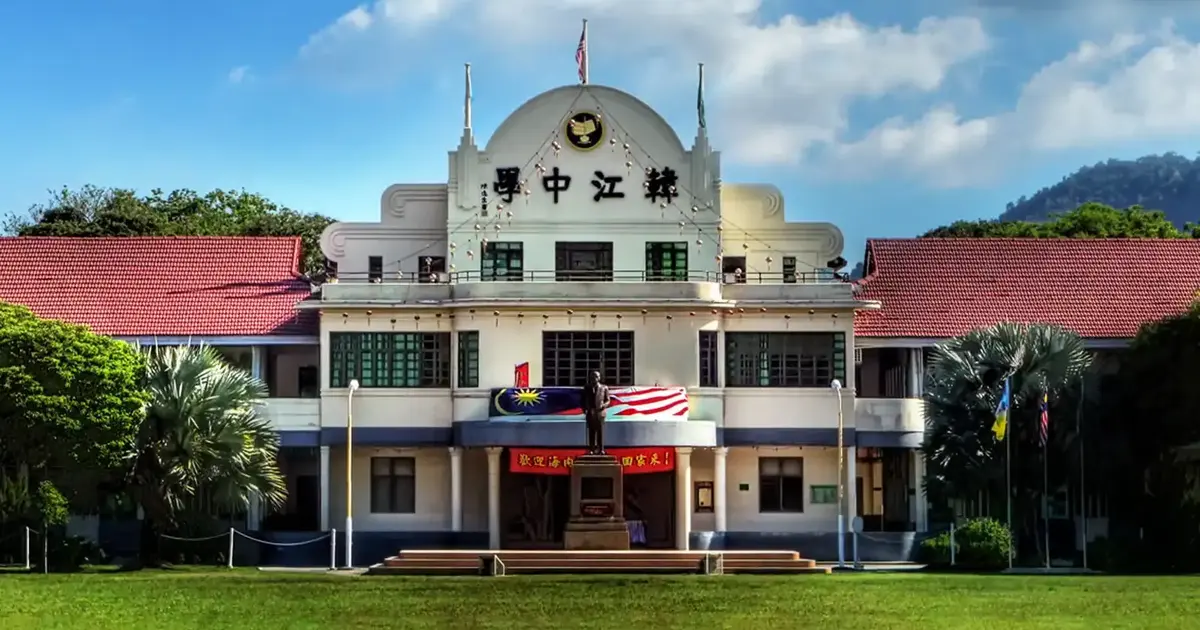
A significant procedural victory has unfolded in the long-running dispute over Han Chiang School's land holdings, as the Court of Appeal has resurrected a lawsuit that had been dismissed in lower proceedings. The appellate tribunal determined that Lim Boon Lin, serving as the school's sole trustee, possesses the legal standing to pursue claims of breach of charitable trust without first obtaining formal authorization from the attorney-general—a ruling that fundamentally reshapes the litigation landscape surrounding the institution's property matters.
The case centres on allegations that the terms governing the school's charitable trust have been violated, a claim that hinges on the trustee's capacity to bring proceedings independently. The lower court had apparently taken the position that constitutional and statutory provisions requiring attorney-general consent applied to such actions, effectively blocking the lawsuit at an early stage. This interpretation would have created a significant barrier for charitable institutions seeking to protect their assets through the courts, placing gatekeeping authority firmly in the hands of the state's chief legal officer.
The Court of Appeal's decision rejects this restrictive reading of the law. By concluding that a charitable trust's trustee may initiate litigation without such governmental approval, the court has affirmed important principles regarding the autonomy and self-governance of private charitable institutions. This distinction is crucial because it acknowledges that trustees have fiduciary duties directly to the trust and its beneficiaries—in this context, the school and its stakeholders—rather than to the state apparatus, even in matters touching on charitable purposes.
For Han Chiang School specifically, the ruling offers a pathway to pursue its property claims through the judicial system. The school, which has a significant history within Malaysia's Chinese-language educational ecosystem, now has the practical ability to seek remedies if indeed a breach of trust has occurred. The restoration of this right is particularly important given the complexities that often attend long-standing property disputes within institutional contexts, where multiple parties may hold different understandings of rights and obligations.
The procedural question resolved here has implications extending beyond this single school. Chinese-language educational institutions occupy a distinctive place in Malaysia's multicultural landscape, with deep roots in community life and often complex governance structures that developed over decades. The ruling clarifies that these institutions retain meaningful legal recourse when their property interests or trust obligations are called into question, without having to navigate an additional layer of state administrative approval that might introduce inconsistent or extraneous considerations into what are fundamentally private dispute resolution matters.
Lim Boon Lin's position as sole trustee carries substantial responsibility under this judgment. The court has effectively confirmed that he may exercise the trust's legal powers—including the power to sue—based on his assessment that doing so serves the trust's interests and purposes. This places considerable weight on the trustee's judgment and fiduciary obligations, making the trusteeship role a consequential one in institutional governance. Any such decision would presumably be subject to standard judicial review if challenged as being undertaken in bad faith or contrary to the trust's purposes.
The attorney-general, by contrast, will no longer serve as a mandatory checkpoint for charitable trust litigation of this type. While the state retains certain supervisory interests in charitable matters through various regulatory frameworks, this decision respects the boundary between public regulation and private dispute resolution. The ruling suggests that courts view such gatekeeping requirements with some skepticism when applied to trustees acting within their legitimate scope of authority to protect charitable assets.
The substantive merits of the Han Chiang School dispute—what the alleged breach actually comprises and whether it can be proven—remain to be litigated now that procedural obstacles have been cleared. The case will proceed on the underlying factual and legal questions concerning what obligations bind the relevant parties and whether those obligations have been fulfilled. This next phase of litigation will be critical in determining the ultimate fate of the school's property claims.
For Malaysian legal observers, the decision contributes to a growing body of jurisprudence surrounding charitable law and institutional governance. Courts increasingly recognize that rigid administrative preconditions can paradoxically weaken the protection of charitable assets by creating delays and uncertainty. By permitting trustee-initiated litigation to proceed directly, the Court of Appeal has struck a balance that preserves meaningful judicial oversight while respecting institutional independence.
The ruling also reflects broader questions about how Malaysia's legal system accommodates the governance of community institutions with long histories and significant social roles. Educational organizations, particularly those rooted in specific linguistic and cultural communities, often occupy important niches within Malaysian society. Ensuring they have practical access to legal remedies when property disputes arise reinforces the stability and continuity that such institutions require to serve their constituencies effectively.
The path forward for Han Chiang School now involves marshalling evidence and legal arguments to establish whether the trustee's allegations of breach can be substantiated. The Court of Appeal's decision removes a procedural impediment but does not prejudge the substantive outcome. Depending on how the litigation develops, this case may yield additional clarification on what duties bind trustees of charitable educational institutions and how courts assess compliance with those duties in the Malaysian context.

