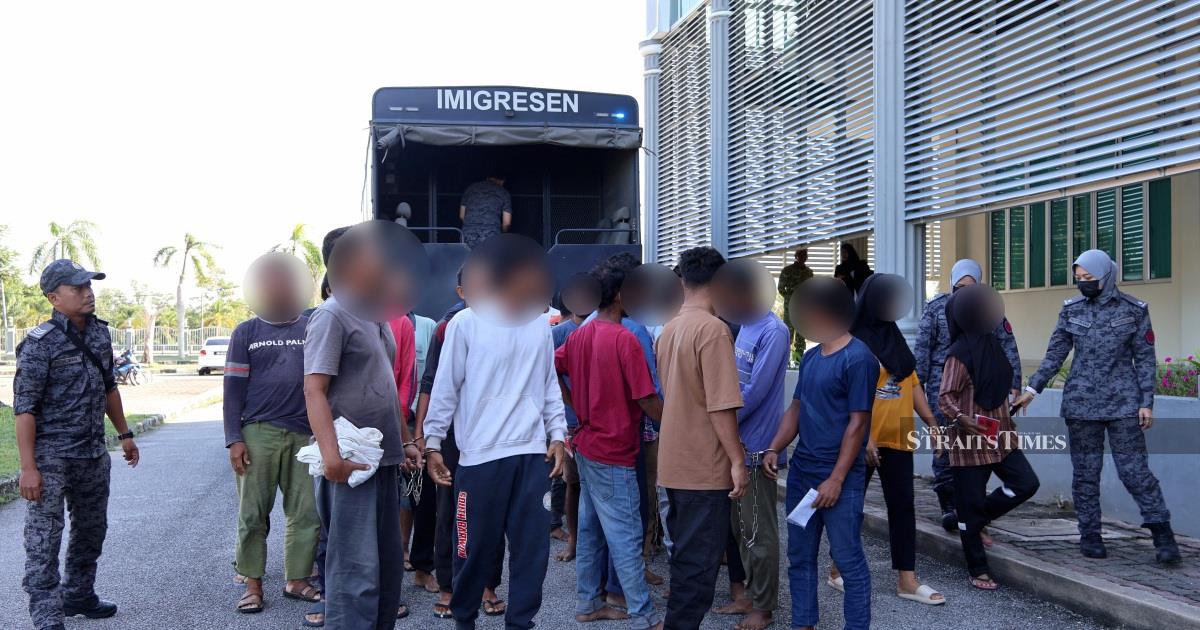
The Sessions Court in Pasir Mas handed down penalties to 29 undocumented migrants on charges related to illegal immigration, with fines spanning between RM1,000 and RM10,000 for those who admitted their culpability. The court proceedings concluded after each individual entered guilty pleas to multiple violations of Malaysia's immigration statutes, marking a significant enforcement action in the northern state of Kelantan.
Those convicted faced accusations encompassing three primary categories of immigration breaches: unlawful entry into Malaysian territory, remaining in the country beyond the validity of their permits, and the misapplication of travel documentation. The graduated penalty structure reflected the varying severity of offences and individual circumstances brought before the bench, with the highest fines reserved for the most serious transgressions. This differentiated approach demonstrates the court's consideration of factors such as duration of illegal residence and intent behind document misuse.
The cases heard in Pasir Mas underscore an ongoing challenge facing Malaysian immigration authorities across the nation's borders. Kelantan's geographic position along the Thailand-Malaysia frontier makes it a persistent flashpoint for undocumented movement, with enforcement agencies regularly conducting operations to intercept and process irregular migrants. The state has experienced steady flows of undocumented individuals seeking employment or transit through Southeast Asia, compounding administrative burdens on local immigration enforcement units.
Illegal immigration carries significant implications for Malaysia's labour market, public health infrastructure, and social services. Undocumented workers often operate outside regulatory frameworks, undercutting wage standards for legitimate employees and depriving the government of tax revenue and social contributions. Beyond economic considerations, overstaying migrants may access public healthcare and education systems without formal registration, straining resources intended for citizens and documented residents. The security dimension also warrants attention, as unvetted individuals present potential risks that proper screening mechanisms could mitigate.
The sentencing outcomes in Pasir Mas reflect judicial interpretation of immigration law severity. Monetary penalties serve dual purposes within Malaysia's enforcement strategy: they function as deterrents to prospective offenders whilst simultaneously generating revenue allocated to immigration enforcement programmes. The financial burden imposed by courts encourages migrants to comply with legal entry procedures and departure deadlines rather than risk substantial out-of-pocket expenses. However, enforcement remains reactive rather than preventative, addressing violations after they occur rather than preventing irregular movement at borders.
Pass misuse represents a particularly concerning violation category, as fraudulent or improperly used documentation creates administrative complications and security vulnerabilities. Individuals acquiring or employing falsified permits disrupt the integrity of Malaysia's immigration control architecture, potentially facilitating organised smuggling networks. The inclusion of pass violations within the convictions suggests authorities encountered sophisticated document fraud beyond simple administrative oversight, warranting judicial attention proportionate to the systematic nature of such breaches.
For Malaysian employers and industries reliant on foreign labour, these enforcement actions reinforce the necessity of engaging workers through authorised channels and maintaining proper documentation. Businesses employing undocumented workers face their own legal jeopardy and should recognise court actions like those in Pasir Mas as indicators of intensifying compliance scrutiny. The cumulative effect of individual worker prosecutions aims to establish systemic compliance, making irregular employment arrangements economically unfeasible for employers.
Regional context matters considerably for understanding these enforcement priorities. Southeast Asia confronts complex migration dynamics spanning economic disparity, armed conflict, natural disasters, and human trafficking networks. Malaysia, as a wealthier nation within the region, experiences persistent migration pressure from neighbouring jurisdictions including Myanmar, Thailand, Bangladesh, and Indonesia. Undocumented entry typically routes through northern border states like Kelantan before migrants establish themselves in urban employment centres or manufacturing hubs throughout the peninsula and Sabah.
The Pasir Mas proceedings occurred within Malaysia's broader legal framework governing immigration, codified primarily through the Immigration Act and supplemented by various ministerial directives addressing contemporary challenges. Courts applying these statutes balance deterrence objectives against humanitarian considerations, recognising that many convicted migrants fled economic hardship or conflict conditions in origin countries. Nonetheless, judicial consistency in imposing substantial penalties aims to establish clear expectations regarding Malaysia's immigration compliance requirements.
Government agencies responsible for immigration enforcement face resource constraints limiting their capacity for comprehensive border monitoring and interior policing operations. The conviction of 29 individuals likely represents successful prosecutions from a larger pool of apprehended migrants, suggesting enforcement capacity remains strained relative to irregular migration volumes. Expanding technological infrastructure, personnel training, and cross-border cooperation agreements could enhance Malaysia's ability to process immigration violations swiftly whilst maintaining due process standards.
Future policy considerations may encompass bilateral agreements addressing root causes of irregular migration within origin countries, development assistance initiatives, and regulated labour migration pathways expanding legitimate employment opportunities. These prospective measures would complement enforcement actions like those in Pasir Mas by addressing both supply-side drivers of irregular movement and demand-side factors attracting migrants to Malaysian employment markets. Comprehensive approaches combining deterrence, border security, and managed migration channels offer more sustainable outcomes than enforcement alone.

