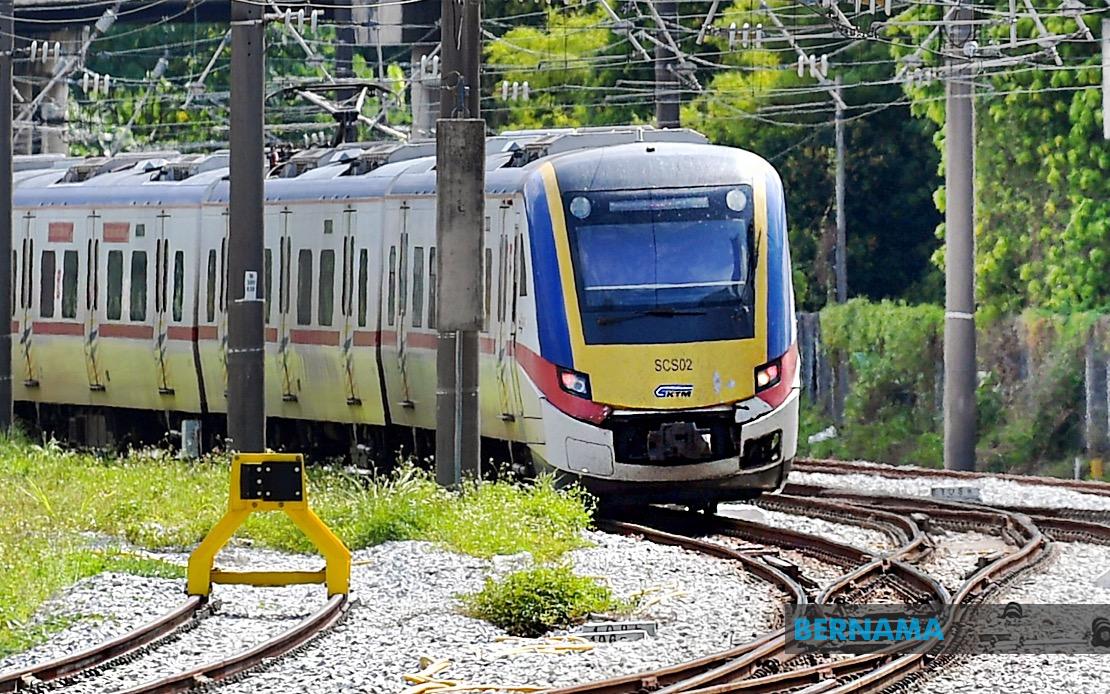
A construction mishap on July 23 brought commuter rail services to a standstill across Malaysia's busiest transport corridor when a wooden structure fell from a third-party work site and struck the overhead power infrastructure near Batang Benar. The incident immediately disrupted operations on both the KTM Komuter Klang Valley line and the Electric Train Service (ETS), leaving thousands of passengers stranded and highlighting critical gaps in construction site safety oversight on railway reserves.
Keretapi Tanah Melayu Berhad (KTMB) confirmed that the fallen structure damaged the overhead line system operating between Batang Benar and Labu stations, rendering the vital electrified corridor inoperable. The damage cut power to the entire affected section, forcing the operator to implement emergency service modifications. KTM Komuter services originating from Pulau Sebang and bound for KL Sentral were redirected to terminate at Seremban Station, while northbound services to KL Sentral or Batu Caves could only depart from Bangi Station. The suspension created a 26-kilometre gap in normal service, effectively isolating the Seremban to Bangi segment entirely.
The operational disruption revealed the cascading logistical challenges inherent in Malaysia's integrated rail network. With no direct Komuter service available, stranded passengers faced lengthy delays as they waited for alternative transport arrangements. KTMB responded by deploying three dedicated shuttle buses circulating between Seremban, Tiroi, Batang Benar, Labu and Bangi stations to maintain some form of ground connectivity. Recognising the broader regional impact, the operator arranged an additional seven shuttle buses at major interchange hubs including KL Sentral, Bandar Tasik Selatan, Kajang and Seremban to accommodate ETS passengers unable or unwilling to complete their journeys. For ETS travellers particularly, the carrier offered full refunds for those choosing to abandon travel plans, an expensive concession that underscores the severity of the disruption.
The investigation into the root cause quickly identified serious lapses in contractor compliance with railway safety protocols. KTMB's preliminary findings indicated that the Public Works Department (JKR) contractor executing wayleave project activities had systematically failed to observe mandatory safety procedures governing work on railway reserves. Most significantly, the contractor had not furnished a comprehensive work schedule before commencing operations, a fundamental requirement for any activity in close proximity to live electrified infrastructure. The operator stated that the contractor had additionally failed to provide advance notification of the precise timing for bridge construction work scheduled that day, preventing KTMB from coordinating adequate on-site supervision.
This lapse directly violated KTMB's Site Entry Permit Standard Operating Procedure, which mandates the presence of three specialised technical representatives from the railway operator whenever full project approval has been granted and complete documentation submitted. These representatives, drawn from the Regional Engineer, Signalling and Communications, and Electrification divisions, are required to provide continuous on-site monitoring to identify hazards and enforce compliance. The absence of such oversight appears to have been directly causal in the incident, as the contractor proceeded with bridge work without the safety checks these specialists would have imposed. The regulatory framework exists specifically to prevent such accidents, yet appears to have been circumvented either through contractor negligence or insufficient enforcement mechanisms.
For Malaysian commuters and the broader transport sector, the incident underscores persistent vulnerabilities in construction project governance on critical infrastructure corridors. The Klang Valley rail network carries approximately one million passengers daily across KTM Komuter and ETS services, making it among Southeast Asia's most heavily utilised transport arteries. Any disruption reverberates through the entire region's mobility ecosystem, affecting not only individual travellers but also businesses dependent on reliable workforce commuting and time-sensitive cargo movements. The fact that a third-party contractor could circumvent safety protocols with apparent ease raises questions about the adequacy of current enforcement and the allocation of monitoring resources.
The recovery timeline remained uncertain as KTMB's technical teams mobilised to repair the damaged overhead line system. The railway operator apologised for the inconvenience and reiterated that passenger and operational safety remained paramount institutional priorities. The diplomatic language conceals the reality that this incident represented a failure of those very priorities, as inadequate supervision allowed dangerous conditions to develop. Passengers were directed to monitor KTMB's official social media channels and consult station personnel for service restoration updates, as the operator refrained from committing to specific recovery schedules pending detailed damage assessment.
The incident also raises uncomfortable questions about accountability frameworks governing contractors working on railway reserves. The Public Works Department contractor responsible for the wayleave project faced potential sanctions, yet KTMB's statement contained no indication of immediate enforcement action or compensation mechanisms for affected commuters. Whether contractual penalty clauses would apply remained unclear, as did the process for recovering costs associated with shuttle bus operations and revenue lost during the service suspension. Malaysian regulatory practice often results in post-incident investigations that eventually conclude with bureaucratic recommendations rather than visible deterrent consequences, potentially emboldening future contractor non-compliance.
Looking forward, this disruption illustrates why Malaysia's planned expansion of rail infrastructure nationwide demands rigorous attention to construction project management and oversight protocols. As the government pursues ambitious rail megaprojects including extensions to existing networks and new dedicated corridors, construction activities will proliferate across operational railway reserves. Each represents an accident waiting to happen if supervision standards remain inadequate. The lesson from Batang Benar is that formal Standard Operating Procedures mean little without consistent enforcement and the resource allocation to sustain meaningful on-site monitoring. KTMB must use this incident as a catalyst to strengthen contractor vetting, increase penalty provisions for non-compliance, and ensure adequate staffing of technical monitoring teams.
For the immediate term, shuttle bus operations provide essential interim relief but cannot replicate the efficiency and capacity of electrified rail. Morning and evening peak periods will likely experience significant congestion as passengers experiment with alternative routing or simply defer travel. Businesses dependent on predictable commuter arrivals may face productivity disruptions, while the incident underscores broader concerns about infrastructure resilience in an increasingly climate-stressed environment where unexpected events like this may become more frequent. As recovery efforts proceed and investigations conclude, the real measure of institutional learning will be whether systemic changes emerge to prevent recurrence, or whether Batang Benar becomes simply another forgotten disruption in Malaysia's long history of transport mishaps.

