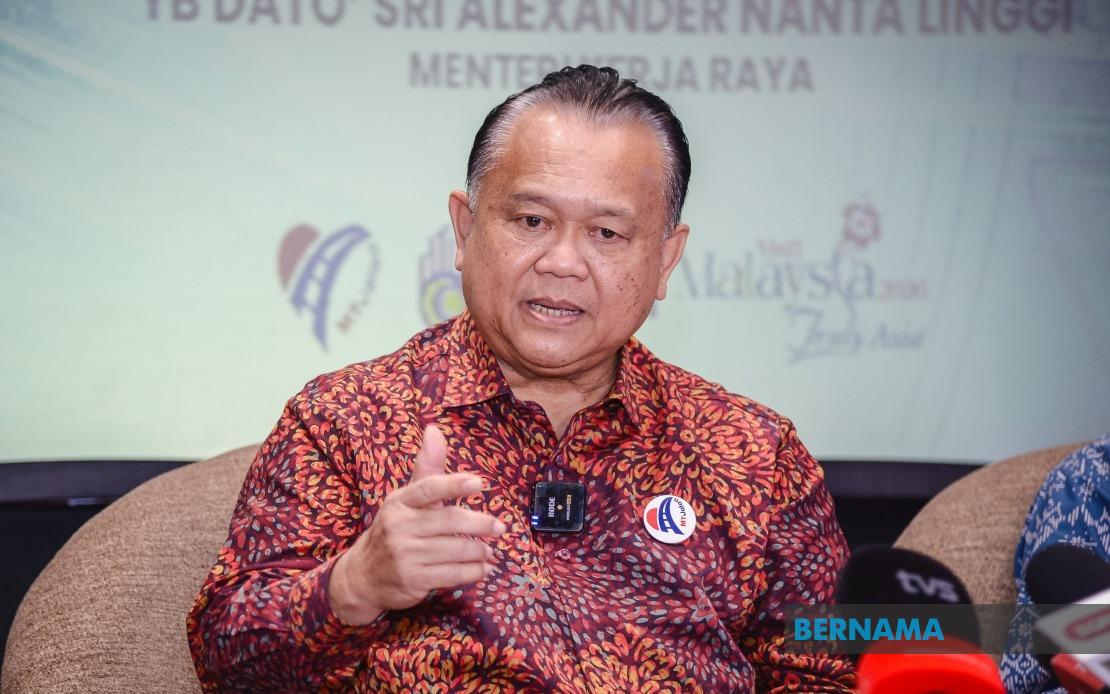
The Works Ministry (KKR) is now weighing 30 strategic priority submissions from the construction sector as it prepares Malaysia's Budget 2027, with industry players seeking enhanced backing for technology adoption, workforce development and improved business competitiveness. Minister Datuk Seri Alexander Nanta Linggi outlined the ministry's plan to evaluate these wishlists against the MADANI Economy framework, which emphasises generating substantial growth while safeguarding the health of Malaysia's construction ecosystem. The comprehensive feedback reflects industry concerns about operational efficiency, cost pressures and the need for structural support as the sector navigates economic headwinds.
At an Industry Dialogue session held in Putrajaya, Nanta unveiled five transformation pillars that will guide the ministry's Budget 2027 recommendations. Strengthening national road networks and delivering high-impact infrastructure projects form the foundation of this agenda. Beyond physical infrastructure, the ministry has prioritized sustainable development aligned with Malaysia's energy transition commitments, recognising that environmental responsibility and economic growth are no longer separate objectives but intertwined imperatives for a modernising nation.
Digitalisation emerges as a critical enabler across KKR's transformation strategy. The ministry is championing Building Information Modelling, the Internet of Things and artificial intelligence adoption to enhance construction efficiency, reduce waste and accelerate project delivery. This technological push reflects global trends reshaping the sector, positioning Malaysian firms to compete beyond traditional cost-cutting approaches. Equally significant is the ministry's commitment to empowering contractors rated G1 through G4, addressing a long-standing gap where smaller enterprises struggle to scale operations and secure stable workloads. Road safety improvements through the MYJalan initiative complete the framework, demonstrating that infrastructure ambitions must encompass human welfare and accident prevention.
Nanta emphasised that these five priorities form an integrated strategy rather than isolated initiatives. The underlying philosophy represents a fundamental shift in how government evaluates infrastructure investment—moving away from merely tallying expenditure towards measuring tangible outcomes and value generation from every ringgit deployed. This results-oriented approach demands that construction firms strengthen their operational capabilities through adoption of green technology, industrial building systems and continuous innovation. Malaysian companies must compete on productivity, technology, quality and value creation rather than price alone, a repositioning essential for competing in international markets and capturing higher-margin work.
The scope of feedback received by KKR underscores industry-wide concern about multiple pressure points. As of August 6, the ministry had received 117 proposals addressing Budget 2027 and broader industry challenges, with 87 emanating directly from industry stakeholders. Common themes centre on enhancing governance and contract management to reduce delays and disputes, developing a skilled and diverse workforce capable of managing modern construction technologies, and addressing escalating operating costs, material expenses and logistics challenges. These concerns reflect post-pandemic supply chain disruptions and inflationary pressures that continue constraining margins across the sector.
Sustainability and environmental responsibility feature prominently in industry submissions, with players calling for accelerated adoption of ESG practices and greater utilisation of locally sourced materials. This dual emphasis serves both environmental goals and local economic development, potentially reducing import dependency and strengthening the domestic supply chain. Industry representatives have also flagged the need for governance improvements, recognising that efficient contract administration and clearer regulatory frameworks reduce disputes and encourage investment in long-term capability building rather than short-term survival strategies.
Crucially, Nanta acknowledged that not all construction participants operate from equivalent starting positions. Smaller contractors, consulting firms, specialist workers and local suppliers face distinct challenges regarding cash flow management, technology access, skills development, administrative approval timelines and utility connectivity. The minister signalled recognition that creating an enabling environment for tier-two and tier-three enterprises requires deliberate policy attention, as strengthening the foundation allows more industry players to advance to higher value-adding levels. This inclusive growth perspective addresses a chronic weakness in Malaysia's construction ecosystem where wealth concentration among major developers limits competition and innovation.
The ministry's framing of budget constraints as a catalyst for creative prioritisation rather than an excuse for reduced ambition offers a markedly different tone from typical austerity messaging. Nanta argued that government and industry should jointly identify high-impact initiatives that generate disproportionate returns per ringgit invested, emphasising maximising resource efficiency over maintaining spending levels. This approach aligns with broader fiscal discipline while potentially fostering more disciplined project selection and improved accountability for development outcomes.
Context matters significantly for Malaysian stakeholders. The KKR received RM10.692 billion in Budget 2026, representing a modest 3.3 per cent year-on-year increase, with RM9.607 billion earmarked for development expenditure funding new infrastructure and sustaining existing projects. This funding level, while stable, remains constrained relative to infrastructure demand across transport networks, utilities and digital connectivity. For Budget 2027, construction industry players will scrutinise how the ministry translates the 30 wishlists into concrete budget allocations and policy measures when parliament tables the budget on October 9.
The dialogue reflects Malaysia's broader strategic positioning as an upper-middle-income economy seeking to avoid middle-income traps through productivity enhancement and technological sophistication. Construction sector transformation is fundamental to this agenda, as infrastructure quality and efficiency directly influence competitiveness across other economic sectors. By pushing local firms toward innovation-driven competition rather than cost-cutting, and by strengthening support for smaller enterprises, the ministry acknowledges that inclusive, sustainable growth requires structural changes alongside fiscal investments.
Regional competition adds urgency to these priorities. Neighbouring economies increasingly compete for foreign investment based partly on infrastructure quality and project delivery speed. Malaysia's construction sector must evolve beyond traditional methods to remain attractive to international investors and capable of supporting domestic economic ambitions. The 30 wishlists represent industry's attempt to articulate what policy support could catalyse this transformation, though translating submissions into budget reality requires difficult choices about which priorities receive enhanced funding when overall allocations remain constrained. The October 9 budget announcement will reveal whether the ministry successfully advocates for construction sector support within broader fiscal parameters.

