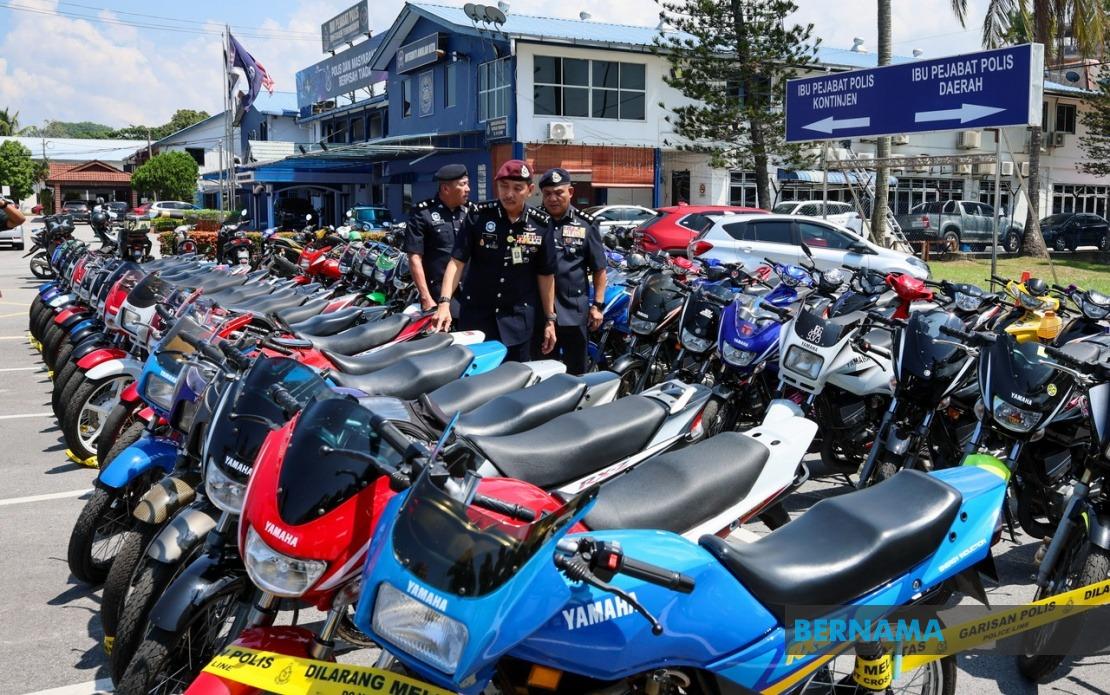
Road safety advocates are sounding fresh alarms over the mounting death toll at Malaysia's largest motorcycle gathering, with a former official from the country's premier transport research institute calling for sweeping changes to how the massive annual event is managed. Shahrim Tamrin, formerly with the Malaysian Institute of Road Safety Research (MIROS), issued the warning in response to data showing a troubling escalation in fatal accidents during successive editions of the RXZ Members programme, a phenomenon he characterises not as individual tragedies but as a systemic pattern demanding urgent structural intervention.
The latest edition of the event, held in early August at the Gong Badak Motor Racing Circuit in Kuala Nerus, drew more than 200,000 participants over four days, making it the largest version since the gathering began in 2017. Over that same period from July 30 through to the end of the weekend, traffic police documented 46 separate motorcycle-related accidents across the broader region, a figure that starkly illustrates the scale of risk associated with bringing together such a vast assembly of riders. The breakdown reveals the severity of the situation: 11 fatal crashes accounting for nearly a quarter of all incidents, five serious collisions causing significant injuries, and 30 minor accidents rounding out the tally.
What distinguishes Tamrin's intervention is his framing of the problem as a failure of event management rather than rider behaviour alone. The three-year trajectory he identified—two deaths in 2024, five in 2025, and 11 in 2026—demonstrates what he views as an unsustainable trajectory that cannot be attributed to chance variation. This escalation pattern suggests that whatever safety measures currently exist are insufficient to accommodate the event's explosive growth in scale. For Malaysian policymakers and transport authorities, the implication is stark: the conventional approach of deploying police enforcement officers and traffic patrols, while necessary, has proven inadequate when dealing with an event of this magnitude.
Tamrin's proposed framework strikes at the operational heart of event organisation, calling for detailed participant projections well in advance of the gathering, strategically planned entry and exit corridors to prevent bottlenecks and unsafe congestion, designated rest zones where riders can safely recover from fatigue, pre-positioned ambulance stations distributed across likely accident hotspots, and a functional emergency response command centre capable of coordinating real-time interventions. The proposal also encompasses a comprehensive communications strategy—presumably involving social media, event apps, and traditional channels—to keep participants informed of hazards and instructions. Critically, Tamrin advocates for a pre-event risk assessment conducted by specialists rather than relying on post-incident analysis and reactive adjustments.
For Southeast Asian readers monitoring the evolution of large-scale motorcycle culture across the region, the RXZ Members programme presents a significant case study in public safety governance. Motorcycle ownership and custom gathering traditions are substantial across ASEAN nations, and Malaysia's experience offers lessons that may eventually inform policy discussions in neighbouring countries facing similar phenomena. The RXZ itself, typically a vintage or older-model Yamaha motorcycle that has achieved cult status in Malaysian motorcycle culture, has become a symbol of a particular community identity, drawing riders who often invest considerable effort in maintaining and modifying their machines.
Tamrin also calls for mandatory post-event safety audits that would systematically examine accident locations, timing patterns, contributing factors, characteristics of affected riders, and mechanical defects or modifications on involved motorcycles. Significantly, he proposes that audit findings be published before the next edition, enabling evidence-based improvements rather than reactions driven by tragedy or assumption. This demand for transparency and data-driven policy reflects international best practices in major event safety management, approaches increasingly adopted by developed nations managing large-scale public gatherings.
Another dimension of his recommendations addresses the complex issue of vehicle registration and compliance. Many RXZ motorcycles currently in use were manufactured two to three decades ago, and their paperwork often reflects multiple ownership transfers, unauthorised modifications, or incomplete records. Tamrin proposes a pathway allowing roadworthy machines to be re-registered after passing inspection by the Computerised Vehicle Inspection Centre (Puspakom), but with a crucial safeguard: motorcycles modified in ways that compromise safety should not receive automatic approval. Instead, they should either be restored to original specifications or denied registration entirely, ensuring that all machines on Malaysian roads carry valid road tax and insurance.
Enforcement concerns also surface in his recommendations. Local residents near the Gong Badak circuit have lodged complaints about excessive noise and smoke from modified exhausts, creating both environmental and quality-of-life impacts. Tamrin urges tighter enforcement of noise and emission standards, a particular challenge given that many RXZ owners pride themselves on customisation that often extends to aftermarket exhaust systems. Balancing the cultural appeal of the motorcycles and the gathering against legitimate community concerns represents a governance challenge requiring sustained attention and clear regulatory standards.
Tamrin further proposes collaboration between law enforcement and the Road Transport Department (JPJ) with motorcycle clubs and event organisers to train marshals and group leaders in safe convoy movement techniques. Given that participants often travel to the event in organised groups riding in formation—a practice common across motorcycle enthusiast communities—structured training on formation safety, communication signals, and emergency procedures could meaningfully reduce accidents during transit to and from the gathering. This recommendation reflects the understanding that accidents occur not only at the event itself but also during the significant journeys many participants undertake to reach it.
The proposal for travel advisory measures mirrors systems deployed during Malaysian festive seasons by highway concessionaires, which provide real-time information about congestion, alternative routes, and recommended rest periods. Implementing similar guidance specifically for the RXZ Members programme could distribute participant movements more evenly, prevent dangerous clustering on particular routes, and encourage riders to stop and recover rather than ride through fatigue. For Malaysia's transport ministry and highway authorities, such measures represent relatively low-cost interventions with proven effectiveness in other contexts.
As the RXZ Members programme has evolved from a niche gathering into Malaysia's largest motorcycle event, safety governance structures have not kept pace with operational scale. Tamrin's intervention suggests that sustained growth of large-scale motorcycle gatherings now demands the application of sophisticated event management frameworks traditionally reserved for major sporting competitions or public festivals. The challenge facing Malaysian authorities is whether they can implement comprehensive safety structures without dampening the cultural significance and appeal that draws hundreds of thousands of participants annually. The stakes are significant: the next edition of the RXZ Members programme will likely draw even more participants, and without structural changes, the fatality trend Tamrin identified may well continue its grim acceleration.

