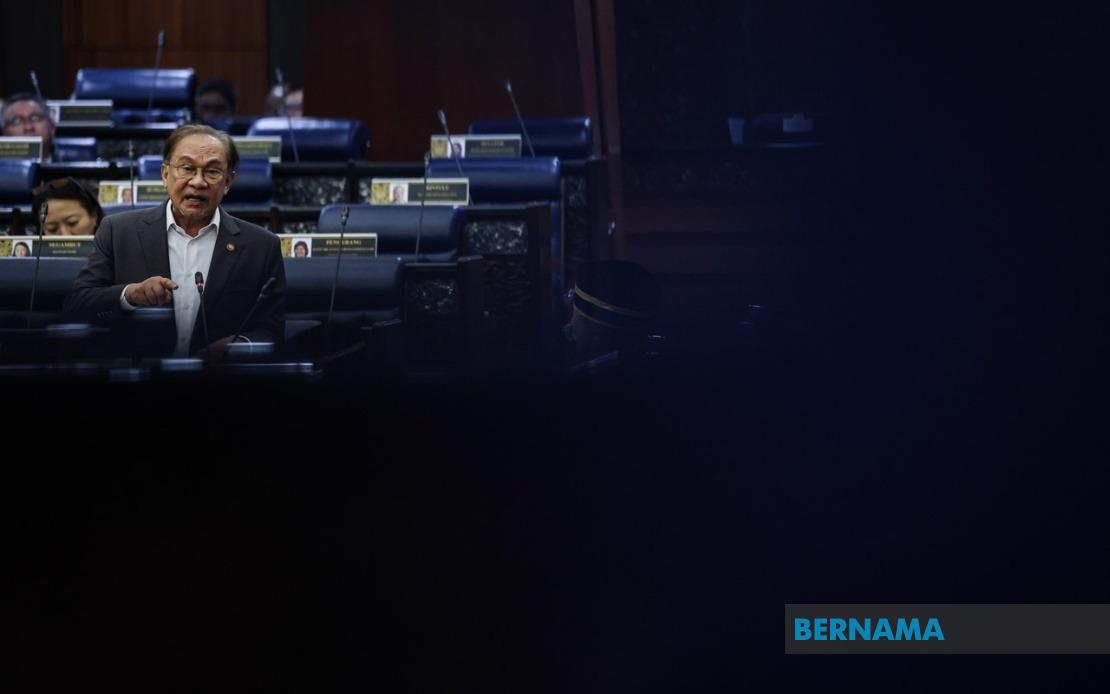
Prime Minister Datuk Seri Anwar Ibrahim has introduced a significant procedural shift in how Malaysia handles complaints against journalists, announcing that grievances lodged against media practitioners from established news organisations will no longer automatically trigger government investigations or enforcement action. Instead, all such complaints must first pass through the Malaysian Media Council (MMM) for independent assessment and scrutiny. The policy represents a notable attempt to create a buffer between complainants and law enforcement when it comes to media-related matters, a gesture that observers say signals the administration's willingness to rethink how press regulation operates in the country.
The Prime Minister's announcement came during parliamentary question time in response to concerns raised by Datuk Mohd Isam Mohd Isa (BN-Tampin) regarding Malaysia's existing legal framework, which critics contend contains provisions that can be weaponised against journalists. The Sedition Act 1948 and the Official Secrets Act 1972 remain on the statute books, and both have historically been employed to prosecute or investigate journalists on various grounds. Anwar's intervention suggests the government recognises the tension between national security legislation and press freedom, though it stops short of proposing legislative reform.
The Prime Minister emphasised that the MMC would serve as an essential gatekeeping mechanism, preventing journalists from being dragged through investigations merely because a government agency or official feels they have been criticised in coverage. Anwar stressed that while no democratic society grants absolute press freedom and that both journalists and political leaders remain subject to the law, a distinction must be drawn between legitimate accountability and the premature targeting of media practitioners for doing their job. This framing attempts to balance competing interests—protecting national security and official dignity while safeguarding journalists from harassment disguised as enforcement.
By establishing the MMC as a mandatory first stop, the administration is attempting to depoliticise what have historically been fraught interactions between government and media. The council would presumably assess whether a complaint has merit before forwarding it to relevant authorities, or recommend that no action be taken. This intermediate review is intended to inject fairness and transparency into a process that, in Malaysia's recent history, has sometimes appeared arbitrary or retaliatory. The mechanism effectively prevents the scenario where a single complaint from a government department could initiate a cascade of legal measures against a journalist without proper independent evaluation.
The announcement carries particular significance for Malaysia's regional standing. Neighbouring countries and international press freedom organisations regularly scrutinise Malaysia's approach to media regulation. The introduction of a dedicated council mechanism could be interpreted as an effort to demonstrate that Malaysia is taking seriously the concerns of global watchdogs while maintaining the government's authority to act against genuinely harmful journalism. However, the actual effectiveness of the scheme will depend entirely on how the MMC operates in practice and whether it proves truly independent from political interference.
Understanding the practical implications requires examining what the Malaysian Media Council actually is and how it functions. The MMC is a self-regulatory body established with industry participation, designed to uphold professional journalism standards and adjudicate disputes between media organisations and the public. By channelling complaints through this body rather than directly to police or prosecutors, the government is essentially endorsing an approach where professional standards and self-regulation take precedence over criminal law as the first line of response. This represents a philosophical shift from treating media misconduct primarily as a law enforcement matter to treating it as a professional standards issue.
For regional context, this development reflects broader shifts in how governments across Southeast Asia are reconsidering their relationship with press regulation. While some nations in the region have strengthened anti-press legislation, others have cautiously moved toward softer regulatory instruments. Malaysia's approach sits somewhere in the middle—retaining powerful legislation but introducing procedural safeguards that make its application less arbitrary. This positioning may appeal to democratic reformists within Malaysia while reassuring security-conscious officials that state interests can still be protected through other means.
The Prime Minister's comments also signal recognition of a longstanding grievance from Malaysian journalists and media organisations. Over several years, various journalists and news outlets have faced legal action that critics characterised as politically motivated, covering everything from coverage of political scandals to reports on official statements. The introduction of the MMC gateway acknowledges these concerns, even if implicitly, by putting structural obstacles in place that make knee-jerk legal responses more difficult to execute. Whether this proves sufficient to address underlying concerns about press freedom remains an open question.
However, important limitations persist within this framework. The mechanism only applies to journalists from recognised media organisations, leaving freelancers, bloggers, and independent digital publishers potentially vulnerable to direct legal action. Additionally, the Sedition Act and Official Secrets Act themselves remain unreformed, meaning that once a complaint passes through the MMC review, journalists could still face prosecution under these contentious statutes. The council's role is to serve as an initial filter, not to provide substantive legal protection or to constrain prosecutors' authority once matters enter the criminal justice system.
For Malaysian newsrooms and editors, the practical effect is mixed. The requirement that complaints go through the MMC does create a procedural hurdle that might discourage frivolous or politically motivated complaints, and it introduces an independent body's assessment into the process. Yet journalists cannot entirely relax, as serious complaints that pass MMC scrutiny could still result in legal action under existing laws. The mechanism represents incremental progress rather than a fundamental recalibration of Malaysia's relationship with press freedom, suggesting an administration willing to make procedural concessions but not yet prepared for substantive legislative reform.
The government's emphasis on fairness and transparency in the announcement itself warrants scrutiny. If the MMC's decisions prove opaque, if its independence is questioned, or if it operates as a rubber stamp for government preferences, the mechanism could actually entrench the appearance of legitimacy while changing little in substance. Conversely, if the council proves genuinely willing to reject unfounded complaints and shield journalists from prosecution, it could meaningfully reshape how press regulation functions in practice. Observer organisations and Malaysian media outlets will likely monitor implementation closely in coming months.
Looking ahead, this development sets a template for how Malaysia might approach other contentious regulatory areas where government authority and individual rights intersect. If the MMC mechanism proves workable, the government might extend similar gatekeeping structures to other sensitive domains. If it fails to command credibility, Malaysia risks a situation where additional procedural layers are perceived as merely cosmetic reforms that fail to address fundamental concerns about press independence and the abuse of criminal statutes against journalists.

