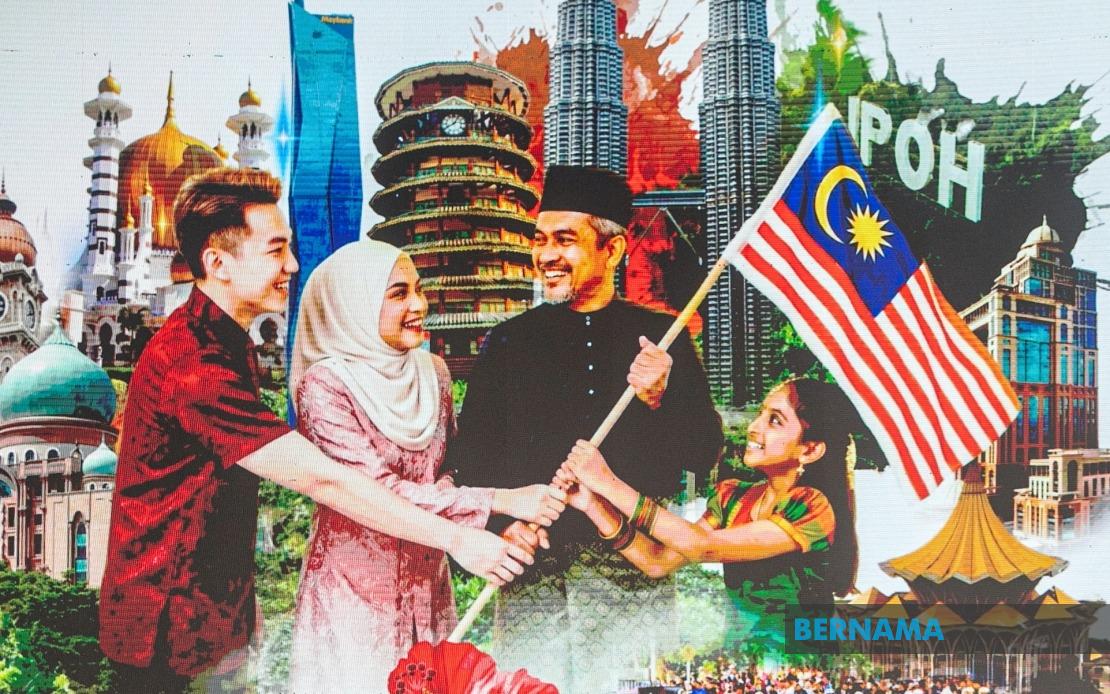
As Malaysia gears up for the 2026 National Month celebrations, Communications Minister Datuk Seri Fahmi Fadzil has sounded a timely alarm about the risks posed by artificial intelligence in creating national flag imagery. Speaking at the launch of the Fly the Jalur Gemilang campaign in Ipoh on July 19, Fahmi emphasised that content creators and the general public must exercise heightened vigilance when deploying AI tools to produce representations of the national symbol, particularly to guard against inadvertent distortions of the flag's design elements.
The minister's concern centres on a specific and critical feature of Malaysia's flag: the 14 stripes that form the foundation of the Jalur Gemilang's iconic design. These stripes are not merely decorative details but essential components that define the flag's authenticity and symbolic integrity. Fahmi warned that AI-generated content has the potential to omit, misalign, or otherwise misrepresent these stripes, a mistake that could undermine the solemnity and respect due to the national emblem. Such errors, while potentially appearing trivial to some users, carry deeper implications for national identity and pride, particularly as Malaysia approaches significant centennial celebrations.
The Communications Ministry is taking a collaborative approach to address this emerging challenge. Working alongside the Malaysian Press Institute and the Malaysian Media Council, the government plans to engage media organisations across the country to establish standards for accurate flag representation throughout the National Month. This partnership underscores recognition that the issue extends beyond individual social media users to professional content creators and media outlets, which bear particular responsibility for maintaining visual accuracy in public communications. The ministry's strategy reflects an understanding that media literacy and technological governance require multi-stakeholder engagement rather than top-down regulation alone.
Crucially, Fahmi has indicated that the government's initial response will prioritise guidance over enforcement. Rather than immediately invoking legislative provisions that govern flag usage, the ministry will adopt an advisory approach, reaching out to those who may have inadvertently generated or shared inaccurate flag imagery. This measured stance acknowledges both the nascent nature of AI technology and the reality that many content creators may not be fully aware of the technical specifications required for accurate flag representation. The threshold for escalation to formal enforcement action will only be crossed if voluntary correction is refused, providing what amounts to a grace period for public education and compliance.
The timing of this initiative proves particularly significant given Malaysia's calendar of national observances. The 2026 National Month campaign, which encompasses both National Day and Malaysia Day celebrations, will see unprecedented flag displays across residential areas, government premises, and villages throughout the nation. With heightened AI adoption among younger content creators and digital marketers, the risk of erroneous flag imagery circulating through social media platforms and digital advertising channels has grown proportionally. By issuing guidance ahead of the main campaign period, Fahmi seeks to prevent systemic errors from becoming entrenched in the visual record of these important celebrations.
For Malaysian content creators and businesses, the message carries practical implications. Those generating AI-powered graphics, animations, or digital content featuring the Jalur Gemilang during the National Month period would be prudent to manually verify outputs against official specifications before publication. The 14-stripe composition should be checked element by element, particularly where AI tools are tasked with scaling, rotating, or integrating the flag into complex designs. Many popular AI image generation platforms, trained on datasets that may include inaccurate or stylised representations of national flags, cannot be relied upon to produce accurate results without human verification. This represents a significant shift in digital content creation, where the onus for accuracy increasingly falls on the user rather than the tool developer.
The broader context of this initiative reveals evolving tensions between technological capability and cultural stewardship in Southeast Asia. As AI tools become more accessible and easier to use, questions of who bears responsibility for maintaining standards around national symbols have become urgent. Malaysia's approach—combining public education, collaborative governance, and calibrated enforcement—offers a model that respects both technological innovation and national pride. Unlike approaches that might attempt to restrict AI usage through heavy-handed regulation, the ministry's strategy seeks to harness technology responsibly while preserving civic values.
Prime Minister Datuk Seri Anwar Ibrahim's presence at the campaign launch in Tanjung Rambutan underscores the government's commitment to this initiative as a matter of national importance. The participation of National Unity Minister Datuk Aaron Ago Dagang and Perak Menteri Besar Datuk Seri Saarani Mohamad further emphasises that flag accuracy and patriotic expression transcend partisan lines and regional boundaries. The event at the Sultan Azlan Shah Ministry of Health Training Institute brought together representatives from health, communications, and state governance, reflecting recognition that safeguarding national symbols constitutes a whole-of-government responsibility.
The 2026 celebrations will unfold across multiple venues, with the main National Day observance held in Putrajaya and Malaysia Day festivities taking place in Sarawak, arrangements that themselves demonstrate the government's commitment to inclusive national commemoration. Against this backdrop, the Communications Ministry's focus on ensuring accurate flag representation serves both immediate and long-term objectives: maintaining the dignity of the upcoming celebrations while establishing precedent for how Malaysia manages the intersection of emerging technologies and national heritage.
For ordinary Malaysians preparing to participate in the Fly the Jalur Gemilang campaign, the minister's guidance offers straightforward direction: if using AI tools to create or enhance flag imagery, take time to learn proper flag specifications, exercise caution during content generation, and double-check outputs before sharing. For media organisations and professional content creators, the message is equally clear: accuracy is not optional, and partnership with government bodies on standards remains available. As AI capabilities continue advancing, this moment of proactive engagement may prove valuable in establishing norms that preserve both technological freedom and cultural integrity throughout Malaysia's digital future.

