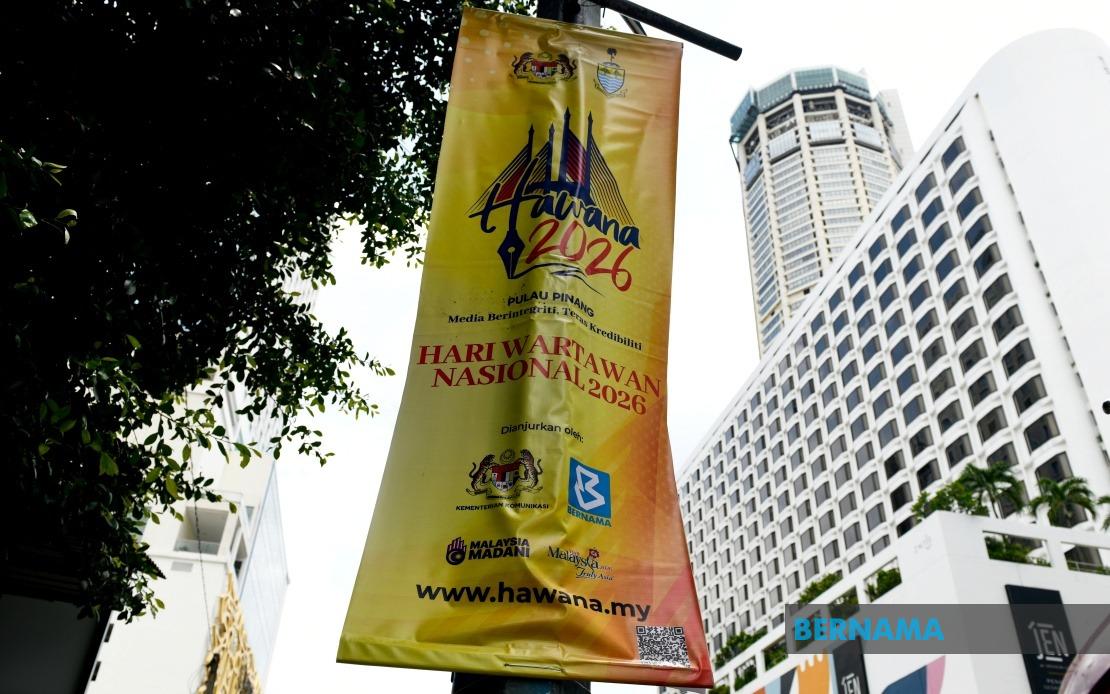
Communications Minister Datuk Fahmi Fadzil has arrived in Penang for a two-day series of engagements marking the climax of HAWANA 2026, Malaysia's premier national platform honouring journalism professionals. The visit, which began this week, represents the government's commitment to recognising the media sector's contributions to national development and strengthening the bonds between communications officials and industry practitioners.
The ministerial schedule reflects the breadth of activities surrounding the National Journalists' Day festivities. Fahmi commenced his itinerary by attending the Malaysia Media Retreat Programme 2.0 in Seberang Jaya, an initiative designed to convene newspaper editors, broadcasting executives and international media leaders. This gathering serves a dual purpose: acknowledging journalism's role in societal progress whilst creating dialogue opportunities among newsroom decision-makers who shape Malaysia's media landscape.
In the evening, the minister was hosted by Penang's Yang Dipertua Negeri Tun Ramli Ngah Talib for an official state government dinner, underlining the ceremonial importance of the occasion and the state administration's role in facilitating the celebrations. Such formal recognition elevates the status of media professionals within the civic hierarchy and reinforces the message that journalism remains central to Malaysia's democratic and developmental frameworks.
The RIUH Pi HAWANA Carnival, held at PICCA Convention Centre in Butterworth, demonstrates how HAWANA 2026 extends beyond traditional industry networking to embrace broader creative sectors. This three-day carnival, which offers free public admission, bridges journalism with Malaysia's wider creative economy by hosting over two dozen local brands producing creative goods, alongside food vendors and live musical performances. Acts including Sakura Band, Kaka Azraff and others appeal to younger audiences, suggesting the organisers recognise that media literacy and industry appreciation must extend beyond newsroom professionals to ordinary citizens.
The carnival's workshop programme—featuring cyanotype printmaking, albumen printing and stone-carving—embodies an unconventional approach to celebrating journalism. By pairing traditional artistic techniques with media engagement, the event positions journalism as part of Malaysia's broader cultural tapestry rather than an isolated professional discipline. This integration of creative industries reflects how modern communications increasingly blur boundaries between news, entertainment and cultural expression.
On the second day of Fahmi's visit, proceedings shift toward more substantive media industry matters. The Jiwa@Sembang Santai programme at Seberang Jaya Public Market's food court represents an accessible, informal setting for the minister to engage directly with journalists and media workers. Holding such an event in a public market rather than a conference hall signals an attempt to demystify the communications ministry and demonstrate responsiveness to ordinary practitioners' concerns.
The centrepiece of Fahmi's visit is the HAWANA 2026 Grand Finale, scheduled to be officiated by Prime Minister Datuk Seri Anwar Ibrahim. This elevation to prime ministerial level underscores the government's formal recognition of journalism's significance. With approximately 1,000 media practitioners expected from Malaysia and abroad, the gathering creates the largest regional assembly of news industry leaders in recent times, offering opportunities for international benchmarking and knowledge exchange regarding contemporary journalism practices.
The grand finale's thematic focus—"Media Integrity Strengthens Credibility"—addresses a critical contemporary challenge. Across Southeast Asia, journalism faces pressures from misinformation, declining trust in institutions and economic disruption to traditional business models. By making integrity and credibility central to HAWANA's messaging, Malaysia's government and Bernama position ethical journalism as foundational to media's continued relevance and societal legitimacy.
Bernama's role as implementing agency for HAWANA extends beyond mere administration; it reflects the national news agency's position as custodian of professional standards. For Malaysian newsrooms and regional media organisations observing this event, Bernama's stewardship signals that journalism standards and professional development remain priorities within government communications strategies.
The composition of attendees—both domestic and international—has implications for Malaysia's media influence within the region. HAWANA 2026 functions as a soft power instrument, allowing the country to project its vision of responsible journalism to regional peers whilst benchmarking local practices against international standards. For Malaysian journalists, exposure to international counterparts offers professional development opportunities that strengthen individual reporters' capabilities and Malaysia's competitive position in regional news markets.
The breadth of Fahmi's two-day itinerary illustrates how HAWANA 2026 operates across multiple registers simultaneously: formal state diplomacy through the Yang Dipertua Negeri dinner; professional development through media retreats; industry dialogue and direct minister-journalist engagement; cultural integration through the creative carnival; and international positioning through the grand finale's international delegations. This multifaceted approach recognises that journalism's challenges and opportunities extend beyond newsrooms to encompass public perception, creative industries integration and regional diplomatic positioning.
For Malaysian media professionals, the occasion represents formal recognition of their professional status whilst simultaneously placing them within a broader development narrative. The government's investment in HAWANA 2026, culminating in prime ministerial participation, signals that journalism remains strategically important to national communications objectives. Whether this translates into concrete policy changes, regulatory frameworks or economic support for the struggling media industry remains to be seen, but the ceremonial priority accorded to this gathering indicates journalism maintains political significance within Malaysia's governance structures.