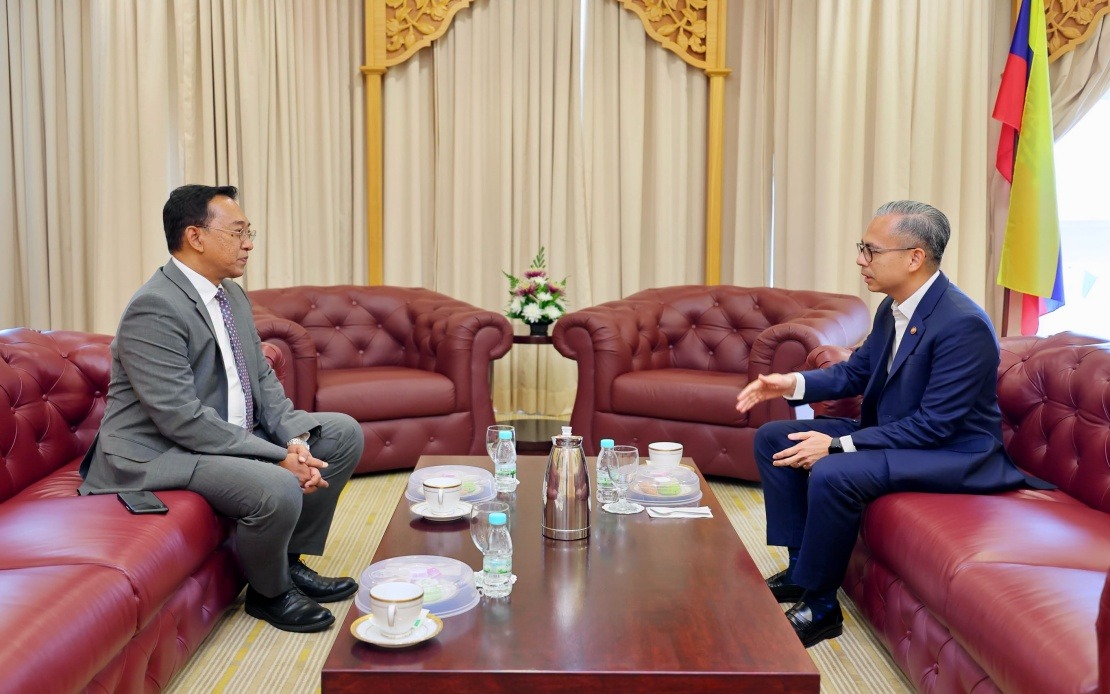
Communications Minister Datuk Fahmi Fadzil hosted a courtesy call from Malaysia's recently appointed Ambassador to Lebanon, Anwar Udzir, marking an important engagement in the country's diplomatic calendar. The meeting, which took place in Kuala Lumpur, reflected the government's commitment to reinforcing collaborative channels between the Foreign Service and domestic ministries overseeing international communications and relations.
Anwar Udzir, who received his letter of appointment from His Majesty Sultan Ibrahim, King of Malaysia, on May 18, 2026, carried out the traditional protocol visit to key government officials as part of his transition into the ambassadorial posting. Such courtesy calls form an essential part of diplomatic practice, enabling newly appointed envoys to establish working relationships with relevant ministers and to discuss their respective mandates and areas of cooperation.
During the meeting, Fahmi emphasised the importance of leveraging enhanced diplomatic ties to advance Malaysia's strategic interests at the international level. The discussion touched on opportunities to strengthen working relationships between the Communications Ministry and the Lebanese mission, as well as the broader framework for coordinating Malaysia's messaging and engagement in the Middle Eastern region. This coordination is particularly significant given Malaysia's active role in international forums and its commitment to representing Southeast Asian perspectives in global affairs.
Fahmi noted his prior familiarity with Anwar, recalling their professional collaboration during the organisation of the Asia-Pacific Telecommunity Ministerial Meeting held in Tokyo, Japan, last year. This prior working relationship helped establish a foundation of trust and mutual understanding, facilitating a more substantive discussion about current challenges and opportunities facing Malaysia's diplomatic presence in Lebanon. The minister's recognition of Anwar's previous contributions underscored the value of experienced diplomatic personnel in advancing Malaysia's international agenda.
The appointment of Anwar Udzir to the Lebanese post arrives at a time when Malaysia continues to deepen its engagement across the Middle East and North Africa region. Lebanon, as a significant regional actor with complex geopolitical dynamics, represents an important posting for Malaysian diplomatic interests. The country's role as a gateway to broader Middle Eastern affairs, combined with its historic cultural and business connections with the diaspora communities, makes this ambassadorial position strategically relevant to Malaysia's foreign policy objectives.
Fahmi's public recognition of the appointment through his Facebook post demonstrates the government's intention to maintain transparency and continuity in diplomatic transitions. Such public acknowledgment also serves to reinforce Malaysia's commitment to sustained engagement in the region, signalling to international partners and stakeholders that ambassadorial postings receive high-level ministerial attention and support. This visibility helps establish the ambassador's credibility and reinforces the importance of the mission within Malaysia's diplomatic framework.
The timing of this courtesy call reflects standard diplomatic protocol but also carries practical significance. As communications minister, Fahmi oversees one of Malaysia's key mechanisms for projecting soft power and managing the country's international narrative. Establishing clear communication channels with ambassadors abroad enables the ministry to coordinate messaging, support media engagement, and ensure that Malaysia's communications strategy aligns with broader diplomatic objectives pursued by the Foreign Service.
Anwar's previous experience in organising major multilateral telecommunications meetings demonstrates his capability to manage complex international engagements involving numerous stakeholders. This technical expertise in the telecommunications sector could prove valuable in Lebanon, where connectivity infrastructure and digital communications play increasingly important roles in both business and civil society development. Such background also suggests potential opportunities for Malaysia to advance technological cooperation and digital economy initiatives through the Lebanese mission.
The discussion between Fahmi and Anwar likely included an assessment of current developments affecting Malaysia's interests in the broader Middle Eastern context. These considerations encompass regional stability, trade relations, protection of Malaysian citizens and business interests, and opportunities to expand cultural and educational exchanges. The Communications Ministry's involvement in these discussions reflects how modern diplomacy increasingly requires coordination across multiple government agencies, with communications and information management playing central roles in strategy implementation.
For Malaysia, strengthening its diplomatic infrastructure in key posts like Lebanon remains part of a broader strategy to ensure effective representation across regions of strategic importance. Anwar's appointment and this subsequent engagement with senior Malaysian officials underscores the government's recognition that ambassadorial effectiveness depends on both individual capability and systemic support from home ministries. The courtesy call thus represents not merely a ceremonial gesture but a substantive commitment to equipping the ambassador with high-level political backing and ministerial coordination necessary for effective mission management.

