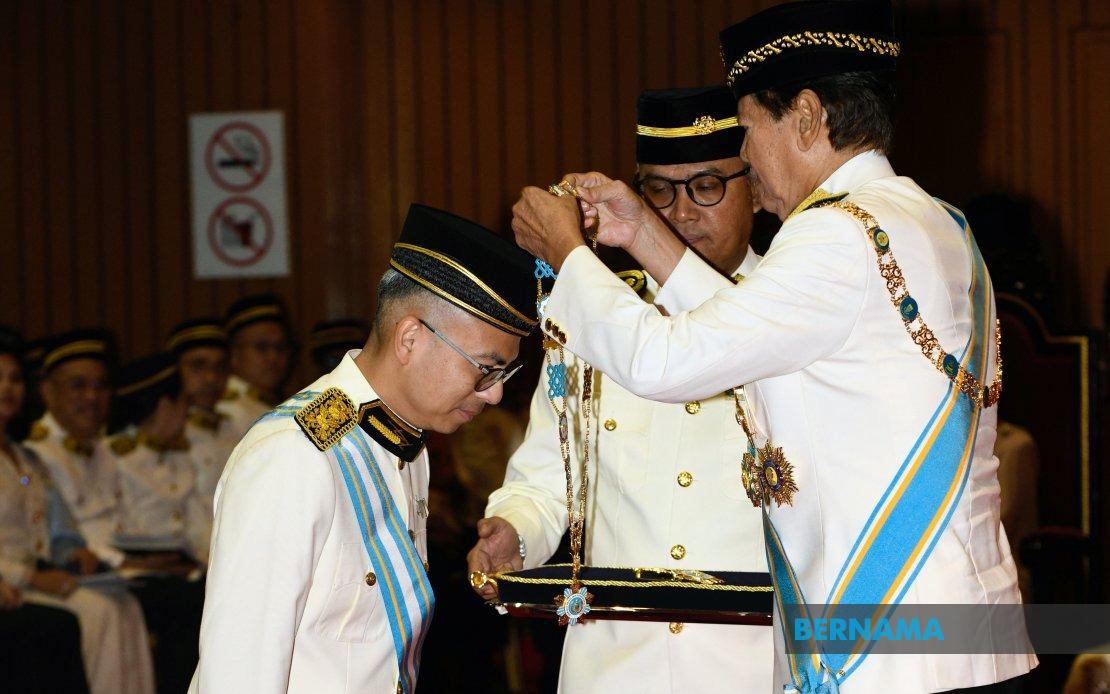
Communications Minister Datuk Fahmi Fadzil has been conferred the Darjah Panglima Pangkuan Negeri (DPPN) award, elevating him to the rank of Datuk Seri, during ceremonies in George Town marking the 85th birthday celebration of Penang Governor Tun Ramli Ngah Talib. The honour positions Fahmi, who also serves as spokesperson for the MADANI Government, as the sole recipient of the DPPN distinction this year, underscoring the award's exclusivity and prestige within Penang's honours system.
The investiture ceremony, which commenced on July 11 and will extend through July 15, represents a significant recognition of outstanding service and contributions across multiple sectors of Malaysian society. A total of 230 individuals feature among the recipients being formally honoured during the four-day event held at Dewan Sri Pinang, reflecting the breadth of achievement and dedication being acknowledged by the state.
Beyond Fahmi's singular elevation to the DPPN level, an additional 19 recipients were conferred the Darjah Gemilang Pangkuan Negeri (DGPN), which likewise carries the Datuk Seri title. This cohort includes MARA Incorporated Sdn Bhd chairman Datuk Abdul Halim Mohammad and Invest Penang chief executive officer Datuk Loo Lee Lian, both prominent figures in Malaysia's economic development and investment promotion infrastructure. The DGPN recipients represent leadership across government-linked companies and strategic economic agencies, highlighting the state's recognition of those driving business and industrial advancement.
The honours system expanded further with nine individuals receiving the Darjah Yang Mulia Pangkuan Negeri (DMPN), a tier below the Datuk Seri ranks. Among this group is former Penang police chief Datuk Azizee Ismail, whose selection reflects continuing acknowledgement of law enforcement contributions to state security and public order. The DMPN designation maintains the tradition of honouring mid-tier leadership across government and institutional sectors.
A considerably larger cohort of 72 individuals were conferred the Darjah Setia Pangkuan Negeri (DSPN), which carries the title Datuk. This category encompasses a diverse array of distinguished citizens whose contributions span entertainment, disaster management, and financial services. The DSPN recipients include the late Nordin Ahmad, a celebrated filmmaker, actor, and scriptwriter from Cathay-Keris Film Productions, honoured posthumously for his cultural legacy. Also recognized were National Disaster Management Agency director-general Meor Ismail Meor Akim, reflecting the state's appreciation for those managing emergency preparedness, and Bank Rakyat chairman Datuk Mohd Irwan Mohd Mubarak, representing the cooperative financial sector's leadership.
Tun Ramli Ngah Talib, accompanied by his wife Toh Puan Raja Noora Ashikin Raja Abdullah, arrived at 8:45 am to officiate the opening of the investiture ceremony. The governor's personal attendance and participation in the proceedings underscored the ceremonial significance of the occasion and the state's commitment to formally recognizing meritorious service and achievement among its residents and institutions.
Beyond the primary honours categories, the broader investiture programme encompasses considerably wider recognition through medals and honorary decorations. An additional 101 individuals will receive state honours across the four-day period, while a separate 1,120 recipients will be awarded medals and honorary decorations. This expansive scope demonstrates how Penang's honours system operates across multiple tiers, enabling recognition of contributions ranging from national-level ministerial positions down to community and grassroots service.
For Malaysian observers and regional commentators, the elevation of a serving communications minister to the Datuk Seri rank carries particular significance in the context of Malaysia's governance structure. Fahmi Fadzil's dual role as both government spokesperson and senior cabinet member positions him at the intersection of policy communication and government coordination. His recognition through Penang's honours system—a state not his primary constituency—suggests the state's acknowledgement of his contributions to national-level communication infrastructure and policy articulation.
The timing of these honours, coinciding with Tun Ramli's 85th birthday celebrations, reflects Penang's tradition of using milestone gubernatorial anniversaries as occasions for broader state recognition ceremonies. This practice reinforces the ceremonial and institutional fabric of state governance while creating structured opportunities to publicly acknowledge diverse contributors to state and national development. The concentration of honours within a defined ceremonial framework also ensures equitable visibility for recipients across different sectors and hierarchies.
For Southeast Asian governance observers, Malaysia's honours system—particularly as expressed through state-level investiture ceremonies—demonstrates the continuing relevance of formal recognition mechanisms in structuring institutional hierarchies and acknowledging leadership contributions. The specificity of award tiers (DPPN, DGPN, DMPN, DSPN) and their associated titles reflects a nuanced approach to differentiated recognition that balances inclusive acknowledgement with hierarchical distinction. This structure has proven enduring across decades of constitutional monarchy and federal governance.
The representation across sectors—spanning government communications, development finance, law enforcement, cultural production, disaster management, and cooperative finance—indicates how Penang's honours committee calibrates recognition across the full spectrum of institutional and social contribution. The inclusion of posthumous honours, exemplified by Nordin Ahmad's recognition, also demonstrates the honours system's function in cultural memory and the preservation of institutional legacy beyond individual lifespans.

