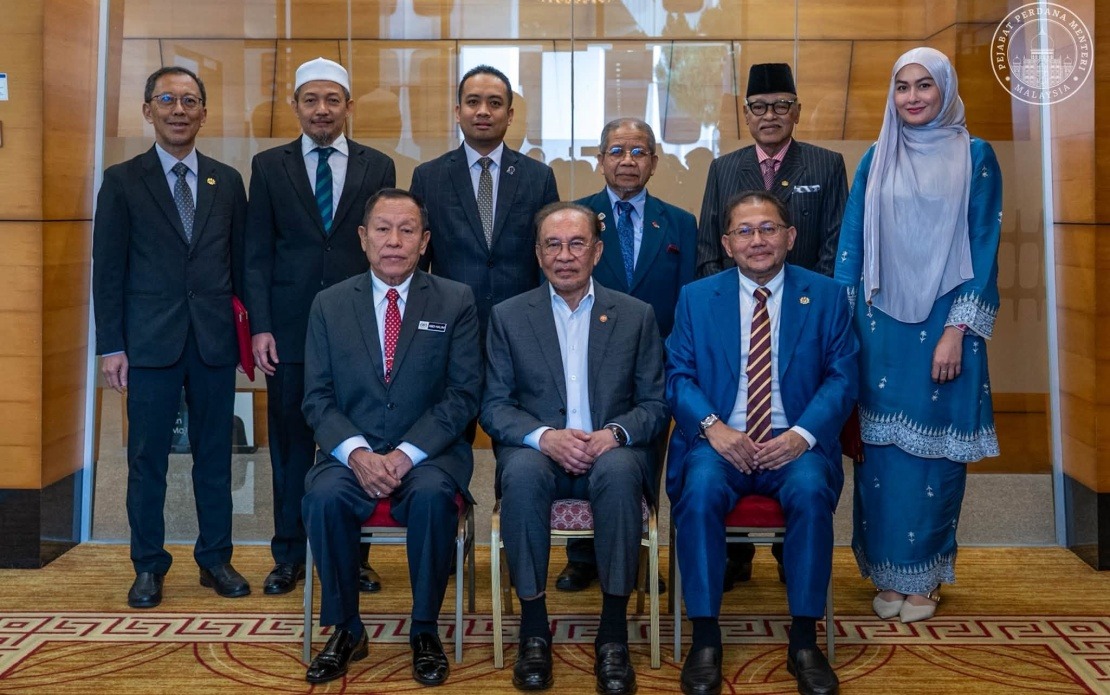
Prime Minister Datuk Seri Anwar Ibrahim has underscored that tackling corruption in Malaysia cannot rest on the shoulders of a single institution, but demands a comprehensive collaborative framework spanning law enforcement, legislative bodies, the corporate world, and ordinary citizens. Speaking at Parliament, he highlighted the critical role that independent oversight mechanisms must play in ensuring accountability and transparency across all layers of governance and commerce.
In an address marking the appointment of fresh appointees to two key anti-corruption bodies, Anwar stressed that meaningful progress against graft requires the active participation of enforcement agencies, advisory committees, parliamentarians, civil servants, business leaders, and grassroots organisations working in concert. This multi-stakeholder approach, he suggested, reflects an understanding that corruption thrives in isolated systems and weakens only when scrutinised from multiple angles simultaneously.
The Prime Minister presented appointment instruments to newly selected members of the Special Committee on Corruption (JKMR) and the Anti-Corruption Advisory Board (LPPR) after securing royal consent from the Yang di-Pertuan Agong. Both bodies function as institutional safeguards within Malaysia's anti-corruption architecture, tasked with providing independent scrutiny and maintaining checks and balances on government and public sector activities.
Anwar conveyed his expectations to the appointees, calling on them to reinvigorate their commitment to advancing the nation's anti-corruption agenda. He noted that despite the diverse professional and personal backgrounds represented among the new members, they share a unified mission: to strengthen Malaysia's defences against corrupt practices that undermine public trust and economic efficiency.
The JKMR was established under law by Section 14 of the Malaysian Anti-Corruption Commission Act 2009 (Act 694). Its membership structure is deliberately designed for balance and inclusivity, with the King appointing representatives from both the Government and Opposition ranks within the Senate and Dewan Rakyat. This constitutional arrangement ensures that anti-corruption oversight cannot be monopolised by any single political faction, lending credibility to the committee's findings and recommendations.
Meanwhile, the LPPR operates under Section 13 of the same legislative framework. Its members are drawn from the wider pool of individuals known for integrity and distinguished service or achievement in their professional domains. This approach permits the advisory board to draw upon expertise and moral authority from sectors beyond government, including academia, business, civil society, and the professions. Such composition strengthens the board's independence and its capacity to offer candid guidance to policymakers.
For Malaysian readers, the appointment of these oversight bodies carries particular significance in the context of recent institutional reforms aimed at restoring public confidence in governance. The emphasis on cross-party and cross-sectoral representation reflects a recognition that corruption prevention succeeds only when perceived as impartial and insulated from partisan manipulation. The involvement of opposition figures in the JKMR, for instance, signals that anti-corruption work transcends electoral cycles and political competition.
Regionally, Malaysia's multi-layered approach to institutional oversight mirrors broader Southeast Asian trends toward enhancing transparency and accountability. Countries across the bloc have similarly experimented with independent boards and cross-party committees tasked with monitoring corruption and ethics compliance. Malaysia's model, combining legislative representation with expert advisory input, presents a nuanced approach that balances political inclusivity with professional standards.
The effectiveness of such mechanisms, however, ultimately depends on whether governments follow the recommendations they generate and whether citizens hold officials accountable for implementing reforms. Anwar's emphasis on a "collective effort" implicitly acknowledges that formal structures matter little without sustained political will and public engagement. The appointment of these committees therefore represents not an endpoint but a beginning—a signal that the administration intends to operationalise anti-corruption commitments across multiple fronts.
Business sectors and civil society organisations in Malaysia also bear responsibility within this framework. Private companies that enforce ethical procurement practices, financial transparency, and whistleblower protections contribute substantially to reducing opportunities for graft. Non-governmental organisations, community groups, and media outlets that monitor and publicise instances of suspected corruption create accountability pressures that formal institutions alone cannot generate.
The dual-structure approach—combining a legislative committee with an advisory board—reflects sophisticated thinking about institutional design. The JKMR's parliamentary composition allows it to influence policy and investigate matters with legislative authority, whilst the LPPR's expert membership provides technical guidance and moral authority without direct political stakes. This division of labour theoretically maximises the strengths of each body whilst compensating for their respective limitations.
For Malaysia to substantively reduce corruption, the newly appointed members of both committees must navigate complex political terrain whilst maintaining credibility across ideological divides. Their success will be measured not merely by reports produced but by whether their recommendations translate into prosecutions, policy changes, and cultural shifts within institutions. Anwar's framing of anti-corruption as a collective responsibility places implicit pressure on all segments of society to deliver concrete results rather than rhetorical commitments.

