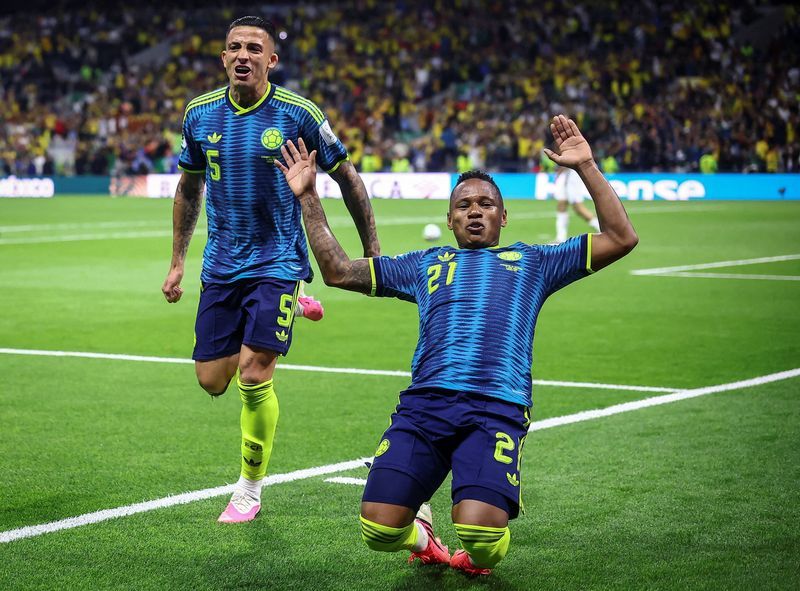
Colombia will attempt to maintain their momentum in the World Cup when they encounter DR Congo on Tuesday, seeking to capitalize on their opening 3-1 triumph over Uzbekistan whilst remaining wary of an opponent who earned a creditable 1-1 draw against tournament favourites Portugal in the group's opening fixtures. The South American side's first outing proved instructive: whilst the scoreline suggested comfortable passage, the second half exposed defensive frailties that coach Nestor Lorenzo recognizes must be tightened before facing more accomplished opposition.
Victory would essentially book Colombia's place in the Round of 32 and potentially cement their position atop Group K, particularly if Portugal stumble against Uzbekistan in a parallel fixture. This means Colombia possess control of their destiny, though the nature of their previous performance suggests complacency carries real risk. The team managed their opening assignment, but the manner in which Uzbekistan capitalized on Colombian lapses demonstrated that progression through this tournament will demand greater consistency across ninety minutes.
The attacking burden has disproportionately fallen on Bayern Munich's Luis Diaz, who produced both a goal and an assist against Uzbekistan whilst being named the match's outstanding performer. His pace and willingness to drive directly at defenders proved invaluable in dismantling an Uzbek backline, yet Lorenzo will be conscious that over-reliance on a single player's dynamism creates tactical predictability. Colombia's midfield orchestration suffered against the Asians as possession often became sterile, with the team occasionally retreating into defensive modes when opportunities to penetrate existed.
Captain James Rodriguez, one of Colombia's most celebrated talents, remained peripheral during the opening victory despite operating in midfield. The midfielder's inability to exert greater influence in both controlling the game's tempo and generating attacking opportunities from deeper positions suggests Lorenzo must find ways to unlock Rodriguez's creativity. Against a DR Congo side likely to defend compactly and rely on transition football, Colombia's midfield must provide superior control and distribution if they are to break down a disciplined defensive structure.
DR Congo arrives with genuine momentum, a remarkable achievement given that they qualified for this tournament as minnows with limited resources. Their 1-1 stalemate against Portugal represented not merely a positive result but a statement of tactical competence and collective resolve. Yoane Wissa's goal marked a historic moment for the Congolese, scoring their first World Cup objective since 1974 when they appeared as Zaire. Coach Sebastien Desabre's preparation proved meticulous: his defensive organization frustrated Portugal's potent attacking units whilst his team's counter-attacking transitions repeatedly created dangerous moments.
The Congolese employ a fundamentally different methodology to what Colombia demonstrated against Uzbekistan. Where the South Americans attempted to dominate possession, DR Congo embrace a more economical approach centred on defensive solidity and rapid transitions. Long diagonal balls and swift breaks constitute their primary offensive currency, a tactic that proved troublesome for Portugal and carries genuine threat against Colombian defenders who showed vulnerability during their opening fixture. Lorenzo has candidly acknowledged this tactical disparity, stating that Congo's transition-based approach will present a notably different challenge.
Lorenzo's tactical concern extends beyond merely the Congolese style of play. The Colombian manager observed that his team's possession advantage against Uzbekistan occasionally became counterproductive, with excessive lateral passing and recycling of the ball negating potential attacking moves before execution. This lack of clinical decision-making in the final third wasted numerous opportunities and frustrated a coach accustomed to more precise finishing. Against DR Congo, Colombia must demonstrate improved efficiency: where they previously required multiple phases of possession to create chances, they now need incisive passing and direct running that converts half-chances into genuine scoring opportunities.
The venue plays into Colombian hands considerably. Thousands of Colombian supporters transformed Mexico City's Estadio Azteca into a fortress during the opening match, creating an atmospheric advantage that should prove even more pronounced against lesser-known opposition. With their tournament base established in Guadalajara, Lorenzo expects similarly robust support, potentially transforming another neutral stadium into Colombian territory. Such backing provides psychological reinforcement, particularly for a side seeking to consolidate their position without relying exclusively on technical superiority.
DR Congo's confidence, however, should not be underestimated. A team that draws with Portugal possesses structural integrity and tactical discipline. The Congolese have demonstrated that they do not approach matches with passive resignation but rather with genuine ambition to impose their system and capitalize on opportunities. Their defensive compactness prevented Portugal from achieving superiority despite the European team's technical advantages, suggesting they possess the organizational capability to frustrate Colombia's attempts to establish dominance through possession.
The broader implications for Group K's trajectory remain significant. Colombia's combination of technical quality and emerging international pedigree positions them as potential challengers throughout the tournament, yet inconsistency remains their vulnerability. A comprehensive victory over DR Congo would silence concerns about their defensive reliability and suggest they possess the mental resilience required for knockout football. Conversely, any stumble would validate fears that their opening success masked underlying fragility, forcing Lorenzo to implement more substantial adjustments before facing Portugal in a potentially decisive final group match. For DR Congo, another positive result would cement their reputation as genuine competitors rather than ceremonial participants, fundamentally altering perceptions of their footballing capability.
Tuesday's encounter therefore transcends a routine group-stage fixture. Colombia seek to progress authoritatively and answer questions about their consistency, whilst DR Congo pursue the extraordinary possibility of establishing themselves as serious competitors in a tournament many assumed they would merely participate in as underdogs. The combination of Colombia's attacking prowess and DR Congo's defensive organization promises an engaging tactical contest that will reveal much about both teams' World Cup prospects.