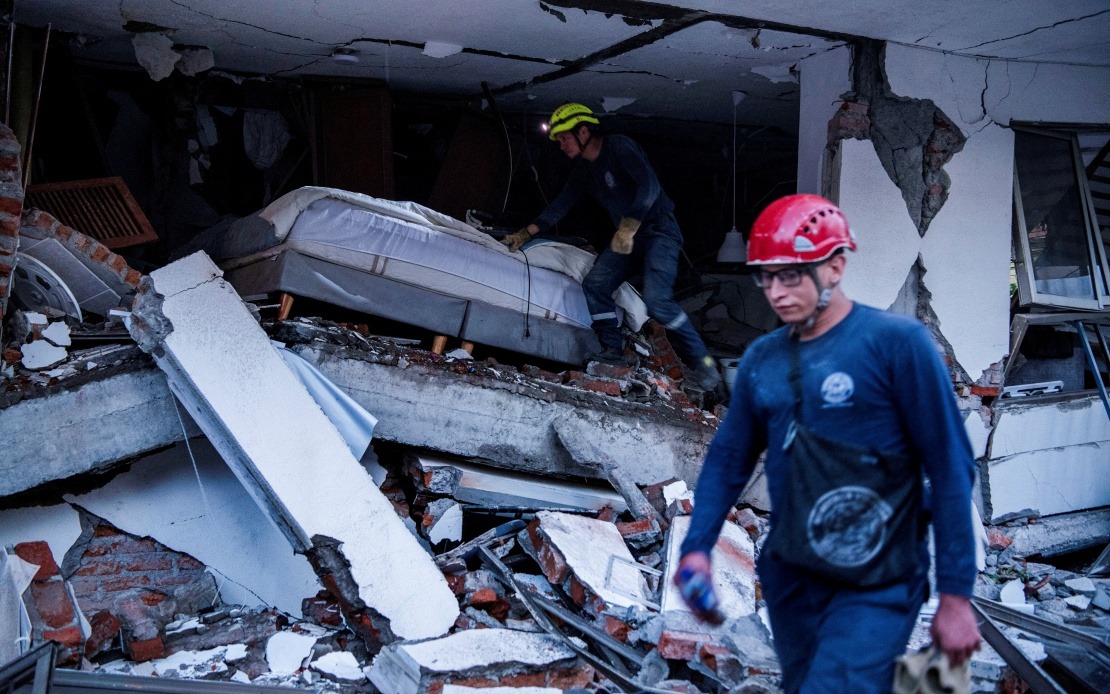
Western Colombia reeled from the impact of a powerful magnitude 7.4 earthquake on Monday morning, with the confirmed death toll climbing to 132 and the number of injured surpassing 570 according to the latest government assessment. The tremor struck at 7:34 am local time near San Jose del Palmar in the department of Choco, originating from a depth of 96 kilometres beneath the earth's surface. The scale of destruction has prompted the Colombian government to declare a state of national disaster, mobilising resources across the country to address the humanitarian crisis unfolding in affected regions.
The geographic spread of the disaster underscores its severity, with 32 municipalities throughout the nation experiencing serious damage. Five major urban centres have been designated as requiring critical attention, remaining under red alert status as emergency services work to manage ongoing aftershocks and secondary hazards. These five capitals—Pereira, Cali, Quibdo, Manizales, and Armenia—represent crucial economic and administrative hubs for their respective regions, and their concurrent vulnerability has strained national response capabilities across multiple fronts.
Among the affected cities, Pereira has been hit hardest, accounting for 60 of the recorded deaths and representing the epicentre of the humanitarian toll. Cali, Colombia's third-largest metropolitan area, has reported 15 fatalities, while Quibdo in Choco department has suffered eight deaths. Manizales, located in the coffee region, has recorded four confirmed deaths. The distribution of casualties across multiple population centres has complicated coordination of emergency medical services and shelter provisions, forcing the government to allocate resources strategically across the devastated zones.
Physical infrastructure damage remains extensive, with 86 building collapses documented by structural engineers and government assessments. The destruction of residential and commercial structures has displaced thousands of residents and created immediate housing shortages in affected communities. Beyond the urban environment, the earthquake has crippled transportation networks, prompting authorities to suspend operations at seven airports throughout the country. These closures have disrupted both emergency relief flights bringing in medical supplies and rescue personnel, as well as commercial aviation serving affected regions, compounding the logistical challenges facing disaster responders.
President Abelardo de la Espriella's declaration of national disaster status opens pathways for expedited federal resource allocation and allows the government to temporarily suspend certain bureaucratic procedures that might otherwise slow emergency response efforts. This administrative measure is typically reserved for catastrophes exceeding the capacity of regional authorities to manage independently. The declaration signals the magnitude of the crisis and indicates the Colombian government's recognition that recovery will demand sustained, coordinated action across multiple government agencies and potentially international assistance.
The international dimension of the disaster extends to foreign nationals present in Colombia at the time of the quake. The Chinese Embassy in Bogota activated emergency protocols immediately following the earthquake to assess the welfare of Chinese citizens throughout the country. As of the latest embassy statement, no casualties have been confirmed among the Chinese national community, though the embassy has maintained heightened monitoring of diplomatic personnel and Chinese-affiliated businesses operating in the affected zones. This pattern of swift consular response reflects standard protocols adopted by diplomatic missions when natural disasters strike host nations.
Geological context provided by the Colombian Geological Service identifies the earthquake as a significant seismic event in a region historically prone to tectonic activity. The 96-kilometre depth places the epicentre at an intermediate level, a depth characteristic of subduction zone earthquakes in the northwestern part of Colombia where the Caribbean and Nazca plates converge. Understanding the geological mechanics of this particular event aids scientists in assessing the probability of major aftershocks and in updating hazard maps for long-term urban planning in this seismically active nation.
The emergency response infrastructure in Colombia, already stretched by decades of internal displacement and humanitarian challenges from other sources, now faces the additional burden of managing a major natural disaster. Hospitals in the five red-alert cities are operating at maximum capacity, with medical teams treating trauma injuries, crush wounds, and other earthquake-related conditions. The psychological toll on survivors, many of whom have experienced previous disasters, compounds the medical and social recovery challenge. Mental health services will likely become increasingly critical as the initial shock gives way to the trauma of loss and displacement.
For regional observers in Southeast Asia, the Colombian earthquake serves as a reminder of the vulnerability that even middle-income countries face when confronting major natural disasters. Malaysia and its neighbouring nations, similarly situated along active geological zones, can draw instructive lessons from Colombia's response mechanisms and the effectiveness of rapid government declarations and cross-agency coordination. The coordination between Colombian civilian authorities, military personnel, and international assistance networks offers operational insights relevant to Southeast Asian disaster preparedness frameworks.
The medium-term recovery trajectory will likely span months or years, extending well beyond the immediate emergency phase. Rebuilding destroyed infrastructure, restoring economic activity in affected regions, and providing psychological support to traumatised communities represent long-term commitments that will test Colombia's social cohesion and fiscal capacity. International development partners and neighbouring countries may provide technical assistance and financial support as part of the broader reconstruction effort, establishing Colombia as a case study in post-disaster development for the global humanitarian community.

