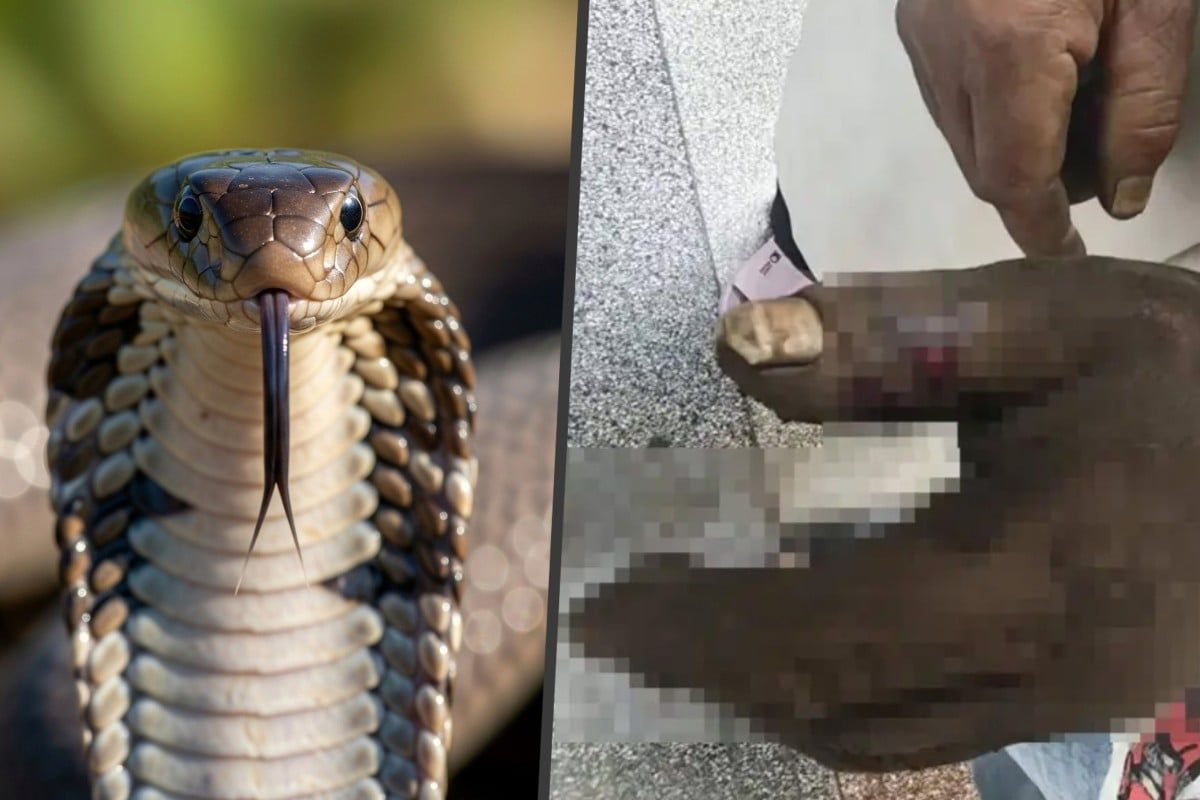
A rural incident in southwestern China has thrust a common medical misconception into the spotlight, illustrating how television dramatizations can lead to life-threatening decisions in genuine emergencies. When her husband, a farmer in Yuanyang county, Yunnan province, was bitten by a cobra while working in his field, his wife acted instinctively—reaching for a remedy she had learned from television screens rather than medical training. The farmer's finger had been struck by the snake, causing immediate swelling and triggering dizziness and weakness. Convinced that removing the venom directly from the wound was his best chance of survival, his wife placed her mouth over the wound and began extracting the poison, a decision that would have consequences neither had anticipated.
The husband was transported to hospital for proper treatment, but the situation took a troubling turn several hours later when his wife's condition began to deteriorate. Numbness crept into her mouth, tongue, face and limbs, and by the following day, she was gripped by severe fatigue. Alarmed by these symptoms, her family rushed her to join her husband at Honghe Prefecture No 3 People's Hospital in Yunnan. Medical staff at the facility confirmed that both patients had been envenomated by a local cobra species, and both required injections of antivenom serum along with additional supportive care to counteract the poison's effects.
The incident, which concluded with both patients being discharged after their conditions stabilised, has become a teaching moment for medical professionals across the region. Hospital doctors in Yunnan have seized on the case to dispel a particularly persistent and dangerous myth: that bystanders should extract snake venom by sucking on the bite wound. The reason this practice is so hazardous lies in human anatomy itself. The oral mucosa—the tissue lining the inside of the mouth—is richly supplied with capillaries, tiny blood vessels that provide an direct highway for toxins to enter the bloodstream. When venom comes into contact with this highly vascularised tissue, absorption happens rapidly, poisoning the very person attempting the rescue.
Beyond the anatomical vulnerability of the mouth, snakebite wounds present another problem that renders extraction virtually useless. Snake fangs typically create wound profiles that resemble tiny pinholes rather than substantial lacerations. Because of this, venom rapidly disperses into the subcutaneous tissues beneath the skin or enters the bloodstream within minutes of injection. The toxins do not remain pooled in a location where suction could retrieve them; instead, they diffuse throughout the body's tissues and circulatory system far too quickly for any manual extraction method to be effective. Medical authorities emphasise that the window for any physical removal of venom is essentially non-existent by the time symptoms appear.
The misunderstandings about snakebite treatment extend beyond suction, however. Another widely held but equally dangerous belief is that cutting the wound to encourage bleeding will help expel the venom. Doctors warn that this approach creates multiple hazards for the victim. The incision can cause excessive blood loss from an already traumatised patient, and it significantly increases the risk of infection at the wound site. Rather than aiding recovery, cutting transforms a treatable snakebite into a compound medical emergency. Similarly, applying heat to the wound or attempting to ice the area are counterproductive interventions that should be avoided entirely.
The correct response to a snakebite follows fundamentally different principles. Medical authorities in Yunnan and throughout China consistently advise that victims should immediately contact emergency services rather than attempting home remedies. The second priority is minimising movement—keeping the affected limb as still as possible slows the rate at which venom circulates through the body and can reduce the speed of symptom progression. This passive approach, while psychologically difficult for those in panic mode, provides genuine medical benefit by buying time before professional treatment arrives.
Collecting information about the snake itself proves crucial for proper medical response. Victims or bystanders should note the reptile's colour, pattern, head shape, and any other distinguishing features. Photography of the offending snake, if it can be captured safely, offers doctors definitive identification that enables them to administer the correct antivenom serum. Different snake species produce different toxin profiles, and using the wrong antivenom wastes precious time without addressing the specific poison in the victim's bloodstream. This information-gathering focus transforms bystanders into active participants in the rescue effort without engaging in the dangerous interventions that popular media has glamorised.
Snakebite incidents have become something of a phenomenon on Chinese social media, with cases regularly attracting substantial online attention. The Yunnan couple's situation gained particular traction, prompting widespread discussion about the gap between entertainment portrayals and medical reality. An earlier case from May further underscored the stakes involved: a fourteen-year-old student in Guangdong province suffered a snakebite at his school that he initially dismissed because he experienced no immediate pain and could not see what had bitten him. Hours later, as numbness spread through his limbs and his vision blurred, he finally reported the incident to a teacher. Medical intervention came just in time; doctors treating him stated plainly that a delay of merely one to two hours would have proven fatal, with the boy's respiratory system failing before any treatment could be administered.
These incidents reveal how snakebite emergencies demand speed and medical expertise rather than improvised interventions based on fictional scenarios. The Yunnan case prompted online observers to reflect critically on how television dramatisation diverges from medical reality. One internet commenter noted that the situation illustrated that what television presents as heroic rescue technique is often dangerously unreliable. Another took a more sentimental view, focusing on the wife's devotion despite the harmful outcome. Both observations, however, underscore the genuine danger posed by medical misconceptions that have been normalised through popular entertainment. For readers throughout Southeast Asia, where snakebite incidents occur with similar frequency, the lesson carries particular relevance: in moments of crisis, medical professionals—not television scripts—should guide emergency response.

