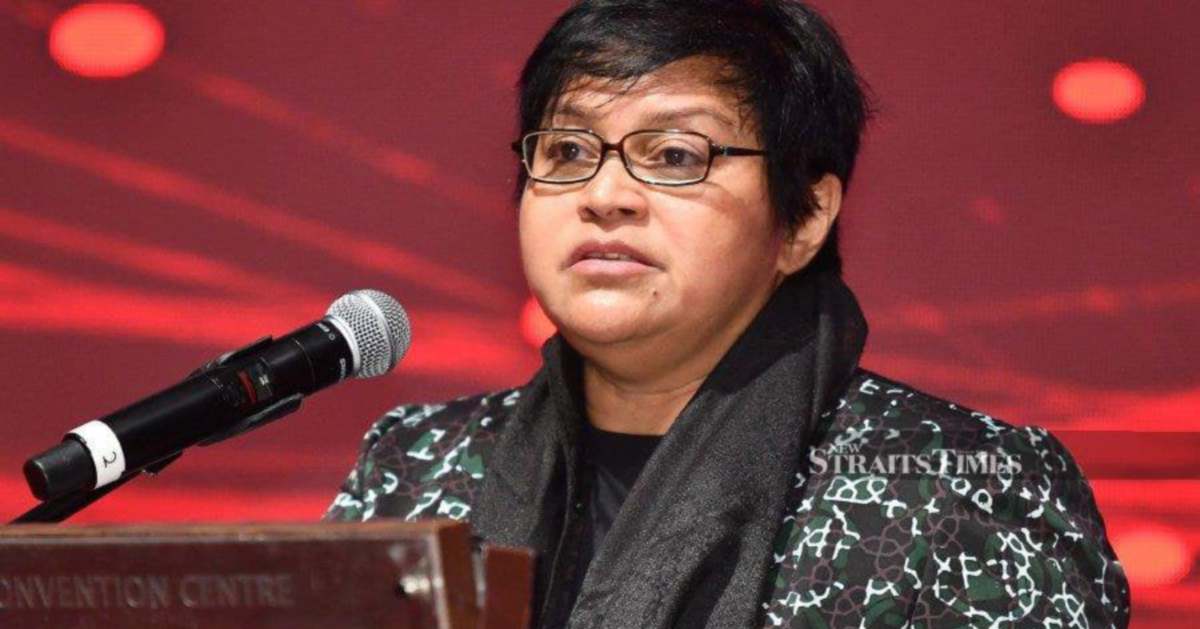
Umno information chief Datuk Seri Azalina Othman Said has pushed back against early speculation regarding potential coalition arrangements in Johor, insisting that meaningful discussions about any possible governing partnership must remain on hold until voters have cast their ballots and results are officially tallied. Her statement, made in Putrajaya, reflects a broader sentiment within Umno that pre-election positioning on governance structures could undermine the democratic process and send confusing signals to the electorate about the party's commitment to competing on merit.
The caution from Azalina signals the delicate political dynamics currently playing out in Johor, where multiple parties are competing for voter support whilst simultaneously calculating potential post-election alliances. In Malaysia's fluid political landscape, where coalition governments have become commonplace at both federal and state levels, the sequencing of public discourse around government formation carries real consequences. Premature announcements or negotiations risk appearing to voters as though political outcomes are predetermined, potentially dampening voter enthusiasm and raising questions about the legitimacy of electoral exercises.
Johor, as the nation's second-largest state by population and economically significant, carries outsized importance in Malaysian politics. The state has traditionally been an Umno stronghold, though recent electoral cycles have demonstrated increasing competitiveness from opposition coalitions and shifting voter preferences in certain districts. Any coalition arrangement formed after elections would carry implications not only for state governance but also for the broader political balance at federal level, particularly given Johor's substantial representation in Parliament.
Azalina's intervention also reflects internal Umno discipline, positioning the party as serious about its electoral mandate rather than focused on opportunistic coalition-building. This framing matters for voter perception, especially among those concerned about horse-trading and backroom deals in Malaysian politics. By establishing clear parameters that coalition discussions follow rather than precede election results, Umno seeks to project an image of political integrity and voter-centric decision-making.
The timing of her statement is significant given the current political calendar and mounting speculation across various political commentary platforms about possible post-election scenarios in Johor. Various combinations of coalitions involving Umno, PAS, PKR, DAP, and other smaller parties have been floated in political circles, but Azalina's intervention establishes that such discussions remain premature and should be treated as unauthoritative until voters have spoken.
This approach also protects Umno's flexibility in eventual coalition negotiations. By declining to commit to specific arrangements before election results, the party preserves its negotiating position and maintains the ability to respond pragmatically to actual electoral outcomes. Malaysian political history demonstrates repeatedly that unexpected results can reshape coalition mathematics, making early commitments potentially disadvantageous to any party entering into them.
For voters in Johor, Azalina's statement provides assurance that their ballot choices will directly influence government formation rather than represent a mere formality preceding predetermined arrangements. This messaging becomes increasingly important in an era where public confidence in democratic institutions can be fragile, particularly when political maneuvering appears divorced from electoral processes.
The broader context involves Southeast Asia's ongoing evolution toward more complex coalition politics, where single-party governments have become exceptions rather than rules in many jurisdictions. Malaysia exemplifies this trend, with federal and state administrations regularly requiring multi-party arrangements to achieve governing majorities. Johor's political future will likely follow similar patterns, but the method and timing through which coalitions are assembled carries implications for democratic legitimacy and political stability.
For Malaysian businesses and civil society organizations operating in Johor or dependent on Johor's economic performance, clarity around governance remains important for planning and investment decisions. Azalina's insistence on maintaining this separation between election and coalition formation suggests that formal government structures in Johor may remain in flux for some weeks following polling day, as negotiations proceed. This period of political uncertainty, whilst procedurally sound, does create temporary challenges for state-level administration and policy implementation.
Umno's positioning through Azalina's statement also reflects awareness that different voter segments respond differently to messaging around coalition politics. Younger voters and urban constituencies may react negatively to perceived pre-determined arrangements, whilst more traditional constituencies might interpret flexibility on coalitions as pragmatic governance. By withholding coalition discussions until results emerge, Umno avoids alienating either segment prematurely.
Looking ahead, the Johor political situation will likely feature as a significant subplot within broader Malaysian political developments over coming months. Whether Azalina's counsel about sequencing proves genuinely consequential or represents largely rhetorical positioning will depend substantially on how dramatically electoral outcomes diverge from current expectations. Significant surprises could force earlier coalition discussions regardless of pre-election declarations about timing, whilst expected results aligned with current polling projections would allow the stated process to unfold largely as articulated.

