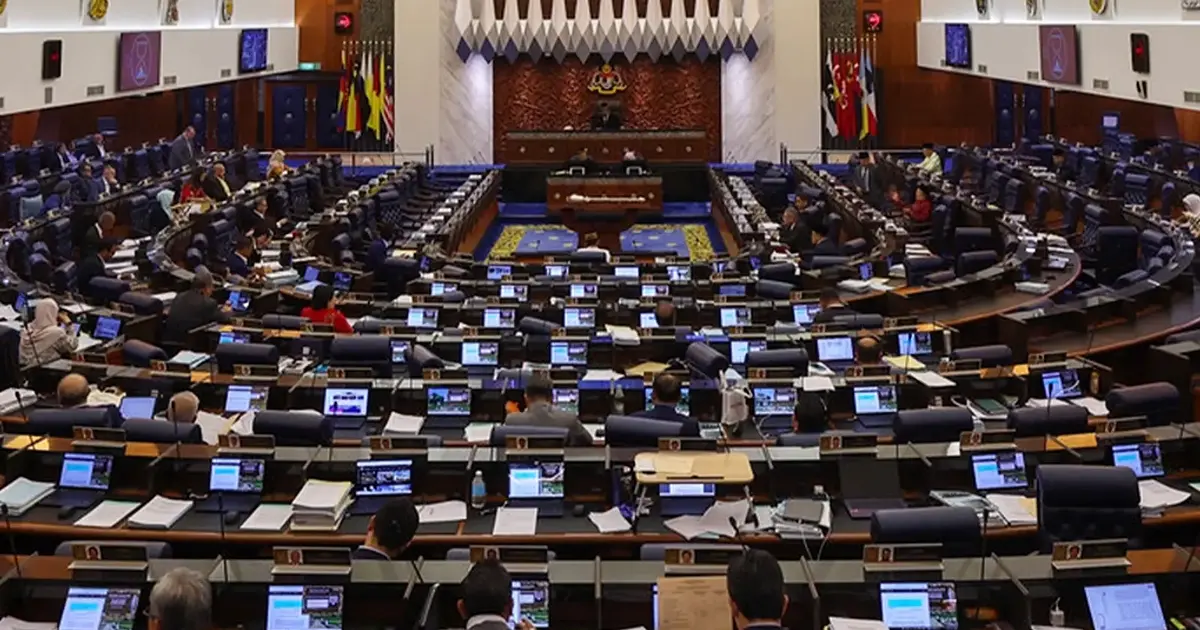
Civil society groups across Malaysia have made a forceful appeal for political stability and institutional reform, calling on the prime minister to convene a high-level summit bringing together government and opposition leaders to hash out a shared agenda for constitutional and electoral changes. The organisations behind this initiative see the completion of the current parliamentary term as critical breathing room for advancing reforms that have languished in the fractious environment of Malaysian politics.
The push reflects growing frustration among civil society actors that Malaysia's frequent electoral cycles and political instability have repeatedly derailed meaningful governance improvements. Rather than waiting for electoral upheaval to dictate the pace of change, these NGOs are arguing that the immediate window before GE16 presents a unique opportunity for consensus-building around institutional architecture. Their reasoning hinges on the premise that reforms agreed upon across party lines carry greater legitimacy and durability than those imposed unilaterally by whichever coalition commands parliamentary majority.
The proposed cross-party pact would likely encompass areas where consensus has historically proven elusive: electoral commission independence, campaign finance transparency, parliamentary procedures, and the distribution of federal and state powers. Malaysian civil society has long advocated for these reforms as fundamental to strengthening democratic accountability and reducing space for institutional manipulation. By framing reform as a national project rather than a partisan battleground, the organisations hope to insulate proposals from the zero-sum logic that typically governs Malaysian politics.
The timing of this call underscores anxiety about the durability of Malaysia's political institutions. Since 2018, the country has experienced three prime ministerial transitions, the collapse of the Pakatan Harapan coalition, a period of emergency rule, and the fragmentation of voter preference across competing blocs. This volatility has exhausted the electorate and created policy uncertainty that affects everything from investment decisions to civil service morale. Civil society sees a comprehensive reform agenda as one pathway to stabilising the political system before the next general election cycle potentially introduces fresh instability.
For opposition parties, engaging in such a summit carries both strategic opportunity and risk. The temptation exists to distance themselves from government initiatives as a means of maintaining political differentiation ahead of GE16. Conversely, demonstrating a commitment to institutional reform over partisan advantage could strengthen their electoral positioning by signalling responsibility and statesmanship. The civil society groups are essentially appealing to political leaders' enlightened self-interest: reforms that enhance parliamentary oversight and transparency would benefit whichever coalition eventually assumes power.
Government participation is equally complex. Administrations contemplating electoral defeat often hesitate to entrench reforms that might constrain their successors' executive prerogatives. Yet accepting responsibility for institutional strengthening before departing office creates a legacy beyond electoral victory or defeat. The current government faces particular pressure given multiple coalition partners with varying reform priorities and constituency demands, making unified negotiation challenging.
The emphasis on completing the current parliamentary term reflects recognition that Malaysia's political culture remains vulnerable to early dissolution calculations. Prime ministers have repeatedly dissolved parliament when circumstances seemed favourable, interrupting legislative agendas and preventing long-term planning. A firm commitment to the full term would provide the temporal space necessary for serious deliberation on complex constitutional matters, which cannot be rushed without sacrificing quality of implementation.
Regional context adds weight to these appeals. Southeast Asian democracies have experienced erosion of institutional safeguards through piecemeal reform or executive dominance, warnings that Malaysian civil society heeds carefully. Thailand's repeated cycles of coup and constitution-writing, Myanmar's descent into authoritarianism, and Cambodia's gradual hollowing of parliament all demonstrate how institutional weakness creates space for democratic backsliding. By contrast, Taiwan and South Korea managed transitions through strong institutional frameworks, suggesting that procedural reforms do matter for democratic resilience.
From a Malaysian perspective, such a pact could address longstanding grievances about electoral fairness that cut across demographic and regional lines. The apparent malapportionment of constituencies, alleged manipulation of boundary definitions, and concerns about voter registration systems affect perception of legitimacy regardless of which coalition wins. A bipartisan reform programme tackling these issues would represent genuine progress toward a more credible electoral system that all parties could regard as neutral.
Civil society organisations also recognise that delay breeds cynicism. Every postponed reform effort that founders on partisan disagreement erodes public confidence in political institutions more broadly. Malaysian voters increasingly regard politicians of all colours with suspicion, seeing them as self-interested rather than genuinely committed to public welfare. A demonstrable commitment to agreed reforms executed before the next election could reverse this trajectory, offering tangible evidence that Malaysia's political class retains capacity for constructive co-operation.
The road from these appeals to actual summit and substantive agreement remains uncertain and politically fraught. Yet the persistence of these calls from diverse civil society actors indicates that significant segments of organised society believe the moment is opportune. Whether the government and opposition leadership will answer this call likely depends on political calculations beyond the immediate horizon—calculations about stability, legitimacy, and the kind of democracy Malaysia will become after GE16.

