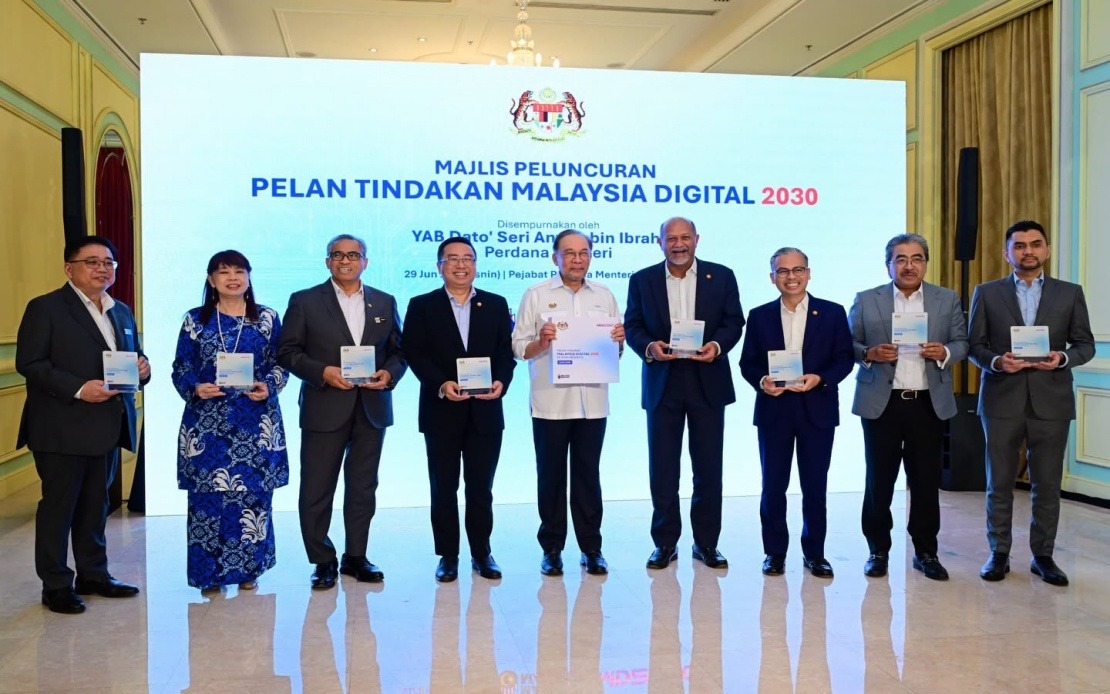
The Malaysian civil service has demonstrated tangible progress in its digitalisation drive, with officials reporting that a paperless initiative has generated savings of RM1.99 million while reducing paper consumption by 116,405 reams. The achievement was highlighted during a meeting of the Digital Economy and Fourth Industrial Revolution Council chaired by Prime Minister Datuk Seri Anwar Ibrahim, underscoring the government's commitment to moving away from traditional paper-based administrative processes.
Chief Secretary to the Government Tan Sri Shamsul Azri Abu Bakar, who chairs the Government Cluster, announced the milestone while discussing broader digital transformation priorities. The paperless transition represents more than mere cost reduction; it reflects a strategic shift in how Malaysia's sprawling civil service conducts routine operations, from document management to inter-departmental communications. The figures suggest that when extrapolated across the entire government machinery, such efficiency gains could yield substantially larger savings as the initiative matures and expands to additional agencies and transaction types.
The paperless programme gained momentum in February when the government announced plans to implement digital systems for simple transactions beginning February 9. This phased approach allows departments to transition gradually while building technical capacity and staff familiarity with new platforms. By focusing initially on straightforward, high-volume transactions, the government could maximize adoption rates and identify operational challenges before extending the system to more complex administrative processes that historically required extensive paper documentation.
The cost savings from eliminating paper purchases represent only one dimension of the initiative's value. Additional benefits include reduced storage requirements, faster document retrieval, improved record-keeping security, and lower environmental impact through decreased consumption of natural resources. For a nation increasingly conscious of sustainability goals, the environmental aspect carries significance beyond the immediate financial calculation. The reduction of over 116,000 reams also illustrates the sheer volume of paper that previously circulated through government channels, suggesting substantial room for further optimization.
The announcement of the paperless achievement occurred within a broader policy framework unveiled during the council meeting. Prime Minister Anwar Ibrahim launched Malaysia Digital 2030, an overarching strategy designed to position the country as an Artificial Intelligence nation within the next six years. This ambitious target connects the immediate paperless initiative to longer-term aspirations of leveraging AI and advanced technologies across government operations. The strategy signals that incremental efficiency improvements like paperless administration serve as building blocks toward more sophisticated digital governance models.
Malaysia's Digital 2030 framework encompasses several interconnected initiatives that extend beyond simple administrative modernization. The council meeting emphasized the MyDigital ID and MyGov platforms, which aim to streamline citizen interactions with government services through unified digital identity systems. These programmes require robust underlying infrastructure and widespread citizen participation, making foundational changes like paperless administration essential precursors to more advanced digital services. The paperless initiative thus functions as both an independent cost-saving measure and a component of larger systemic transformation.
The government's focus on developing digital talent through the MyMAHIR National AI Council for Industry reflects recognition that technological adoption requires human capital development. Eliminating paper-based processes necessitates training staff in digital systems, establishing new workflows, and building comfort with technology-mediated work environments. The integration of talent development initiatives with infrastructure projects suggests a holistic approach to digital transformation that addresses both technical and human dimensions. Success depends on civil servants at all levels acquiring relevant digital skills and embracing new ways of conducting business.
For Malaysia's higher education sector, the council's decision to expand digital access represents a significant commitment to ensuring that universities can participate fully in the digital economy transition. Educational institutions serve as crucial incubators for AI talent and digital innovation, making their connectivity and technological sophistication essential to national competitiveness. By prioritizing higher education connectivity, the government recognizes that developing the skilled workforce necessary for an AI-driven economy begins with educational infrastructure investment.
The paperless initiative's success to date provides encouraging precedent for scaling digital transformation across government. The demonstrated cost savings and operational improvements create internal momentum for expanded adoption, while success stories help convince skeptical departments and staff members of digitalization's benefits. This psychological dimension matters significantly in large bureaucratic organizations where established routines and traditional methods hold considerable institutional weight. Visible achievements make the case for change more persuasive than policy directives alone.
Regional observers noting Malaysia's digital economy ambitions should recognize that foundational administrative reforms like the paperless initiative provide necessary groundwork for competing with regional technology leaders. Singapore and South Korea have advanced digital governments that serve as both benchmarks and competitors. Malaysia's multi-year, comprehensive approach to digital transformation, encompassing everything from basic paper elimination to AI governance frameworks, reflects strategic thinking about sustainable competitive positioning in Southeast Asia's rapidly evolving digital landscape.
The intersection of cost savings with environmental sustainability positions Malaysia's paperless initiative as aligned with both fiscal responsibility and climate commitments. Government procurement represents significant spending that extends beyond immediate budget lines to include warehousing, transport, and waste management costs associated with paper consumption. Reducing these expenditures while simultaneously lowering environmental impact creates compelling justification for continued investment in digital infrastructure and process redesign. This alignment of financial and environmental incentives strengthens the case for broader adoption across all government operations.

