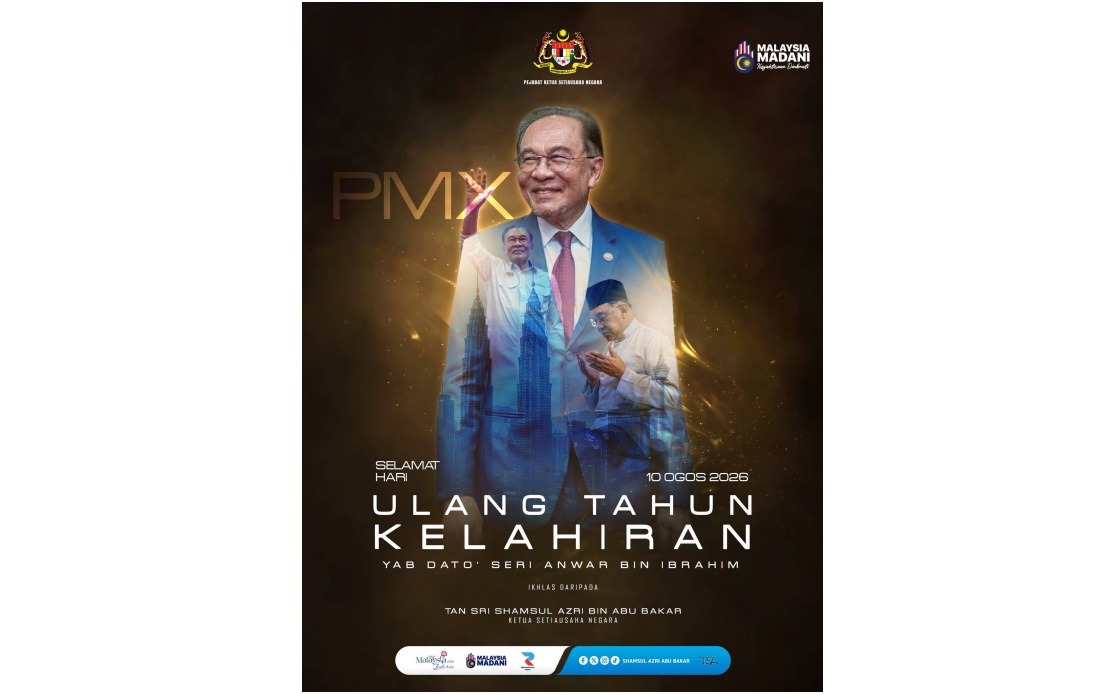
Prime Minister Datuk Seri Anwar Ibrahim reached his 79th birthday on August 10, drawing warm wishes from key government figures including Chief Secretary to the Government Tan Sri Shamsul Azri Abu Bakar. The civil service's top official took to social media to express sincere greetings, marking the occasion with both personal well-wishes and institutional affirmation of the Prime Minister's role at the helm of the nation's administration.
Tan Sri Shamsul Azri's message extended beyond simple birthday pleasantries, weaving together expressions of hope for the Prime Minister's continued good health and wellbeing alongside prayers for the wisdom and strength necessary to guide the country through its current challenges and future opportunities. His Facebook post reflected the formal yet respectful tone expected in such governmental acknowledgements, while simultaneously positioning the civil service as a committed partner in the administration's broader mission.
The Chief Secretary's statement carried particular significance given his position as the administrative backbone of Malaysia's government machinery. By publicly pledging the civil service's unwavering support for the Prime Minister's reform agenda and public service modernisation initiatives, Shamsul Azri signalled institutional continuity and alignment with the government's stated development priorities. His reference to supporting both the aspirations and reform agenda underscored the interconnection between political leadership and bureaucratic implementation at the highest levels.
The Prime Minister's Office added its own tributes through a video message distributed via Facebook, employing language that reflected themes of perseverance and divine providence. The message conveyed through official channels emphasised the notion that efforts persist, trust is maintained, and ultimate reliance rests with Allah SWT—sentiments that resonated with Malaysia's Muslim-majority population while maintaining inclusive governance messaging.
Simultaneously, the Malaysia MADANI official page, representing the government's broader policy framework and institutional identity, joined in the birthday celebrations. The posting reiterated hopes for the Prime Minister's continued strength and energy to pursue development objectives and national service. The Malaysia MADANI brand, which encapsulates the current administration's governance philosophy and policy direction, has become a prominent vehicle for official messaging and represents a shift in how Malaysian government institutions communicate with the public.
At 79 years old, Anwar Ibrahim remains among the world's elder statesmen still actively leading major democracies. His tenure as Prime Minister since late 2022 has encompassed significant economic challenges, including inflation management and fiscal sustainability concerns that continue to preoccupy policymakers across Southeast Asia. The birthday wishes from institutional figures subtly reinforce the administration's message of stability and experienced governance during a period of regional economic flux.
The coordinated nature of these greetings—spanning the civil service leadership, the Prime Minister's direct office, and the broader government messaging apparatus—illustrated the structured, institutional approach to state communications. Such messages serve multiple purposes simultaneously: they acknowledge the individual's importance, affirm continuity of leadership, and communicate to the broader public that key institutions remain aligned and functioning cohesively.
For Malaysian readers and observers, these birthday tributes offer insight into the personal dimension of governance and the relationship between political leadership and administrative structures. The emphasis on civil service support and reform agendas reflects ongoing efforts to modernise Malaysia's public institutions, a priority that has gained urgency as the nation navigates post-pandemic economic recovery and structural transformation.
The religious undertones in several of the messages—invoking divine blessings and protection—reflect the cultural and religious fabric of Malaysian governance, where Islamic principles remain interwoven with administrative communications. This approach balances institutional formality with cultural authenticity, demonstrating how Malaysia's plural yet Muslim-majority context shapes official discourse.
Looking forward, the widespread institutional recognition of the Prime Minister's milestone birthday carries subtle messaging about succession planning and generational leadership questions that naturally arise when senior statesmen reach advanced age. While the greetings themselves focus on present service and continued contributions, they also implicitly acknowledge the Prime Minister's enduring role in shaping Malaysia's near-term political and economic trajectory.

