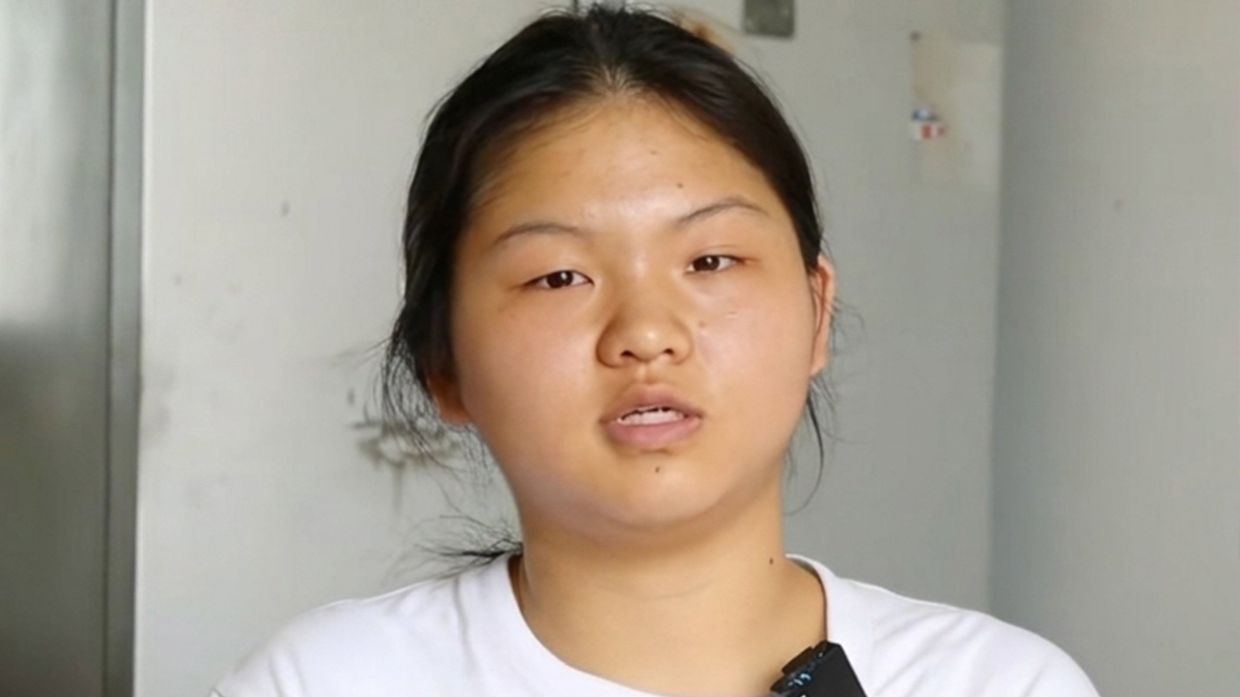
Zeng Zixuan, an 18-year-old Chinese student, faces an uncertain future with remarkable maturity and compassion, having become an orphan on the eve of her university studies. Just as the promising scholar prepared to enrol at a local institution selected partly for its proximity to her grandmother's home, the elderly woman fell ill and passed away in early July. The loss marked the final chapter in a young life shadowed by family tragedy, leaving Zeng to navigate her formative years entirely alone. Her circumstances highlight both the fragility of family structures in contemporary China and the resilience of individuals confronted with overwhelming personal loss.
Zeng's path to this juncture began with parental separation during her childhood, a rupture that fundamentally altered her trajectory. When her parents divorced, her mother remarried and effectively disappeared from her life, while her father relocated to Guangdong to seek employment opportunities. The abandonment forced young Zeng into the sole care of her grandmother, a humble arrangement that might have seemed sustainable had fate not intervened with cruel persistence. The girl's early years were defined by this grandmother-grandchild bond, which became the emotional and practical anchor of her existence. She channelled her circumstances into academic achievement, consistently excelling in her studies and emerging among the top performers in her cohort.
The trajectory of her teenage years shifted dramatically when her father died in an accident during her senior secondary school years. This tragedy not only severed Zeng's remaining direct family connection but also eliminated the household's primary income source, plunging her and her grandmother into genuine financial vulnerability. The pair became dependent on government assistance programmes and subsidies provided through her school, a lifeline that represented the institutional safety net many vulnerable families in rural China must navigate. The death prompted a visible psychological transformation: a previously cheerful girl withdrew into herself, bearing the weight of grief and loss that no adolescent should endure. Her supervising teacher recognised these changes and became an emotional anchor, regularly engaging Zeng in conversations designed to help her process trauma and maintain perspective.
Community structures also mobilised to support Zeng during this dark period. Village officials designated a representative responsible for women's issues to ensure that Zeng and her grandmother received consistent support and remained connected to available resources. Her supervising teacher provided crucial encouragement, framing education as a pathway to honouring both her deceased father and her living grandmother. The message conveyed was clear: academic excellence represented not merely personal advancement but also a form of filial piety and intergenerational responsibility. Zeng internalised this guidance, understanding that her educational achievements carried significance beyond her individual prospects.
When her grandmother's health deteriorated and she passed away in early July, the timing coincided with Zeng's preparation to begin university following her gaokao examination. She had scored 564 out of 750 on the national university entrance examination, a respectable result that secured her admission. The university she selected was deliberately chosen for its geographical proximity to her grandmother's home, allowing her to maintain regular contact and provide what support she could as the elder's health declined. The grandmother's death, therefore, arrived at a moment of particular vulnerability—precisely when Zeng should have been experiencing excitement about her academic future, she instead confronted complete isolation.
The tragic news sparked an outpouring of compassion from both her village community and strangers who learned of her circumstances. Kind-hearted individuals began offering financial donations through the village government apparatus, seeking to ease her path through university. Within a relatively short timeframe, village residents and well-wishers accumulated over 60,000 yuan, equivalent to approximately US$8,800. For a rural family without means, this represented a substantial sum capable of covering tuition fees, accommodation costs, and living expenses for a full academic year. The collective generosity reflected deeply rooted Chinese values emphasising community responsibility and filial piety extended toward those facing extreme hardship.
Zeng's response to these donations revealed character that transcended her years and circumstances. Rather than accepting the accumulated funds with gratitude—a response entirely understandable given her desperate situation—she contacted the village office and requested that donations cease immediately. In a statement demonstrating remarkable emotional maturity and social consciousness, she expressed appreciation for the support already provided, noting that the funds received were sufficient for her tuition and accommodation expenses. She articulated a vision of shared hardship across society, acknowledging that many individuals faced circumstances more challenging than her own. Her decision reflected a philosophical orientation that prioritised collective welfare over individual benefit, a perspective rarely encountered among people of any age facing such personal devastation.
Zeng explained that she intended to pursue part-time employment to cover her daily living expenses, rejecting the notion that society bore responsibility for her subsistence. The village government, recognising her circumstances and commitment to study, offered her an employment position designed to accommodate a full-time student's schedule. This arrangement provided both income and flexibility, enabling Zeng to balance her academic responsibilities with financial self-sufficiency. Her approach embodied a determination to avoid dependency despite having every justification for reliance on public support. The combination of community assistance and personal initiative created a sustainable model for her university years.
The incident resonated powerfully on Chinese social media and news platforms, generating widespread discussion about resilience, responsibility, and the relationship between individual agency and community support. Online commentators offered encouragement and reflection on Zeng's circumstances, with many noting that despite her status as a disadvantaged child, she lived in an era and society that provided institutional mechanisms for support. Others emphasised that her future, though shadowed by past tragedy, held genuine potential for transformation and achievement. Zeng's story challenged prevailing narratives about victimhood and despair, instead presenting a portrait of a young woman determined to honour those she had lost through academic accomplishment and ethical behaviour.
For Malaysian and Southeast Asian readers, Zeng's narrative offers several important reflections. Her experience illuminates the vulnerabilities that young people in rural areas across the region face when family structures collapse, particularly in societies where social safety nets remain inadequate or inconsistently implemented. Her response—declining assistance she could legitimately claim—highlights the ethical frameworks and values systems that shape responses to hardship. Additionally, her reliance on community support, institutional assistance, and part-time employment mirrors patterns increasingly common among university students throughout Southeast Asia. The gaokao examination system that defined her academic trajectory represents a significantly different educational landscape than Malaysian educational pathways, yet the fundamental challenges of rural poverty, family instability, and educational opportunity resonate across national borders throughout the region.

