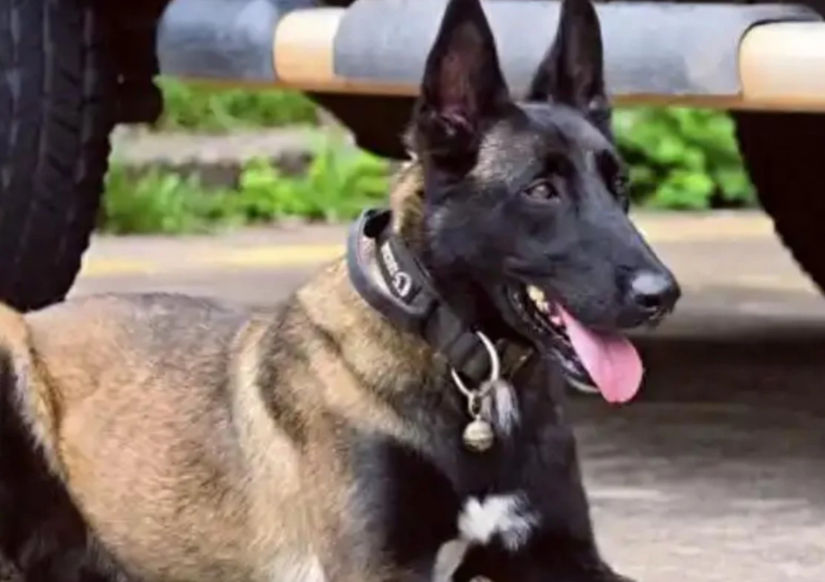
An emotional reunion between a police dog and its handler has resonated deeply across China's social media platforms, drawing millions of viewers and sparking renewed interest in the role of canines in law enforcement across the region. The story of Bulu, a four-year-old German shepherd trained in narcotics detection, and his handler Awei from Chuxiong in Yunnan province, illustrates the profound bonds that develop between working animals and their human partners in demanding operational environments.
The incident that separated them unfolded in November during a coordinated drug enforcement operation targeting suspects believed to be hiding in an abandoned building. Deployed together as a trained unit, Bulu and Awei were moving through the debris-strewn corridors when the dog's acute senses detected movement ahead—suspects attempting to flee the scene. In the pursuit that followed, tragedy struck when Awei, navigating the dim passageways filled with rubble and structural hazards, lost his footing on an upper level. He plummeted from a second-storey height, sustaining injuries that would prove far more severe than initial assessments suggested.
The immediate aftermath captured on scene footage reveals the gravity of Awei's condition. Officers found him suffering from convulsions and vomiting blood, drifting in and out of consciousness as medical personnel rushed to stabilize him. Throughout this crisis, Bulu remained at his side, circling frantically and attempting to nudge his handler back to awareness—a instinctive response that highlighted the dog's trained capacity to recognize distress in his human partner. Emergency responders transported Awei to hospital where he faced a five-day coma before regaining consciousness. Medical examinations revealed multiple fractures affecting both his head and chest, injuries that required extended hospitalization and rehabilitation.
While Awei underwent treatment and the slow process of recovery, Bulu was transferred to a training facility to await his handler's return. What unfolded over the subsequent months became a testament to the emotional investment these working dogs develop with their partners. Rather than moving forward with regular duties or adapting to temporary handlers, Bulu entered a state of marked distress. The dog refused meals with consistency, declined water, and displayed visible anxiety that manifested in restless behavior throughout the facility. The separation stretched across six months—a lengthy period for any animal conditioned through years of close partnership with a single handler.
Surveillance systems at the training base documented Bulu's behavior during this extended waiting period, revealing patterns that illuminated the depth of his attachment. The footage showed the dog repeatedly returning to locations where he might encounter Awei: the dormitory quarters, the main gate where handlers typically entered, and the familiar training routes where they had worked together. In one particularly poignant instance captured on video, Bulu rushed toward a returning police vehicle, clearly anticipating his handler's arrival, only to receive confirmation that Awei was not aboard. These repeated cycles of hope and disappointment continued throughout the separation period, underscoring the psychological toll of their forced separation.
The moment of reunion, when it finally came, demonstrated the resilience of their bond. Upon Awei's return to active duty, the training facility arranged for them to meet, a decision that proved emotionally significant for both parties. The encounter was immediate and unrestrained—Bulu barked with urgency and bolted toward his handler at full speed. Awei, still bearing the physical marks of his injuries, abandoned his belongings and dropped to his knees to embrace the dog, a gesture of mutual recognition and relief that transcended the typical professional relationship between handler and working animal. This reunion moment, captured on video and subsequently shared across mainland Chinese social media platforms, garnered extraordinary engagement: more than 10 million views and over 580,000 likes.
The operation that prompted their separation, despite the unfortunate injury to Awei, ultimately achieved significant law enforcement success. During the months following his hospitalization, Awei's colleagues pressed forward with the investigation, successfully apprehending 11 suspects connected to the case. Officers additionally seized 4.4 kilograms of narcotics and recovered more than 500,000 yuan (approximately US$75,000) in illicit financial assets. The successful conclusion of the case represented the culmination of their initial operational deployment, though at considerable personal cost to both Awei and Bulu.
The viral story has refocused public attention on China's extensive police dog programs and the working conditions these animals endure. According to figures released by CCTV News, the People's Republic maintains more than 29,000 active police dogs across its law enforcement agencies as of 2024. These animals typically serve approximately eight years in operational roles, though the demanding nature of narcotics detection work, explosive device identification, and pursuit operations takes considerable physical toll. Extended periods of high-intensity deployment frequently result in joint deterioration and spinal injuries—occupational hazards that affect these working animals much as they would human officers.
The broader ecosystem of care surrounding China's retired police dogs reflects institutional recognition of their service contributions. Following retirement from active duty, most police dogs remain stationed with their original units where their longtime handlers assume primary responsibility for their ongoing care and welfare. This arrangement acknowledges both the practical reality of handler-dog attachment and the principle that these animals have earned continued support. In some instances, retired police dogs become available for public adoption, allowing them to transition into civilian family environments where their training and temperament prove valuable as household pets.
The Bulu and Awei story resonates across Southeast Asia and beyond because it speaks to universal truths about partnership, loyalty, and the emotional complexity of animals working in human institutional frameworks. Online commentators in China expressed their responses in emotionally direct language, with one notable observation capturing widespread sentiment: the dog was not simply waiting for his handler to return, but rather remaining devoted to a comrade-in-arms—a framing that elevates the relationship beyond mere employment or training to something approaching mutual military service. This perspective reflects evolving attitudes toward working animals, recognizing them not as tools or equipment but as sentient beings capable of forming genuine emotional attachments and experiencing genuine suffering during separation.
For Malaysia and other Southeast Asian nations developing or refining their own police and military working dog programs, the story offers both inspiration and practical considerations. The evident emotional and psychological needs of such animals—their capacity for depression, loss of appetite, and behavioral deterioration during separation from established handlers—suggests that operational planning must account for the welfare dimensions of canine deployment. The success of the narcotics operation, despite Awei's injuries, confirms the operational effectiveness of properly trained and bonded dog-handler teams, supporting continued investment in such programs. Yet the narrative equally underscores the risks involved, particularly when operations occur in dangerous environments with poor visibility and structural hazards where handlers face serious injury risk.
The viral resonance of this story also reflects deeper cultural and societal shifts regarding how humans value and conceptualize relationships with animals in service roles. Rather than viewing the dog's refusal to eat and apparent emotional distress as operational problems to be managed, the dominant narrative celebrates these responses as evidence of admirable loyalty and emotional depth. This perspective mirrors broader regional conversations about animal welfare, worker protections (even for non-human workers), and the ethical dimensions of deploying living beings in dangerous situations. As law enforcement agencies across Asia continue expanding and professionalizing their canine units, the lessons embedded in Bulu's story—about the importance of preserving handler-dog continuity, recognizing animals' emotional needs, and honoring their contributions—warrant serious consideration.

