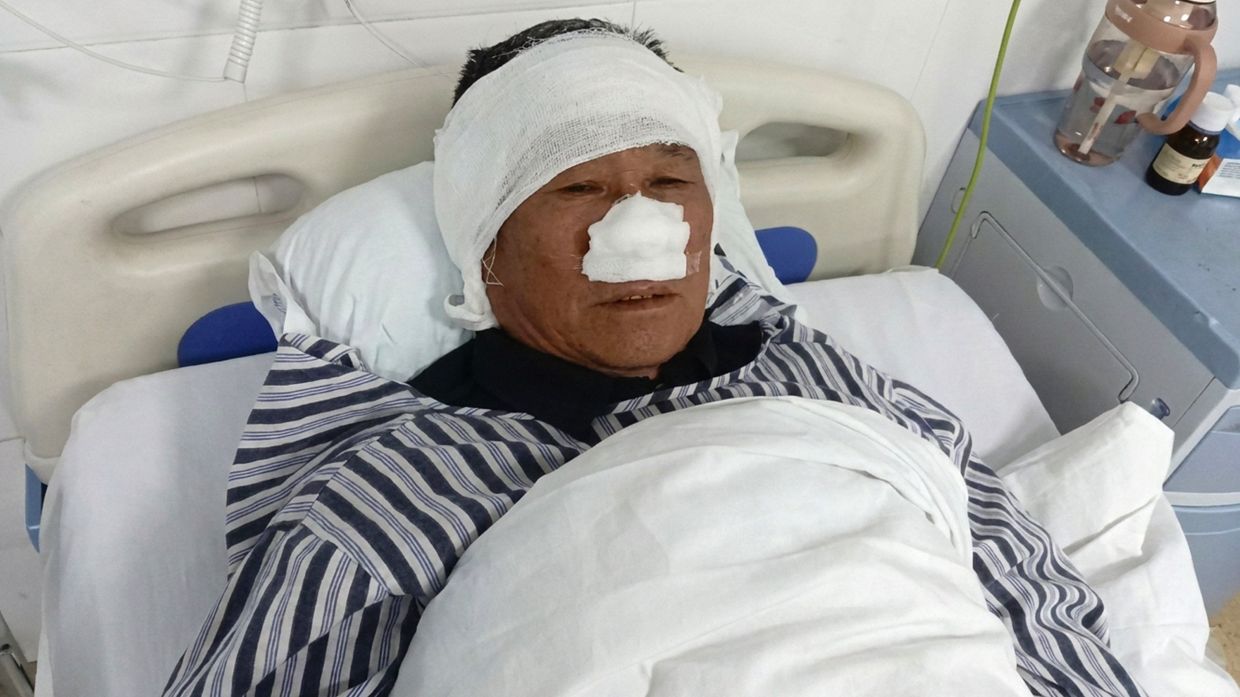
Zeng Fanlin, a 69-year-old from Chenzhou in Hunan province, has been officially recognised as a national hero by the Chinese government following a violent incident in April that left him severely disfigured. His courageous intervention to save a woman from an aggressive attacker, despite sustaining a catastrophic injury, has drawn widespread admiration across China and offers insights into concepts of civic duty and personal sacrifice that resonate across East Asia.
The incident unfolded when a man in his twenties entered the village and began attacking passers-by indiscriminately, kicking doors and terrorising residents. The rampage intensified when the attacker accosted a woman riding an electric bicycle, grabbing her by the neck with apparent intent to cause serious harm. Bystanders, fearful of the assailant's unpredictable violence, initially held back and contacted police rather than intervening directly, leaving the woman in immediate mortal danger.
Zeng, who happened to be in the vicinity, made the split-second decision to confront the attacker. He rushed forward and tackled the man, initiating a physical struggle that two other villagers soon joined. During this chaotic confrontation, the attacker bit off a substantial portion of Zeng's nose, inflicting an injury that would fundamentally alter his appearance for the remainder of his life. Despite the shock and excruciating pain of this disfigurement, Zeng maintained his grip on the assailant until police officers arrived at the scene and took the suspect into custody.
Zeng's background provides crucial context for understanding his willingness to risk personal harm for a stranger. Orphaned in childhood, he grew up depending on the support and generosity of his village community and subsequently received government-funded education. This formative experience of relying on collective care appears to have instilled in him a profound sense of reciprocal obligation to society. His daughter characterised him as someone with an unwavering commitment to justice who could never remain passive when witnessing wrongdoing, a trait he had previously demonstrated in 2016 when he assisted police in apprehending a thief.
The medical consequences of Zeng's injury were severe. Doctors determined that most of his nose had been destroyed, presenting extraordinary surgical challenges for reconstruction. The medical team warned of substantial scarring, permanent functional complications, and ongoing pain during the healing process. The reconstruction effort required multiple surgical interventions, including sophisticated skin grafting from his scalp and delicate restoration of the nasal wings to restore basic respiratory function. Despite these efforts, Zeng continues to experience daily discomfort.
The overall treatment cost exceeded 70,000 yuan, approximately US$10,000, a substantial sum for most rural Chinese communities. Government support helped cover these expenses, reflecting official recognition of Zeng's sacrifice even before his formal designation as a hero. Subsequently, the Alibaba Foundation and local media organisations presented Zeng with an additional 20,000 yuan in recognition of his bravery, further acknowledging the economic burden he had borne.
Zeng has now completed two major surgical procedures aimed at restoring functional capacity rather than cosmetic perfection. While doctors successfully enabled him to breathe normally again, the physical and psychological toll of his transformation remains significant. When interviewed by local journalists, Zeng demonstrated remarkable perspective, stating that compared to the life he had saved, any personal sacrifice seemed trivial and worthwhile. This philosophical outlook, rooted in his childhood experiences of community interdependence, suggests a worldview fundamentally oriented toward collective welfare over individual comfort.
On July 9, the Chinese government formally named 86 individuals, including Zeng, to its official list of "national heroes for a just cause". This recognition places Zeng among an elite group celebrated for extraordinary moral courage and selflessness. The designation carries significant cultural weight in China, where such honours typically acknowledge individuals whose actions exemplify core values of the state and society.
The criminal investigation into the attacker continues, with authorities working to understand what triggered his violent episode. According to police statements, the suspect lost emotional control before attacking random strangers, though full details remain under investigation. Under Chinese criminal law, intentionally inflicting serious injury carries potential prison sentences ranging from three to ten years, suggesting the assailant faces substantial legal consequences.
Zeng's story resonates particularly strongly across Southeast Asia and East Asia more broadly, where concepts of community responsibility, deference to social harmony, and willingness to endure personal hardship for collective benefit hold deep cultural significance. His case raises important questions about the balance between individual safety and collective action, the role of bystanders in preventing violence, and societal obligations to protect vulnerable community members. The fact that initial bystanders chose to contact authorities rather than intervene highlights contemporary tensions between self-preservation instincts and community-oriented values.
For Malaysian and regional readers, Zeng's example illustrates both the aspirational ideals and practical challenges of maintaining cohesive, mutually protective communities. His willingness to absorb catastrophic personal injury to prevent harm to a stranger reflects values celebrated across the region's cultures, yet raises uncomfortable questions about why ordinary citizens must bear such extreme costs when professional security and law enforcement services exist. The incident also underscores how economic support from government and philanthropic organisations can partially mitigate the consequences of individual heroism, though material compensation can never fully restore what was lost.

