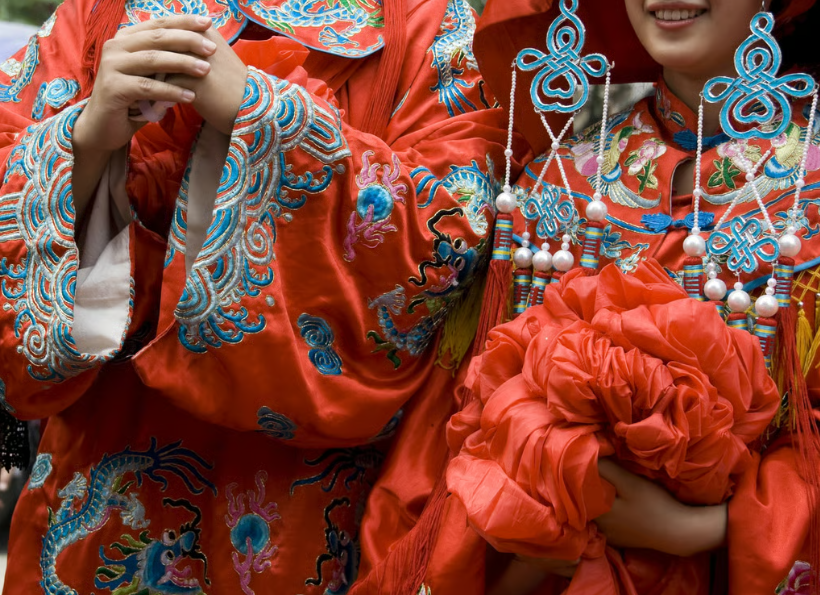
A court in Ruyang county, Henan province, has handed down a significant ruling that underscores the legal and physical dangers of wedding customs gone awry. In early July, the court made public its verdict in a case involving a bridesmaid who was severely injured during what started as a traditional but ultimately reckless prank at a wedding celebration. The judgment, ordering the newlywed couple and nine other people to pay a combined 230,000 yuan—equivalent to approximately US$34,000—marks an important moment in China's reckoning with the potential consequences of uncontrolled wedding revelry.
The incident dates back to October 2023, when a woman surnamed Zhang accepted an invitation to serve as a bridesmaid for her friend, the bride Li. During the wedding festivities, Zhang and roughly a dozen men, predominantly groomsmen, found themselves alone in the bridal chamber. At some point, Zhang sought refuge inside a cabinet, but one groomsman identified as Wang Moubing forcibly extracted her and pushed her onto the matrimonial bed. What followed was a hazing game that Wang himself initiated: he encouraged the assembled men to toss Zhang repeatedly into the air using a bedsheet held at its four corners. The first attempt succeeded without incident. The second throw proved catastrophic. As Zhang soared upward, the men failed to position the sheet properly, and she plummeted to the floor below, collapsing hard against the solid surface.
The tradition at the heart of this incident, known in Chinese as hun nao, carries ancient roots stretching back millennia. Originally conceived as a method to foster merriment and ward off malevolent spirits, the custom has remained embedded in wedding ceremonies across numerous regions of China. Yet in contemporary times, what purports to be festive banter has frequently morphed into something far more sinister. The line separating playful teasing from actual abuse has become increasingly blurred, with newlywed couples and their attendants bearing the brunt of escalating maltreatment.
Witnesses present during the incident included the groom's aunt, who observed the scene as she passed through the room. Recognizing the danger inherent in the escalating roughness, she vocally cautioned the men against allowing the jest to deteriorate further. Her warning was ignored entirely. Meanwhile, another man in the room, surnamed Hu, declined to participate in the hazing and instead demonstrated the restraint that others lacked. When it became evident that Zhang required urgent medical attention, Hu carried her downstairs and summoned emergency services. By the time medical professionals examined her at the hospital, Zhang had sustained a lumbar vertebral fracture—a serious injury to the spine that demanded eighteen days of inpatient treatment. Subsequent forensic evaluation assessed her condition as ninth-grade disability, a classification indicating substantial and lasting harm.
Zhang's determination to seek recourse led her to file suit against the bride and groom, as well as nine individuals implicated in the hazing. Her initial compensation demand stood at 270,000 yuan, approximately US$40,000. The court's analysis of culpability produced a nuanced allocation of responsibility. The newlywed couple bore primary accountability as the event's organizers, having permitted the hazing to unfold without intervening to prevent it, despite being cognizant of the practice. Wang Moubing's liability stemmed from his dual roles: he had physically dragged Zhang from the cabinet and orchestrated the perilous bedsheet tossing game. The remaining eight participants faced joint and several liability under a legal principle that placed the burden on them to demonstrate their non-involvement—a threshold they failed to clear.
The financial settlement ultimately reflected this graduated responsibility structure. The couple was ordered to remit 90,000 yuan, constituting forty percent of the total judgment. Wang Moubing's individual obligation amounted to approximately 50,000 yuan. The remaining eight individuals collectively faced a bill of 90,000 yuan. Though the court awarded less than Zhang's original claim, the verdict established clear precedent regarding the legal consequences of wedding hazing practices that result in genuine bodily harm.
This case arrives amid a troubling pattern of wedding-related injuries across China that have attracted increasing media attention and public concern. In 2018, a groom in Guizhou province suffered multiple traumatic injuries after attempting to flee from his own wedding hazing by fleeing onto an expressway, where he was struck by a vehicle. Earlier in 2024, another Guizhou groom sustained a fractured leg while escaping similar revelry. That incident similarly proceeded to litigation, with courts ordering compensation of 50,000 yuan. These episodes collectively paint a picture of a cultural practice that has deteriorated into something potentially life-threatening and increasingly difficult to justify under contemporary standards of social conduct.
The Ruyang court's decision to publicize its verdict demonstrates a deliberate effort to cultivate greater public consciousness regarding the perils of unrestrained wedding customs. By making the judgment widely available through news media, the court aimed to catalyze reflection among citizens about the boundaries between acceptable festive behavior and unacceptable violence. For Malaysian and Southeast Asian readers, the case offers a cautionary perspective on how deeply embedded cultural rituals—irrespective of their historical pedigree—require continuous reassessment in light of evolving standards regarding personal safety and bodily autonomy.
The implications of this ruling extend beyond the immediate parties involved. Chinese courts are signaling that individuals and organizations cannot shield themselves behind appeals to tradition when actions result in demonstrable physical harm. The principle that organizers bear responsibility for creating a safe environment, even at celebrations, carries broader application. Wedding celebrations in many Asian societies incorporate their own forms of playful testing or light ribaldry, and this precedent suggests that courts across the region are increasingly prepared to hold participants accountable when such activities cross into the realm of genuine injury.
For the bride and groom, the judgment serves as an expensive reminder that their authority as wedding hosts encompasses an obligation to maintain decorum and safety. The couple's forty percent share of liability reflects this organizational responsibility. For Wang Moubing and the other participants, the ruling establishes that neither youthful exuberance nor the existence of a cultural script absolves individuals of legal responsibility when their actions demonstrably harm others. The case represents a meaningful evolution in how Chinese jurisprudence addresses the intersection of tradition, consent, and culpability.

