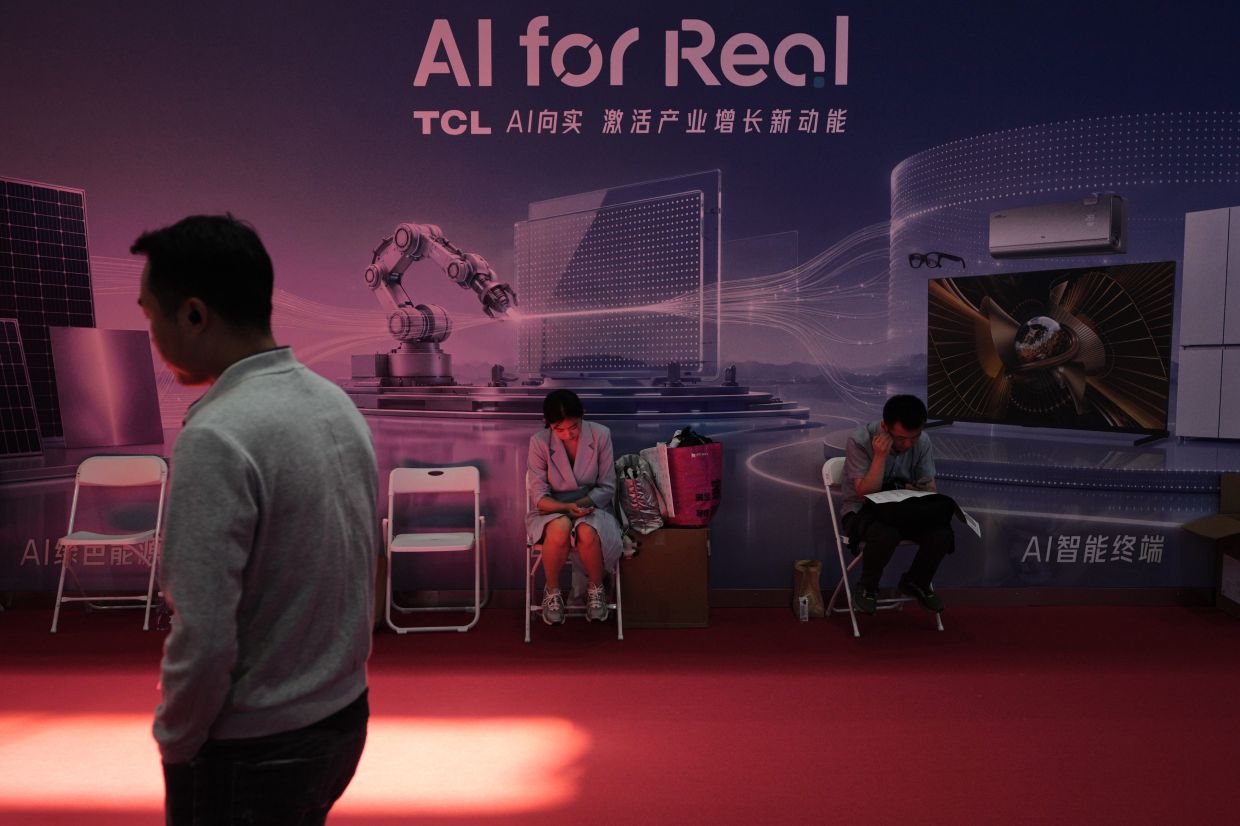
China's accelerating embrace of artificial intelligence, fueled by deliberate government promotion, is creating widespread anxiety among workers who fear obsolescence in an economy increasingly shaped by automation. From software engineers to translators and creative professionals, millions are confronting a rapidly shifting job market where their specialised skills face pressure from AI systems that can perform complex tasks at fraction of the cost. Unlike comparable concerns in Western economies, however, Chinese workers appear to exhibit less overt resistance to this technological upheaval, instead focusing their energies on adaptation and experimentation within the AI ecosystem itself.
The transformation of China's employment landscape reflects a distinctive policy approach. Through its "AI Plus" initiative and five-year technological plan extending to 2030, Beijing is actively promoting artificial intelligence adoption across multiple sectors as part of its broader competition with the United States for technological supremacy. This government-directed diffusion differs markedly from organic market adoption elsewhere, meaning AI penetration could accelerate more rapidly and pervasively across Chinese industries than competitors might experience. Market data underscores this acceleration: according to intelligence firm IDC, the proportion of Chinese industrial enterprises deploying AI models and autonomous agents surged to 47.5 percent in 2024, compared with merely 9.6 percent the preceding year—a remarkable expansion that demonstrates the speed of technological integration.
Programmers and software developers represent one of the frontlines in this disruption. Fei, a 40-year-old coder, exemplifies the resignation settling into the technology workforce. Despite previously believing artificial intelligence could not handle programming tasks with sufficient reliability, he now recognises that mid-level coding positions are "essentially replaceable in most cases." His pragmatic acceptance—that workers must employ AI tools since competitors will use them regardless—captures the competitive logic driving adoption throughout China's tech sector. Rather than continuing in traditional employment, Fei has redirected his energies toward creating video content during a career transition, hoping to establish new income streams despite the content creation sector itself facing AI-driven displacement.
Translation services provide another instructive example of AI's economic impact. Du Qinchun, a part-time translator based in Chengdu, has paradoxically found increased work by assisting in training AI translation models. Yet this opportunity masks a deeper deterioration: industry compensation has plummeted by more than half compared to previous years. The displacement has proven so pronounced that foreign language university programmes, once highly sought, have fallen sharply from favour as AI-powered translation tools proliferate across commercial and academic sectors. This cascading effect—where technology simultaneously creates some work while devastatingly reducing compensation across the entire field—illustrates the structural challenge facing knowledge workers dependent on language skills.
The creative industries present particularly stark disruption. In China's expanding short-drama sector, generative AI is increasingly integrated into content creation, production, and distribution workflows. Statistics reveal a staggering decline: the volume of live-action short and vertical video series designed for mobile phones plummeted approximately 75 percent in the first quarter of 2024 compared to the identical period previously. Wang Zhicheng, a 32-year-old former scriptwriter for educational animation and interactive content, witnessed his employer eliminate roughly half its 13-person writing team after parental company restructuring. Though AI provided certain efficiencies for brainstorming and fact-checking, the systems produced formulaic, repetitive outputs that frequently felt unnatural, forcing human scriptwriters to expend substantial effort revising generated material. Now operating independently as an illustrator of children's books, Wang maintains that artificial intelligence functions best as a support tool, with human judgment remaining essential for creative direction and quality decisions.
The expansion into physical automation and robotics deepens the employment threat. Humanoid robots have begun performing parcel sorting in postal distribution centres and are experimenting with traffic direction and food service preparation. Most consequentially for the broader workforce, autonomous delivery robots are proliferating throughout China's cities, potentially jeopardising the livelihoods of millions employed in the country's massive food delivery sector. These deployments, still operating at modest scale, nevertheless signal the trajectory of technological displacement extending beyond knowledge work into service and logistics employment traditionally available to less educated workers.
Research on who faces greatest vulnerability reveals disturbing patterns aligned with existing inequalities. An International Labour Organization investigation determined that women confront elevated displacement risk from artificial intelligence compared to men, primarily because female-dominated employment sectors—electronics assembly, routine manufacturing, data entry—prove particularly amenable to automation. Simultaneously, women remain substantially underrepresented in science and technology sectors where new opportunities might emerge. This gender dimension suggests that technological disruption, absent deliberate policy intervention, may intensify labour market inequality even as aggregate employment figures ostensibly stabilise.
The psychological and economic responses to displacement diverge notably from Western nations. According to Shujing He, a Beijing-based analyst at Plenum research firm, anti-AI sentiment appears considerably less prevalent in China than elsewhere. Rather than mounting organised opposition, workers and displaced professionals demonstrate surprising eagerness to experiment with artificial intelligence-enabled business ventures and independent entrepreneurial projects. This orientation reflects both limited institutional mechanisms for collective labour action and cultural factors emphasising pragmatic adaptation. Yet this apparent acceptance masks genuine economic hardship: consumer spending has stagnated partly as workers, anxious about employment security, curtail expenditures. This hesitation to consume exacerbates economic headwinds from the prolonged housing market downturn that has eroded household wealth and constrained demand.
China's overall employment situation presents contradictory signals. The official urban unemployment rate hovers near five percent, suggesting reasonable labour market health. However, disaggregated data reveals serious generational stress: joblessness among citizens aged 16 to 24 (excluding students) approaches triple the overall rate, indicating severely constrained opportunities for young workers entering a contracting entry-level job market. Additionally, major Chinese technology companies have executed mass layoffs or restructuring initiatives partly attributable to artificial intelligence, further concentrating displacement in high-wage sectors where replacement employment typically pays substantially less.
Economic researchers express serious apprehension about medium-term consequences. Eswar Prasad of Cornell University warns that while artificial intelligence may increase productivity broadly, it could trigger substantial employment disruption that exacerbates existing labour force growth problems and undermines social stability. The concern extends to macroeconomic fundamentals: China's second-largest economy growth has already decelerated, and simultaneous productivity improvements without commensurate employment generation could create a deflationary spiral where reduced consumer spending suppresses overall economic demand.
One potential counterbalance to displacement scenarios emerges from China's demographic trajectory. The nation's population of 1.4 billion is rapidly ageing and shrinking, with projections showing fewer than two working-age adults supporting each retiree by 2050, compared with more than 2.5 in the United States. This structural labour scarcity might eventually moderate technological displacement as enterprises struggle to maintain workforce size even through automation. As Xuenan Cao of San Francisco Bay University suggests, automation could partially offset a contracting workforce rather than function purely as a displacement mechanism. However, this silver lining depends entirely on successful timing—automation must expand gradually enough to avoid catastrophic near-term employment destruction before demographic shifts create genuine labour shortage conditions.
For Malaysia and other Southeast Asian economies, China's experience offers cautionary lessons and perhaps opportunities. The rapid AI adoption trajectory demonstrates both possibilities and perils. Nations considering similar acceleration should carefully examine China's approach to retraining programmes, social safety nets, and management of displacement. Simultaneously, some Southeast Asian workers and entrepreneurs might find opportunities by positioning themselves as providers of lower-cost creative, translation, and knowledge services during the transition period before AI systems mature sufficiently for global deployment. The unfolding Chinese situation will substantially influence regional labour market dynamics as companies throughout Asia determine their automation strategies and workers everywhere assess the urgency of digital skill development.

