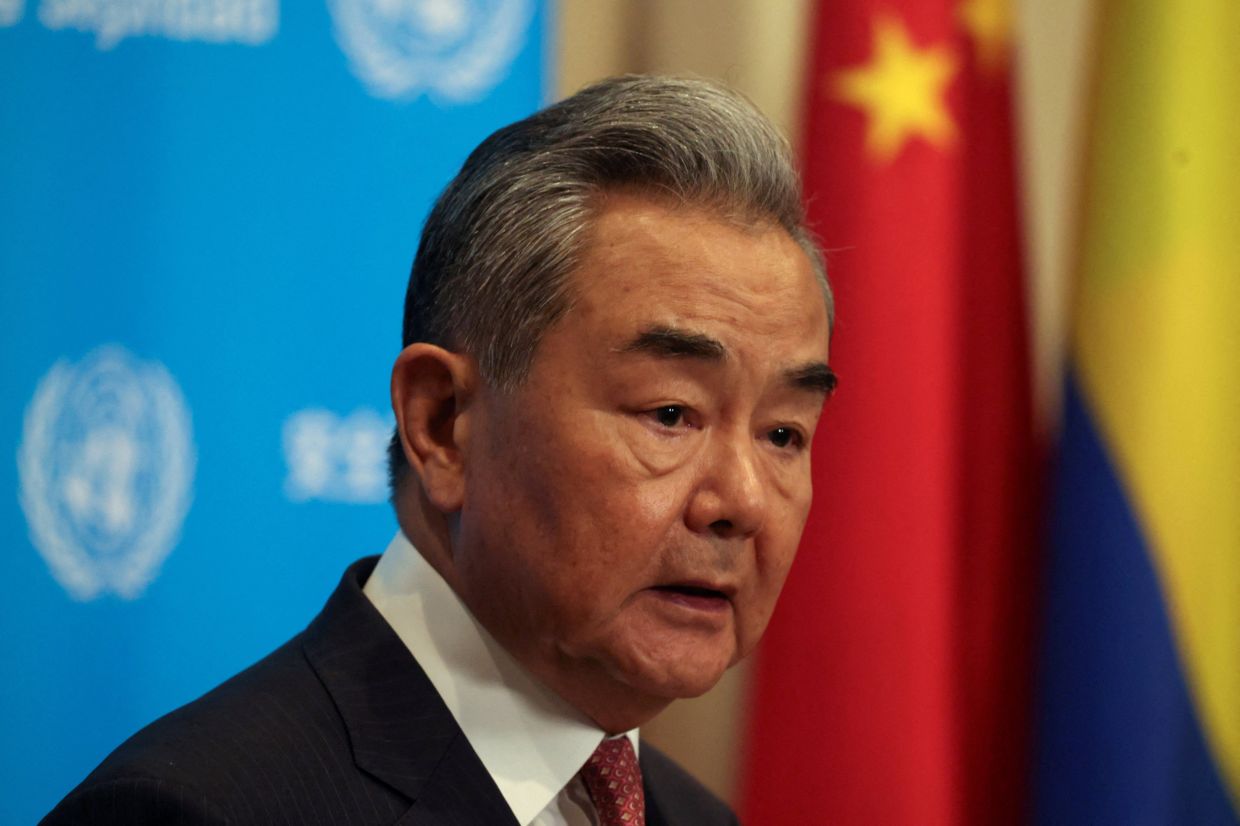
China's Foreign Minister Wang Yi has delivered a carefully calibrated warning to United States Secretary of State Marco Rubio, urging him to approach matters concerning Taiwan with what he described as "utmost caution." The diplomatic message, conveyed during a Tuesday telephone conversation, reflects Beijing's ongoing anxiety about Washington's stance on the self-governing island and signals the delicate balance required to maintain the recent stabilization of US-China relations.
Wang emphasized that constructing a genuinely constructive and strategically stable relationship between Washington and Beijing serves the interests of both nations as well as the broader international community. His remarks underscore a core Chinese position: that bilateral ties, when managed responsibly, can yield mutual benefits that extend far beyond the two superpowers themselves. The Foreign Minister articulated a vision in which both countries work collaboratively to chart a path forward, rather than allowing tensions to derail diplomatic progress.
In his characteristic diplomatic language, Wang outlined the practical requirements for achieving such a relationship. He stressed that building robust ties "is not just a slogan" but demands concrete action, reciprocal gestures, and sustained commitment over time. This framing serves to differentiate between rhetorical commitments and substantive policy shifts, suggesting that Beijing expects Washington to back words with deeds rather than offering empty reassurances about cooperation.
The Foreign Minister's formula for managing bilateral relations involves expanding areas of mutual interest while simultaneously containing points of disagreement. Wang called for lengthening "the list of cooperation" and creating "more positive agendas," while simultaneously working to shorten "the list of problems" and managing "various risks and hidden dangers." This approach reflects Beijing's preference for compartmentalizing the relationship—maximizing gains in areas where interests align while preventing disputes from metastasizing into broader conflicts.
Taiwan occupies a uniquely fraught position in US-China relations, with Beijing viewing the island as an indivisible part of its territory. The Tuesday call gains particular significance when viewed against the backdrop of Trump's May summit with Chinese President Xi Jinping. During that high-profile meeting, Xi raised the Taiwan question with considerable emphasis, cautioning that mishandling the sensitive issue could trigger actual conflict and push bilateral relations into what he termed an "extremely dangerous situation." Xi's stark language reflected the seriousness with which the Chinese leadership treats any perceived movement toward formal recognition of Taiwan's autonomy or strengthened US military support for the island.
For Malaysian observers and policymakers across Southeast Asia, these diplomatic exchanges carry substantial implications. The region has long served as a crucial economic and geopolitical arena where both the United States and China pursue their respective interests. Taiwan's status directly affects regional security architectures and trade flows, making it a matter of genuine concern for ASEAN nations. Any escalation of US-China tensions over Taiwan could disrupt the delicate equilibrium that currently allows regional prosperity and stability.
The timing of Wang's message to Rubio also reflects ongoing preparations for a potential state visit by Xi Jinping to the United States, suggesting that both capitals remain committed to maintaining diplomatic channels even as underlying tensions persist. The May summit itself was framed by Washington as a significant achievement, with US officials circulating fact sheets highlighting purported agreements on issues including supply chain resilience and addressing American concerns about critical material shortages. These claimed accords were presented as concrete evidence that engagement and dialogue could produce tangible results benefiting ordinary Americans.
Yet beneath the surface of improved rhetoric, clear signs of strain continue to emerge between the world's two largest economies. The relationship has neither returned to pre-trade war normalcy nor deteriorated into open confrontation, but rather exists in a precarious middle ground requiring constant diplomatic management. Washington's appointment of Rubio, a vocal China hawk, to the position of Secretary of State added an additional layer of complexity to bilateral ties, prompting Beijing to issue reminders about the importance of careful handling of sensitive issues.
For the broader Asian region, the trajectory of US-China relations remains crucial. Several Southeast Asian nations maintain substantial economic relationships with both powers while attempting to preserve strategic autonomy. The Taiwan issue serves as a bellwether for whether Washington and Beijing can maintain compartmentalized cooperation even amid fundamental disagreements on regional order and democratic governance models. Wang's cautionary tone suggests that Beijing remains deeply concerned about potential miscalculation or unexpected shifts in American Taiwan policy that could trigger a crisis.
The Foreign Minister's emphasis on both nations "removing interference" and staying "firmly on this correct path" appears designed to discourage any American actions that Beijing might interpret as supporting Taiwan's independence aspirations or enhancing the island's international standing. Simultaneously, the language about "moving towards each other" suggests Chinese willingness to reciprocate if Washington demonstrates restraint. This carrot-and-stick approach reflects Beijing's two-track strategy of combining warnings with inducements toward cooperation.
For Malaysian readers and Southeast Asian policymakers, the significance of Wang's message extends beyond simple diplomatic courtesy. How the United States and China manage their relationship—particularly on existential questions like Taiwan—will substantially influence the security environment and economic opportunities available to regional nations. The continued emphasis on dialogue, despite obvious tensions, provides some reassurance that neither capital is seeking confrontation. However, the need for Wang to remind a senior American official about handling Taiwan carefully underscores how fragile current stability truly remains.

