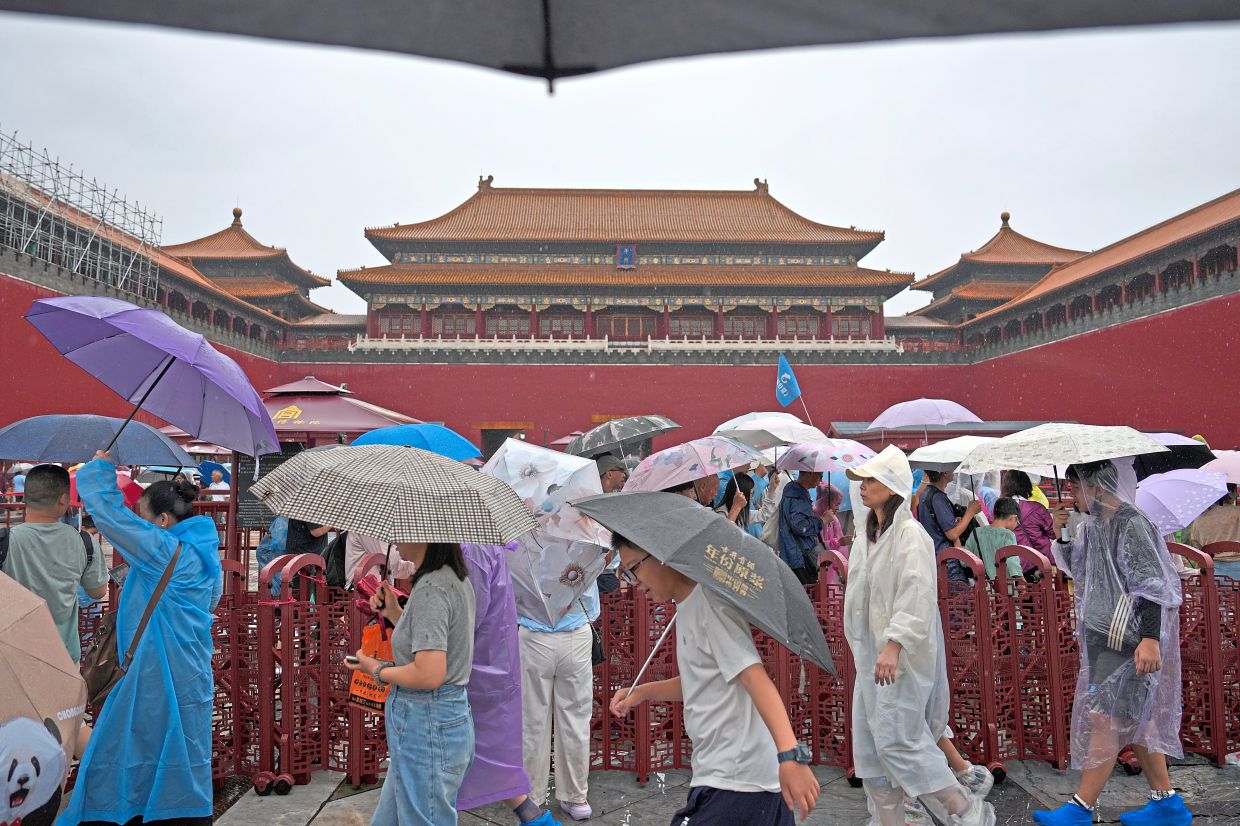
China has completed a remarkable recovery in its international tourism sector, welcoming 35 million foreign visitors in 2025 and surpassing pre-pandemic arrival and spending levels for the first time since the Covid-19 shutdown. This resurgence marks a dramatic turnaround from the sluggish recovery of previous years and positions the country among Asia's most visited destinations, rivalling Thailand and approaching Japan and Malaysia in total visitor numbers. The rebound reflects years of calculated government strategy to rebuild China's tourism appeal following years of strict pandemic controls that damaged the country's international reputation.
The foundation of this recovery rests on China's bold visa-free travel initiative, launched in 2023, which gradually extended visa-free entry to citizens of 50 countries. Initially, the programme showed limited traction as pandemic memories lingered and international flight routes remained incomplete. However, the momentum has shifted dramatically, with visa-free arrivals now accounting for more than 70 per cent of all foreign tourists in 2025, a 50 per cent increase from 2024. In the first half of 2026, this category accounted for 18 million arrivals, propelling overall foreign tourist numbers up by 20 per cent and cementing the policy's effectiveness as a visitor magnet.
Beyond policy changes, Chinese government authorities have invested heavily in targeted digital marketing campaigns that leverage social media platforms, particularly those banned within mainland China itself. Officials in major tourism cities have bypassed the Great Firewall to establish accounts on platforms such as TikTok and X, recognising that younger Western travellers make decisions based on viral content and influencer recommendations. Chongqing's deputy tourism director explicitly acknowledged this strategy, stating ambitions to make the city "Internet famous" through influencer partnerships and celebrity endorsements, including basketball star Stephen Curry. This represents a significant shift in government approach, acknowledging that soft power now flows through channels entirely controlled by Western technology companies.
Social media trends themselves have played an unexpected role in reshaping perceptions of China among younger international audiences. Viral content featuring Chinese lifestyle choices—from drinking hot tea to adopting specific wellness practices—has created a cultural movement termed "Chinamaxxin" among Western citizens curious about Asian life. Simultaneously, improved global sentiment towards China emerged in 2025 as perceptions of the United States shifted under the Trump administration, according to Pew Research Centre data. Shanghai has particularly benefited from this rebranding, with recent visitors now comparing the city favourably to Tokyo, once considered Asia's unrivalled cultural and commercial capital.
The composition of returning visitors reveals distinct regional patterns driven by the visa-free policy. Leading surge nations include South Korea, Russia, Malaysia, and Thailand, all of which now enjoy visa-free access to China. However, Japanese visitor numbers have declined following diplomatic tensions between Beijing and Tokyo, demonstrating how quickly geopolitical friction can override tourism infrastructure advantages. Vietnamese and Russians have driven particularly strong growth in Beijing during the first half of 2026, reshaping the demographic composition of major cities. This geographic redistribution of tourist flows carries implications for Southeast Asian tourism economies, potentially redirecting visitor spending that might otherwise flow to Thailand, Vietnam, or Malaysia.
Chinese municipalities have responded to increased visitor numbers with substantial public investment in tourism infrastructure and marketing. Beijing allocated an additional CNY 2.64 million (RM 1.26 million) in 2026 specifically to manage surging visitor volumes and launch online publicity campaigns, while Shanghai committed at least CNY 1.6 million towards promotional spending on global hotel booking platforms Expedia and Booking.com. These allocations represent rare fiscal commitments at local government level, underscoring how seriously Chinese administrations view tourism's contribution to economic recovery. Some funds specifically targeted travel agencies introducing foreign-language tour guides, demonstrating recognition that language barriers remain significant friction points for international visitors.
Young tourists from developed economies have driven much of this growth, drawn by carefully curated social media content showcasing contemporary Chinese lifestyle experiences rather than historical monuments alone. Twenty-eight-year-old Claire Thum from Singapore, for example, initially knew only of China's terracotta warriors until Instagram content sparked curiosity about Shanghai's viral perfumeries, contemporary fashion retailers, and experiential attractions. Her itinerary—featuring shopping, snowboarding simulations, and Japanese sportswear stores alongside cultural sites—reflects a broader pattern where international visitors seek immersive local experiences over traditional tourist circuits. This shift has benefited Chinese retail considerably, as visitors spend on consumer goods, beauty treatments, and fashion alongside accommodation and dining.
The spending patterns of international tourists reveal significant opportunities for Chinese retailers and service providers. Miniso, a Chinese lifestyle retailer with flagship stores in Shanghai, reports that foreign visitors comprise up to 70 per cent of foot traffic during certain hours, drawn by limited-edition collaborations featuring globally recognised characters such as those from Disney, Sanrio, and Harry Potter franchises. Beauty brands with roots in China have capitalised on this visibility, with Joy Group's Judydoll brand achieving over tenfold growth in overseas sales within two years, particularly across Vietnam and Japan. Judydoll and sister brand Joocyee generated more than CNY 600 million (RM 363.88 million) in overseas retail sales in 2025, with international sales now surpassing domestic revenue and expanding at 20 per cent annually.
The Middle East's geopolitical instability has unexpectedly contributed to China's tourism surge by disrupting traditional travel patterns through Gulf-based airline hubs. Rising air ticket prices and security concerns have pushed more international transit traffic through Chinese gateways, where state-owned carriers—China Eastern, Air China, and China Southern—operate at significantly lower prices than international competitors. These Chinese airlines have not fully recovered their pre-pandemic route networks, leaving capacity that remains substantially cheaper than foreign carriers offering equivalent routing. This structural advantage has created a transit tourism opportunity, converting passengers between Asia, Europe, and other regions into temporary visitors who spend on accommodation and retail during layovers.
Despite impressive recovery metrics, China's inbound tourism sector still lags considerably behind established mature tourism economies in total revenue and per-capita spending. International visitors spend approximately US$2,240 (RM 9,163) per capita in China, representing roughly 40 per cent of global averages and less than one-third of total inbound tourism receipts compared to the United States. The sector contributed less than 0.5 per cent to China's national GDP in 2025, far below mature tourism economies such as Spain and Thailand where tourism represents approximately 8 per cent of output. This disparity suggests substantial room for growth if spending patterns can be shifted upwards, though domestic consumption challenges and real estate sector doldrums have constrained the broader economic environment supporting tourism development.
Friction points remain that could limit tourism growth if unaddressed, including China's predominantly cashless payment infrastructure that disadvantages tourists without local banking relationships or digital wallet access. The absence of mainstream global applications such as Google, WhatsApp, and Instagram—accessible only through illegal VPNs—creates navigation and communication challenges for foreign visitors accustomed to these services. Emerging businesses have begun addressing these pain points; Kora, an artificial intelligence-powered tourist guide platform, has served tens of thousands of visitors since its 2026 launch by simplifying ride-hailing reservations, restaurant bookings, and providing multilingual chatbot support. Such innovations may prove critical in sustaining the tourism momentum by reducing the practical barriers that could otherwise discourage repeat visits.
The broader significance of China's tourism recovery extends beyond immediate visitor spending. International tourists increasingly experience contemporary urban China rather than historical sites alone, exposing them to modern retail innovation, technological integration, and daily life patterns that challenge external perceptions shaped by political discourse. French history student Virgile Kebaili's observation that he encountered relatively few other international tourists during his recent multi-week journey through Chengdu, Chongqing, Xi'an, and Beijing suggests significant capacity for absorbing additional visitors before saturation occurs. His experience of being interviewed by Chinese students seeking to understand foreign perspectives represents a form of soft power accumulation that transcends traditional tourism metrics, rebuilding interpersonal connections disrupted during years of isolation and restricted movement across borders.

