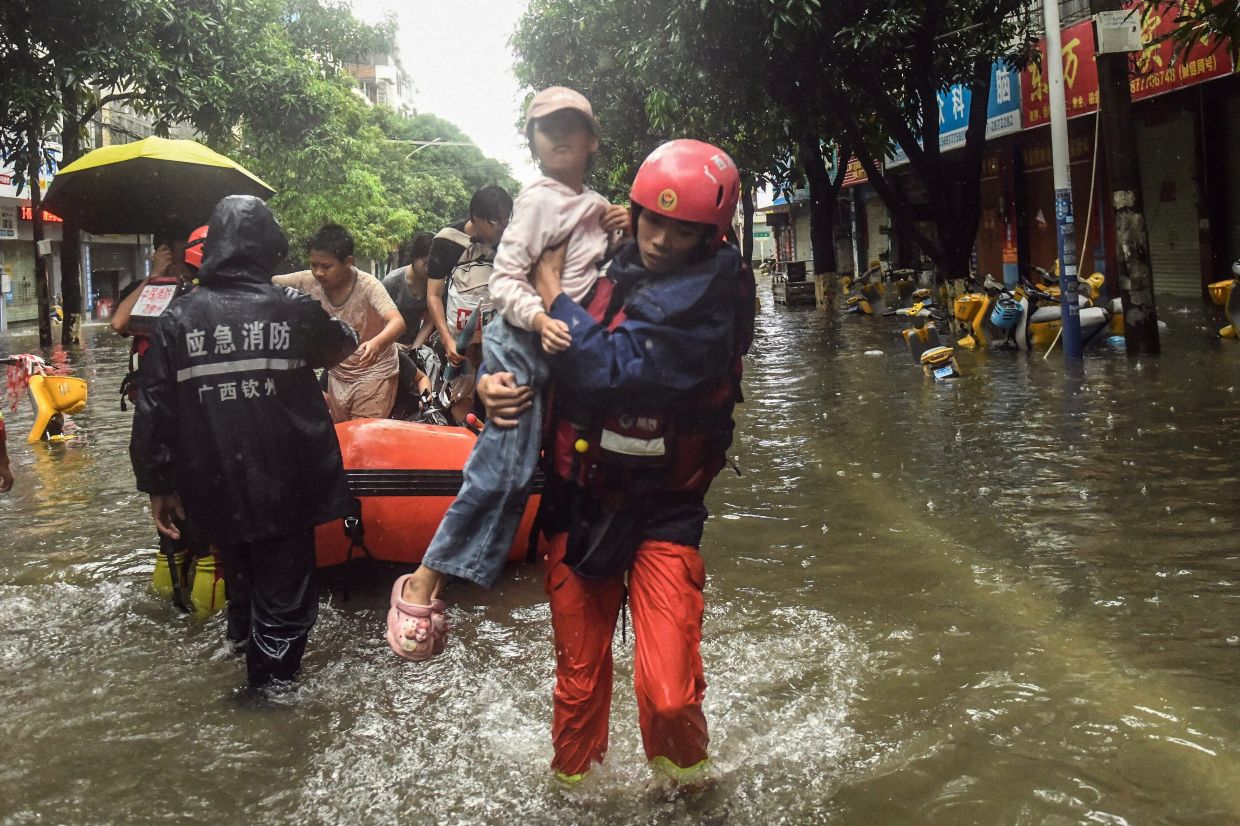
Rescue operations are intensifying across China's storm-ravaged regions after catastrophic weather systems left 17 people dead and forced authorities to evacuate more than 100,000 residents from flooded communities. The unfolding disaster underscores the mounting vulnerability of China's densely populated southern provinces to extreme weather events, with meteorological authorities warning that heavy rainfall will persist through midweek, complicating recovery efforts and raising new concerns about dam infrastructure and embankment integrity across the affected zones.
The southern region of Guangxi bore the brunt of the immediate impact, where Typhoon Maysak's torrential downpour triggered severe flooding that claimed at least six lives and displaced approximately 130,000 people from their homes. The scale of evacuation reflects the region's exposure to rapid water accumulation and flood risks that characterise the landscape during summer monsoon seasons. Authorities in Guangxi documented the overflow of 40 rivers and waterways within the region, with fast-moving waters carrying significant volumes of sediment and debris through populated lowlands. The agricultural sector sustained particularly heavy losses, with nearly 13,000 acres of farmland inundated or severely damaged, compounding economic hardship in farming communities already struggling with seasonal vulnerabilities.
One of the most alarming developments came with the collapse of a reservoir dam in Guangxi, captured in dramatic footage broadcast by state media showing torrents of brown water bursting through deteriorating concrete structures. Rescue teams deployed immediately to affected areas, with workers navigating inflatable boats through the rapidly rising floodwaters to locate and extract stranded residents. The dam failure highlights longstanding concerns about aging water management infrastructure across rural China, where maintenance budgets have not always kept pace with climate change intensification and the structural stresses imposed by unprecedented rainfall volumes.
The neighboring province of Guangdong also faces continued threat, with meteorological forecasts indicating that the weather system will deliver additional precipitation throughout Wednesday. This sequential rainfall pattern raises the prospect of compound flooding, where water from upstream sources combines with local precipitation to overwhelm river channels and drainage systems. Chinese authorities responded by maintaining the second-highest alert level for flood-control emergency operations across Guangxi, activating supply chains to rush relief supplies including food provisions, waterproof clothing, and additional inflatable rescue boats to impacted communities.
According to Li Guoying, China's Minister of Water Resources, water levels at the Wuzhou Hydrological Station in Guangxi are anticipated to surge more than six metres above the official warning threshold early Thursday morning. Such extreme elevations create hazardous conditions for embankments and secondary water retention structures throughout the region, which already labour under the weight of saturated soil and extended exposure to floodwaters. The minister warned that the combination of sustained heavy rain and the sluggish drainage of exceptionally elevated water levels poses "a severe test" to reservoir and embankment safety, signalling government acknowledgment that infrastructure across the affected areas may face unprecedented strain.
Beyond Guangxi and Guangdong, central Hubei province experienced a distinct meteorological catastrophe driven by severe thunderstorms and gale-force winds rather than rainfall-induced flooding. This system claimed at least 11 lives, injured 331 people, and triggered tornado warnings across multiple locations as the weather front swept across the province on Monday evening. Hubei authorities documented extensive structural damage, with 4,800 homes sustaining varying degrees of harm and 22 buildings completely destroyed. The province also reported one person missing, adding to the overall casualty toll and underscoring the broad geographic extent of the weather system's destructive reach.
The cascading nature of China's summer weather disasters became even more apparent when state media reported that northwestern Gansu province was simultaneously grappling with an unrelated but equally deadly landslide in Dangchang County. The slide, which occurred at Rencang village shortly before 7:00 am on Tuesday, ultimately claimed 21 lives after initially burying 33 people in the debris field. Rescue teams mobilised to the site and concluded search operations, though authorities acknowledged that the underlying geological trigger for the landslide remained under investigation. The dual catastrophes—flooding in the south and landslides in the northwest—revealed the scale of natural hazard exposure that characterises China's diverse topography during the summer season.
President Xi Jinping responded to the unfolding crisis by directing rescue personnel to mount comprehensive emergency operations, instructing responders to "go all out" in their efforts to save lives and stabilise affected communities. This directive from the highest levels of government underscored the political salience of disaster management in China's governance structures, where response capability and coordination effectiveness serve as metrics for official competence and public confidence. The central government mobilised resources including emergency funding, military personnel qualified in water rescue operations, and coordination mechanisms to align provincial and local response activities across multiple disaster zones.
For Malaysia and the broader Southeast Asia region, the unfolding catastrophe in China serves as a sobering reminder of climate-driven hazard intensification and the fragility of even well-resourced nations' infrastructure when confronted with extreme weather events. As monsoon seasons intensify across the region and extreme rainfall episodes become more frequent, Malaysia's own flood management systems, dam infrastructure, and early warning protocols warrant ongoing scrutiny and investment. The Chinese experience demonstrates that even state-of-the-art response mechanisms can be overwhelmed when multiple disasters strike simultaneously, suggesting the urgency of regional cooperation on weather forecasting, disaster preparedness, and transboundary water resource management throughout Southeast Asia's river systems.
The economic implications extend beyond immediate loss of life and property damage. Guangxi's agricultural devastation, affecting 13,000 acres of farmland, will ripple through food supply chains and may elevate commodity prices across regional markets where Chinese agricultural production maintains significant influence. For Malaysian agriculture and food security planning, the disruption in Guangxi production capacity may create both supply pressures and temporary market opportunities depending on commodity categories affected. Additionally, the reconstruction efforts in Gansu province, which authorities allocated 30 million yuan ($4.4 million) to fund, signal that Chinese government capacity to absorb disaster costs remains substantial but not unlimited—suggesting priority-setting among competing reconstruction needs will shape regional development trajectories for months ahead.
The sequence of disasters across multiple Chinese provinces during a compressed timeframe also illustrates the challenge posed by climate variability to disaster management systems designed around historical baselines. When thunderstorms, torrential flooding, and landslides strike nearly simultaneously across different regions, centralised resource allocation becomes vastly more complex, and local communities may experience inadequate support despite elevated national-level mobilisation. For Malaysian officials engaged in disaster management planning, the lesson suggests value in building redundant local capacity rather than relying entirely on resource transfer from higher administrative levels during multisite crises, and in investing in preventive infrastructure improvements rather than accepting reactive repair cycles.

