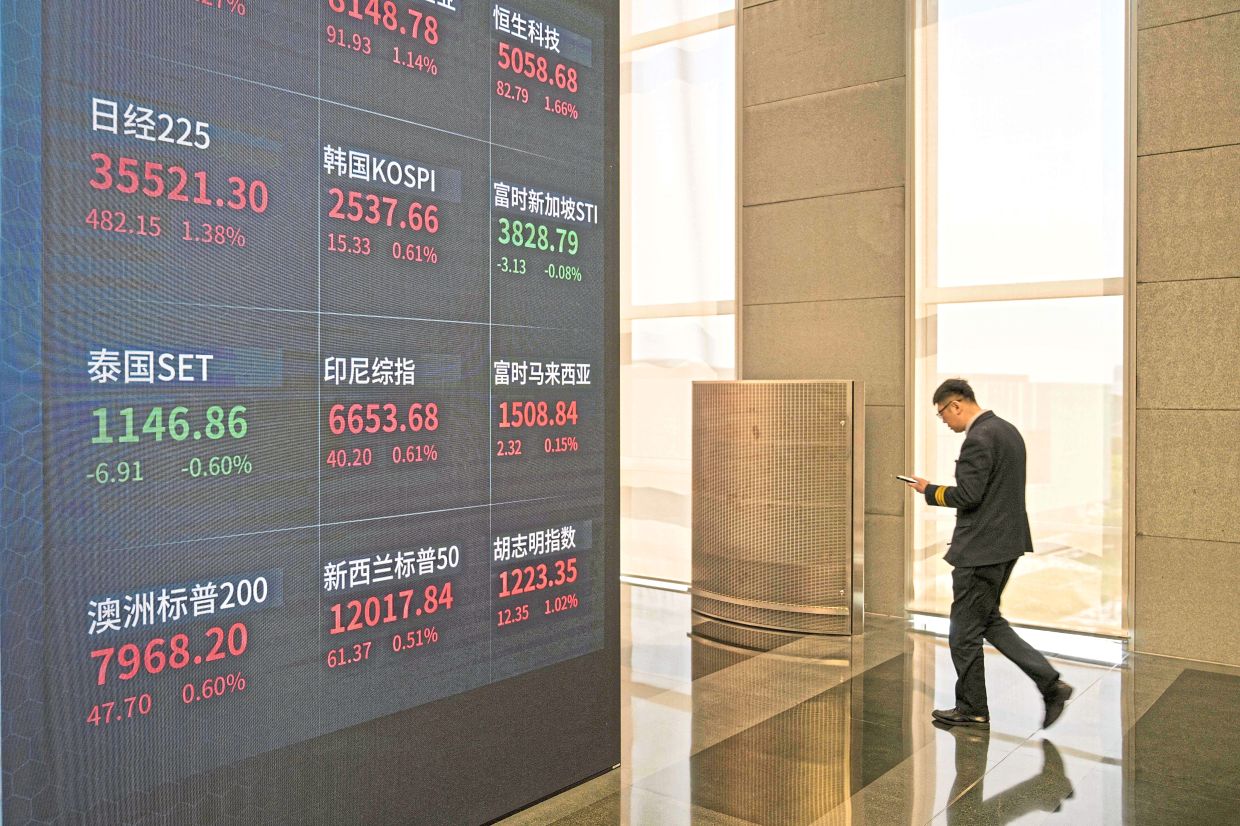
Beijing's latest attempt to restructure China's chronically troubled property sector has sent shockwaves through financial markets, with developer shares experiencing significant losses following the release of sweeping new regulations on Friday. The measures, announced jointly by the central bank and financial regulators, represent a dramatic departure from decades of industry practice by deliberately curtailing the presale model that has underwritten Chinese real estate's explosive growth. Share indices tracking the sector reflected the scale of investor alarm, with mainland's CSI300 Real Estate Index dropping 4.6% by mid-afternoon trading, while Hong Kong-listed Chinese developers suffered even steeper losses of 6.5%, and the Hang Seng's Hong Kong developers index fell nearly 5%.
The regulatory crackdown strikes at the financial architecture that has kept China's property machine running for years. Developers traditionally relied on collecting buyer payments for units still under construction to fund ongoing building work, creating a financing cycle that generated enormous returns but left the sector vulnerable to disruptions in buyer confidence. The new framework fundamentally breaks this model by mandating that mortgages can only be issued after projects reach completion—a structural shift that forces developers to find alternative sources of construction funding precisely when their access to capital is already severely constrained. Analysts at Nomura highlighted the severity of this transition, noting that developers can no longer depend on early mortgage proceeds and must instead rely on their own resources or expensive development loans.
The timing of this intervention underscores Beijing's desperation to restore public confidence in a market that has haemorrhaged buyer trust over the past several years. Despite presales representing 68% of new home sales by floor space in 2025, the government has concluded that this model itself fuels the delivery risks and homebuyer anxiety that have become defining characteristics of China's property crisis. Complementary guidelines now require local governments to actively promote sales of already-completed units, deliberately steering demand away from presales toward finished properties. While authorities hope this extended mortgage term of up to 40 years—stretched from the previous 30-year maximum—might free up consumer cash for domestic spending and marginally improve demand, most analysts regard this sweetener as insufficient to offset the structural challenges created by the presale restrictions.
State-backed developers bore the brunt of Monday's market selloff, suggesting investor fears about contagion throughout the sector. China Jinmao, Yuexiu Property, and Greentown China each shed more than 14%, while larger state-owned behemoths China Resources Land and China Overseas Land & Investment declined by more than 9%. Even financially resilient private players faced significant pressure, with Longfor Group and Seazen—both regarded as relatively well-capitalized—falling 7.2% and 5.5% respectively. This broad-based weakness indicates markets are pricing in genuine structural harm regardless of developers' current financial standings.
The financing squeeze will prove particularly acute because presales and mortgages currently account for approximately 40% of development capital. Executive sources speaking confidentially to Reuters suggested this means developers could lose access to cash equivalent to 40% of their investment capacity in the near term—a contraction that arrives as the sector already struggles with anaemic home sales. Even state-owned developers, which enjoy preferential access to bank loans at rates of 2-3% compared to 5-6% for private competitors, will find their strategic flexibility severely constrained. This disparity threatens to accelerate industry consolidation as smaller and mid-sized private players, unable to compensate for lost presale funding through expensive bank borrowing, face existential pressure.
China's property sector has been in decline for nearly six years now, draining growth from the world's second-largest economy while simultaneously creating misery for hundreds of millions of households sitting on deprecating real estate assets. The sector's role as a traditional wealth-creation vehicle and economic growth engine has evaporated, replaced by persistent anxiety about completion delays, unfinished apartments, and abandoned projects. Official statistics reveal the underlying weakness: government land sales revenue collapsed 30.8% year-on-year to 1.1731 trillion yuan ($174.56 billion) over the first seven months of 2026, while nationwide property development investment fell 19.2% to 4.3 trillion yuan. These figures underscore an economy struggling to stabilize a sector that accounts for roughly 30% of GDP and employment for tens of millions.
The geographic dimension of the crisis adds another layer of complexity to interpreting Beijing's new approach. While first-tier cities such as Beijing and Shanghai have seen new-home price recoveries stall, smaller inland cities tell a far grimmer story, with second-hand property values down almost 25% from 2020 peaks. This divergence reflects the fundamental challenge facing policymakers: tier-one markets possess structural demand that provides a floor for values, whereas lower-tier cities face demographic headwinds and limited economic dynamism that have rendered large swathes of inventory potentially worthless. The presale restrictions, by forcing developers to complete projects before securing buyer funding, will likely expose which properties have genuine end-user demand versus which represent speculative excess.
The regulatory shift also signals a quiet but consequential power transition within China's property sector. State-owned developers now dominate a landscape where most large private firms have defaulted or barely survived recent crises. While this consolidation might appear to strengthen industry stability, it actually concentrates systemic risk within state-controlled entities whose performance directly impacts government fiscal health and employment. Beijing's apparent comfort with allowing private-sector competitors to face funding crunches suggests authorities view state ownership as the sector's inevitable endpoint—a conclusion that carries profound implications for entrepreneurship and capital allocation in Asia's most dynamic economy.
Everbright Securities warned that the new measures have substantially raised the barrier to entry and survival for developers across the board, requiring sophisticated financing abilities and management skills that many established players have not cultivated. The investment community now anticipates accelerated consolidation as smaller developers lacking scale, brand recognition, or state connections find themselves unable to compete under the new regime. Most industry observers expect a wave of bankruptcies, asset sales, and forced mergers over the coming months and years, ultimately producing a smaller but potentially more stable sector dominated by well-capitalized state players and a handful of surviving private champions. For Malaysian investors and regional economists watching China's property implosion unfold, this latest regulatory intervention represents an acknowledgment that the previous policy approach has failed and that more radical restructuring lies ahead.

