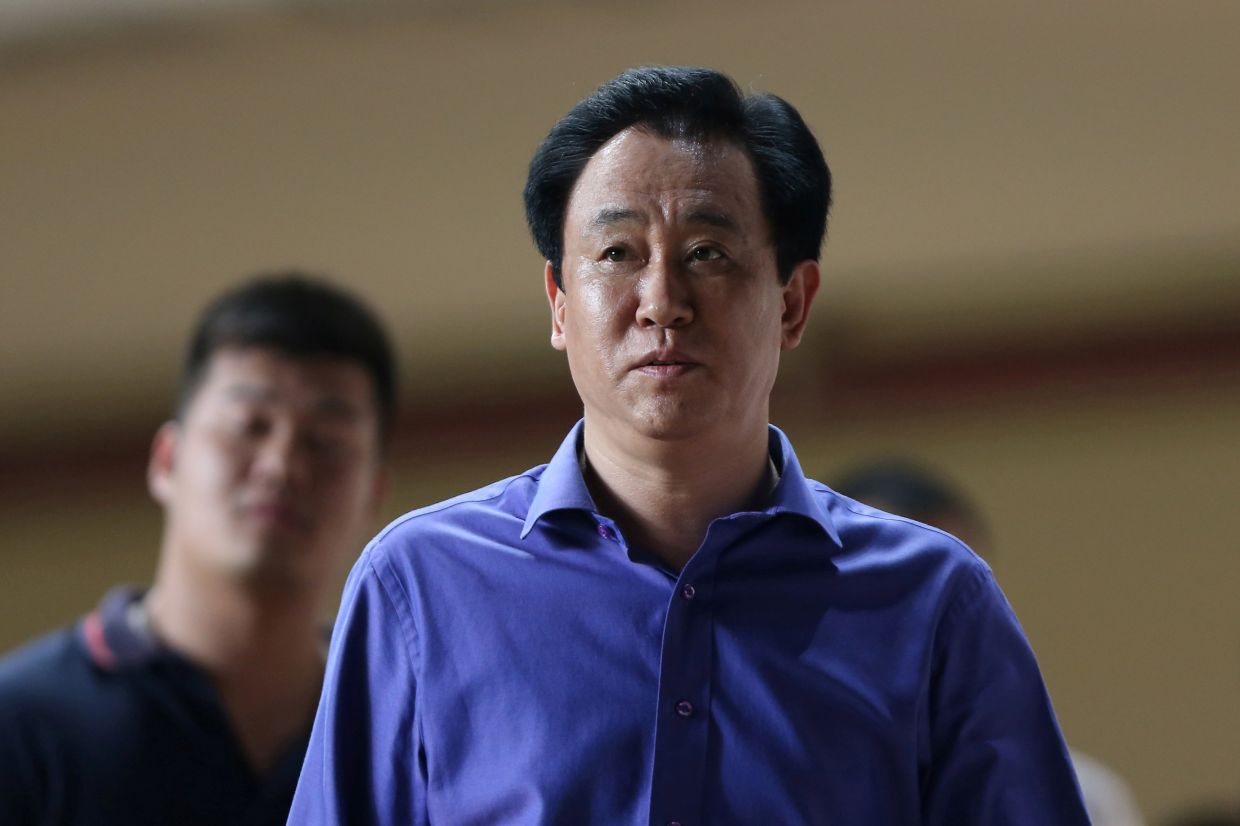
The Shenzhen Intermediate People's Court delivered a life sentence to Xu Jiayin, the founder of China's troubled property behemoth Evergrande Group, on Thursday as the country continues its reckoning with the executive who built one of the nation's most prominent companies. The court simultaneously levied penalties totalling 15.82 billion yuan—equivalent to US$2.4 billion—against Evergrande and its real estate subsidiary, concluding a high-profile case that has captivated observers of China's financial system since the firm's spectacular collapse five years earlier. The verdict represents the culmination of legal proceedings that exposed systematic wrongdoing at the highest levels of the organisation.
Xu's conviction encompasses multiple serious offences, notably large-scale financial fraud perpetrated over a six-year window beginning in 2016. According to the court's pronouncement, Xu and the company under his stewardship engaged in deliberate misrepresentation of assets while concealing substantial liabilities—practices that allowed Evergrande to maintain an appearance of financial health even as its underlying fundamentals deteriorated. The sentencing stripped Xu of his political rights permanently and mandated the confiscation of all his personal property, underscoring the severity with which Chinese authorities treated the transgressions. Four additional senior executives also received prison sentences ranging from six to eighteen years for their involvement in fraudulent activities.
Evergrande's trajectory from market darling to cautionary tale illuminates the structural vulnerabilities that accumulated within China's property sector during the prolonged boom years. The conglomerate epitomised the appetite of Chinese developers and investors for rapid expansion financed through increasingly elaborate borrowing arrangements. For decades, the property market functioned as an engine of economic growth, generating employment, attracting foreign investment, and generating substantial tax revenues for local and national governments. Xu capitalised on this momentum, transforming Evergrande from a modest enterprise into a multinational corporation with interests spanning real estate, automobiles, renewable energy, and entertainment—a diversification that masked underlying problems in the core property business.
The regulatory environment shifted decisively beginning in 2020 when Beijing implemented stringent restrictions on developer leverage and borrowing. These measures, colloquially known as the "three red lines" framework, were designed to arrest what policymakers viewed as unsustainable credit expansion and speculation within the property sector. For Evergrande, whose growth model depended critically on maintaining access to capital markets and banking facilities, these constraints proved devastating. The company discovered that refinancing obligations and completing projects for buyers became untenable as credit channels closed. By 2021, Evergrande had accumulated debts exceeding US$300 billion, rendering default inevitable.
The mechanism by which Evergrande concealed its precarious financial position involved more than simple accounting manipulations. Court documents indicate that Xu leveraged bribery to gain control of financial institutions, enabling the company to channel funds in ways that obscured true liabilities from regulators and creditors. This dimension of the case—the corrupting influence of corporate power over financial institutions—resonates beyond Evergrande's specific circumstances. It underscores how the interconnections between major developers, banks, and government officials created systemic vulnerabilities that threatened broader economic stability. When Evergrande's house of cards collapsed, it triggered cascading effects throughout China's financial ecosystem.
For Malaysian and Southeast Asian observers, Evergrande's implosion carries several instructive lessons. The episode demonstrates how rapidly fortunes can reverse when governmental policy priorities shift, a consideration of particular relevance for regional economies where large conglomerates play outsized roles. It also illustrates the risks associated with opacity in financial reporting and the importance of stringent regulatory oversight of major corporations. Southeast Asian developers and financial regulators watching Evergrande's decline have arguably benefited from a cautionary precedent regarding the dangers of excessive leverage and opacity.
Xu's admission of guilt in April facilitated the relatively swift progression toward conviction and sentencing. His cooperation with authorities and acknowledgement of charges including embezzlement and bribery likely influenced the court's determination. While a life sentence under Chinese law does not invariably preclude eventual release, the supplementary measures—political rights revocation and asset confiscation—ensure that Xu's capacity to exercise influence has been permanently curtailed. The severity of the punishment signals official determination to hold even the most prominent corporate figures accountable for systematic fraud.
The sentencing also serves a broader political function within China's governance framework. By prosecuting Evergrande's leadership with high visibility, authorities reinforce messaging about the consequences of financial misconduct and the supremacy of state power over even the largest private enterprises. This demonstration effect may deter other executives from pursuing aggressive accounting practices or corrupt arrangements with financial institutions. Simultaneously, it reinforces the Communist Party's narrative of resolute anti-corruption action and commitment to financial stability.
Evergrande's situation remains fluid despite the judicial conclusion. The company continues operating under state supervision, attempting to complete projects and service residual obligations to creditors and homebuyers. Millions of Chinese purchased units in Evergrande developments, and many still await construction completion—a constituency that exerts continual pressure on local and central government to preserve the company's viability in some form. The simultaneous prosecution of leadership and maintenance of operational continuity reflects the delicate balance Chinese policymakers must strike between accountability and systemic stability.
The case concludes a particularly turbulent chapter in Chinese corporate history while raising questions about similar vulnerabilities elsewhere in the property sector. Other major developers faced comparable liquidity crises during 2021 and 2022, though none achieved Evergrande's notoriety. Whether the sentencing of Xu and his associates will precipitate broader reforms to corporate governance standards and financial disclosure requirements remains uncertain. Nevertheless, the verdict serves as a definitive punctuation mark on an era of relative permissiveness toward developer leverage and opacity that characterised the pre-2020 property boom.

