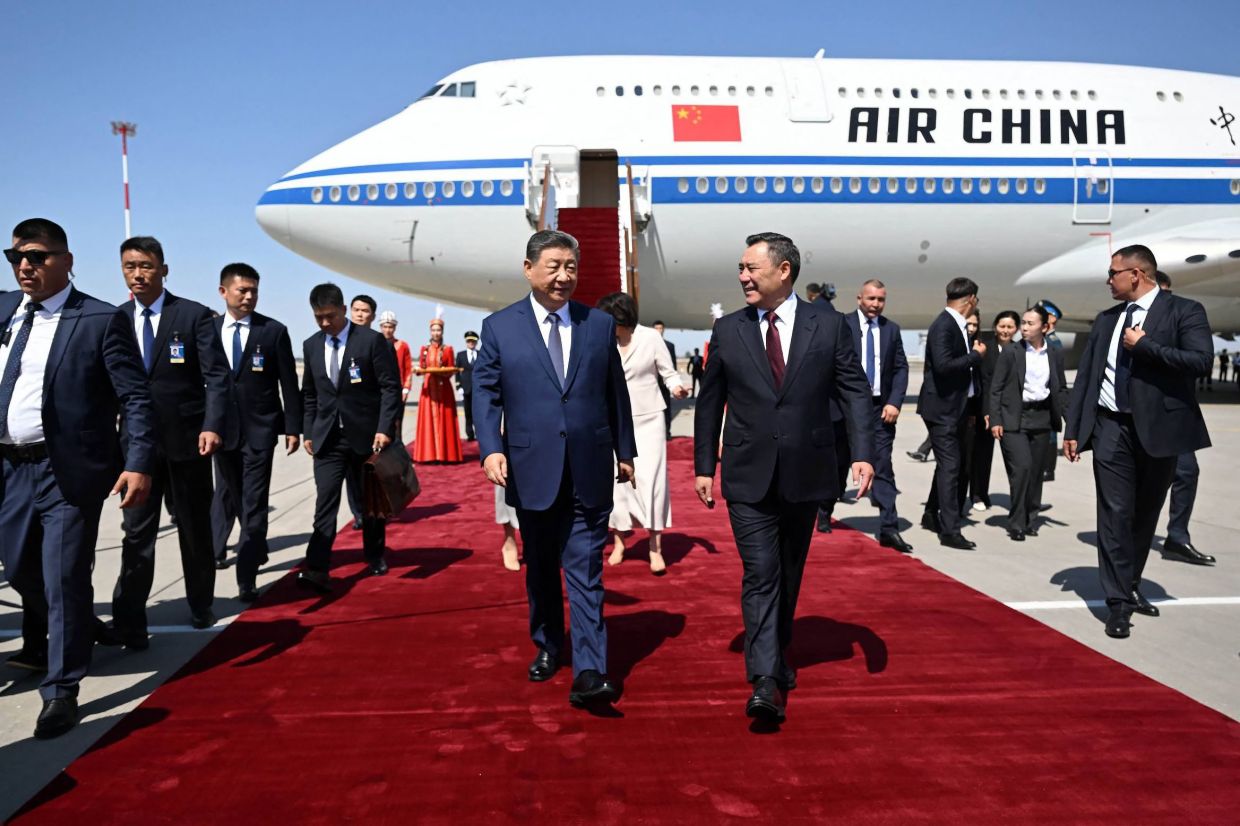
The Shanghai Cooperation Organisation is convening its summit this week in Bishkek, Kyrgyzstan, drawing together the leaders of China, Russia and India alongside representatives from nine other member states and numerous partners. The gathering underscores the bloc's evolving role as a forum through which major non-Western powers seek to coordinate regional policy and signal their collective resistance to American-led global arrangements. Chinese President Xi Jinping, Russian President Vladimir Putin and Indian Prime Minister Narendra Modi headline the attendance list, reflecting the organisation's core composition of Asian heavyweights intent on reshaping the balance of power in their respective neighbourhoods.
The timing and setting carry particular diplomatic weight. Russia, now deeply entrenched in its fourth year of full-scale conflict in Ukraine and increasingly isolated from Western economies, views the summit as an essential platform to reinforce its standing among nations unaligned with NATO and its allies. Similarly, Iran—engaged in an extended confrontation with Israel and the United States—regards the assembly as an opportunity to deepen its strategic relationships with countries willing to engage with Tehran despite Western pressure. Both Moscow and Tehran see participation in the SCO as validation of their regional importance and as a counterbalance to diplomatic and economic sanctions imposed by the West.
The SCO itself represents an intriguing institutional evolution. Established in 2001 as a security cooperative mechanism involving China, Russia and four Central Asian republics, the organisation has expanded substantially over more than two decades. Its current membership encompasses ten nations: Russia, China, India, Iran, Pakistan, Belarus, Kazakhstan, Kyrgyzstan, Tajikistan and Uzbekistan. This enlargement has transformed it from a relatively narrow security arrangement into a sprawling multilateral platform encompassing countries across multiple regions and at varying stages of economic development. Despite this growth, the SCO remains deliberately ambiguous in its operational objectives and strategic doctrine, allowing member states considerable flexibility in interpretation and commitment levels.
Beijing and Moscow have deliberately marketed the SCO as an institutional alternative to Western-dominated forums such as the G7, offering member nations a space where their voices carry weight independent of American preferences. China has particularly emphasised the organisation's potential as a vehicle for regional development cooperation, pledging financial and technical assistance to participating countries. Chinese officials have framed the SCO as an example of what Beijing terms a "new path" for cooperation—one premised on respect for sovereignty, non-interference in internal affairs, and mutual benefit rather than the hierarchical arrangements that have historically characterised Western-led international institutions. This messaging aligns with Beijing's broader rhetorical strategy of positioning itself as the architect of an alternative international order more equitable to developing nations.
For individual member states, however, the summit serves purposes that often diverge markedly from the bloc's collective rhetoric. India presents perhaps the most complex case: New Delhi joins the organisation not out of ideological alignment with its anti-Western posture but rather from strategic pragmatism. Analysts at institutions such as Carnegie India note that membership provides New Delhi with privileged access to regional developments and a platform through which to advocate its interests among the Asian powers increasingly shaping geopolitics across Central and South Asia. India must navigate the SCO's membership carefully, balancing its participation against the reality that China and Pakistan—both historical rivals—sit at the same table and wield considerable influence over the organisation's agenda and outcomes.
India's strategic calculus reflects the fundamental truth that the SCO, despite its reputation as a unified bloc, functions as a forum where significant national divergences remain evident and unresolved. Member states maintain their own distinct foreign policy priorities and frequently pursue competing objectives within the region. The organisation thus represents less a coherent alliance bonded by shared ideology than a diplomatic space where major Asian powers manage their interactions and seek incremental advantages. This structural reality limits the SCO's capacity to generate transformative outcomes or enforce binding commitments upon its members, meaning that summits often yield symbolic achievements rather than substantive policy coordination.
Turkey occupies a particularly instructive position within this landscape. Holding dialogue partner status since 2012 under President Recep Tayyip Erdogan's strategic initiative, Ankara continues actively pursuing full membership despite remaining NATO's most geopolitically unconventional member. Turkey's cultivation of SCO ties reflects its broader foreign policy orientation toward balancing engagement with Western institutions—particularly its NATO commitment—against deepening involvement in Eurasian affairs and energy markets. Turkey maintains substantial trade relationships with the European Union under longstanding commercial agreements, yet its application for EU membership has stalled for over two and a half decades, leaving Ankara to seek alternative platforms for projecting influence and securing its economic interests.
The summit's substantive agenda remains deliberately vague, allowing flexibility for bilateral engagements conducted along the forum's margins. Putin and Xi are scheduled for a one-on-one meeting, while Putin and Iranian President Masoud Pezeshkian will conduct separate talks. These bilateral encounters often prove more consequential than the formal multilateral sessions, as leaders use the SCO gathering as a convenient venue for advancing specific national interests outside public scrutiny. The architecture of such summits—ostensibly collective but practically bilateral—reflects how major powers continue privileging direct negotiation and relationship-building over genuine multilateral consensus-building.
For Southeast Asian observers, the SCO summit illustrates broader patterns reshaping the Asian geopolitical order. The organisation demonstrates how middle powers and major regional states increasingly construct alternative institutional frameworks through which to exercise agency independent of American preferences, even when their internal coherence remains questionable. Countries throughout Southeast Asia watch these developments with acute interest, recognizing that the region's stability and prosperity depend partly on their ability to maintain productive relationships across the emerging divides between Western-aligned and non-aligned powers. The SCO summit thus serves as a barometer of how definitively Asia's powers are organising themselves into competing spheres and whether organisations capable of genuine strategic coordination might eventually crystallise from their current loose affiliations.

