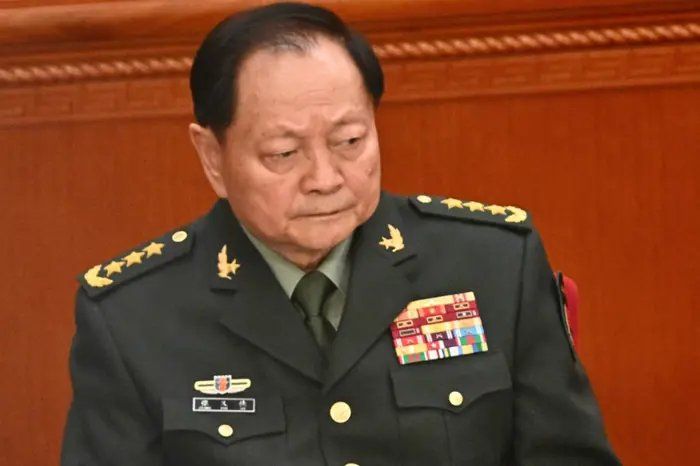
China's political establishment has formally excised one of its highest-ranking military officials, with state media announcing Friday that former General Zhang Youxia has been removed from his position as Vice Chairman of the Central Military Commission. The decision by the standing committee of China's parliament marks the conclusion of an investigation that began in January when authorities first disclosed that Zhang and another senior officer, Liu Zhenli, were suspected of "serious violations of discipline and the law" — a phrase routinely employed in Chinese official communications to describe graft and related misconduct.
Zhang's departure carries considerable significance within Chinese military and political circles. As the more senior of two vice chairmen overseeing the Central Military Commission, he held the distinction of being China's highest-ranking serving officer at the time of his fall. His elevation through the ranks had positioned him as one of the country's most powerful military figures, a status that made his sudden removal particularly striking to observers both inside and outside Beijing. The sheer seniority of the position he occupied underscores how extensively anti-corruption initiatives have penetrated even the uppermost echelons of China's defence establishment.
What renders Zhang's case particularly noteworthy is the widespread perception among analysts that he enjoyed close ties to President Xi Jinping. Prior to his removal, such proximity to the paramount leader would ordinarily provide significant insulation from the kind of corruption investigations that have ensnared countless other officials. Zhang's vulnerability despite these reportedly warm relations suggests that no amount of personal connection shields high-ranking figures from accountability when graft allegations emerge. This dynamic reveals something fundamental about how Xi's administration exercises power: loyalty and relationships, while important, ultimately bow to the demands of the anti-corruption campaign when serious misconduct comes to light.
The investigation into Zhang's conduct represents merely one chapter in Xi Jinping's broader and transformative anti-graft initiative, a signature policy thrust that has fundamentally reshaped China's political and institutional landscape since he assumed power over a decade ago. Through relentless pursuit of corruption at all levels, from village committees to the highest state organs, Xi has consolidated power while simultaneously presenting himself as a reformer committed to cleansing a system plagued by embezzlement, bribery, and abuse of office. The campaign has ensnared hundreds of thousands of officials and military personnel, creating an atmosphere of heightened scrutiny throughout the bureaucratic apparatus.
Liu Zhenli, the other official ensnared in the same investigation, occupied a different though still significant position within China's military hierarchy. As chief of staff of the Central Military Commission's joint staff department — the body responsible for overseeing combat planning and coordinating military operations — Liu's removal eliminates another influential voice from decision-making structures governing China's defence capabilities and strategic military planning. The simultaneous removal of both men signals a coordinated effort to cleanse the military's senior command structure of those implicated in misconduct.
The timing and methodology of these removals merit careful examination. The seven-month interval between the announcement of the investigation in January and Friday's formal removal follows established patterns within China's disciplinary process. Officials facing serious allegations typically endure extended periods of investigation during which their fates remain uncertain, a process that serves both evidentiary and political purposes. By extending the timeline, authorities gather comprehensive evidence while simultaneously allowing political reverberations to settle, ensuring that when formal removal decisions come, they represent conclusions already anticipated by the system.
For Southeast Asian nations and regional observers, developments within China's military leadership carry broader implications. The Central Military Commission sits at the apex of Chinese military decision-making and strategy formulation. Changes in its composition, particularly the removal of senior figures, can signal shifts in institutional priorities, strategic orientations, or factional balances within the military establishment. Understanding these transitions helps foreign governments assess potential evolution in Beijing's regional policies, military posture, and willingness to pursue particular strategic initiatives.
Zhang's removal also reflects Xi's continuing consolidation of military authority under his direct control. By systematically removing potential rivals and those of questionable loyalty, Xi has transformed China's defence apparatus into an institution more directly responsive to his personal authority than to competing interests or institutional traditions. This centralisation process, while potentially enhancing command unity and strategic coherence, has also concentrated enormous power in the hands of a single individual, raising questions about institutional resilience and succession planning as China contemplates leadership transitions in coming decades.
The anti-corruption campaign targeting military officials has proven particularly consequential because it has eliminated generations of senior commanders who previously exercised considerable institutional autonomy. Younger officers ascending to prominence now operate within a system where corruption investigations can strike regardless of rank or connections. This generational transition within the military structure continues reshaping China's defence establishment in ways whose full implications may only become apparent over time as these newer leaders confront regional security challenges and strategic decisions affecting the entire Indo-Pacific region.

