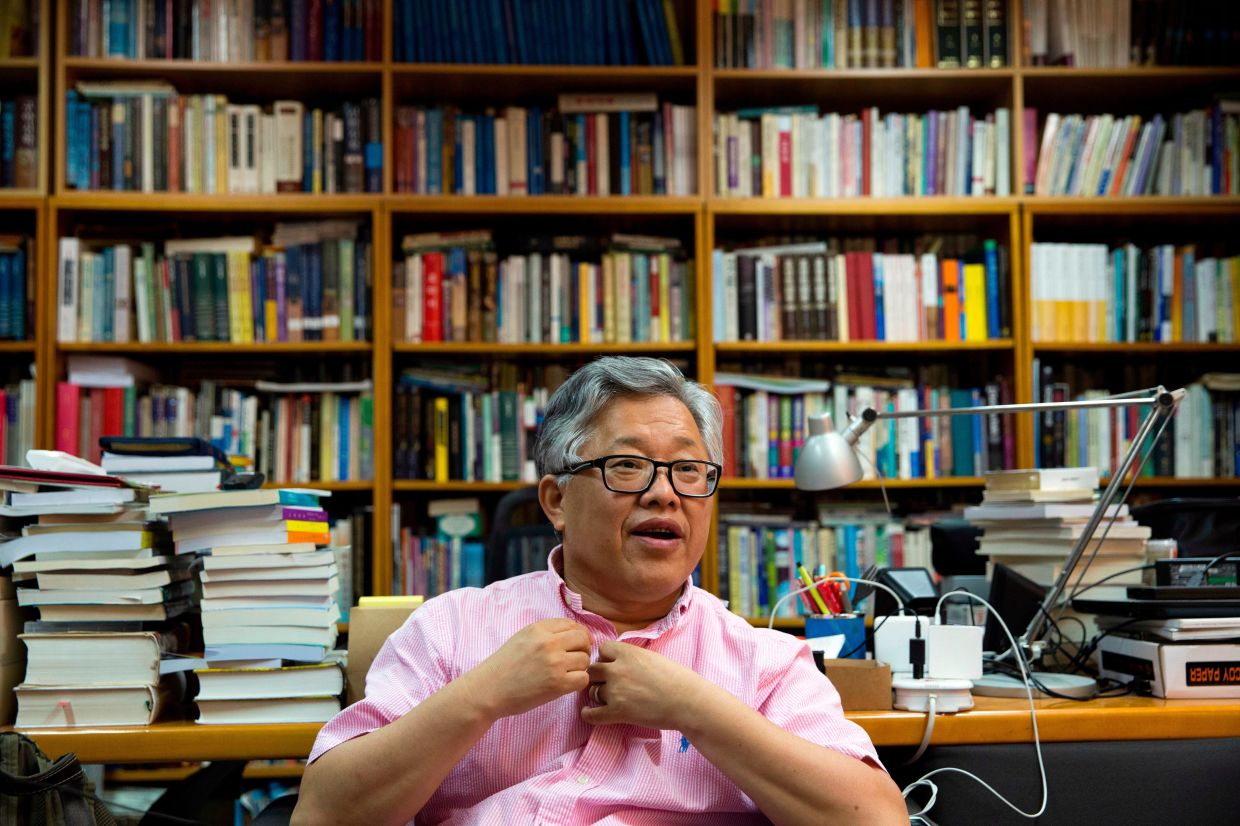
The Chinese government has released Ezra Jin, founder of Zion Church, an independent religious congregation operating outside official channels, following high-level discussions between the United States and Beijing. Jin's liberation from custody represents a significant diplomatic development in relations between Washington and the Chinese capital, coming after US President Donald Trump personally advocated for the pastor's case during meetings with Chinese President Xi Jinping earlier this year. The release underscores the complex interplay between religious freedom concerns and geopolitical negotiation that continues to characterise Sino-American relations in the current era.
Jin, who operates under his Chinese name Mingri, had been held in detention since October 10 on allegations related to the "illegal use of information networks," a charge frequently levelled against those operating unregistered religious organisations in China. Zion Church exemplifies the broader category of underground or house churches that have proliferated across the country, allowing Chinese Christians to practise their faith in settings not subject to state oversight. The foundation of such institutions reflects widespread discomfort among believers with the Communist Party's insistence on regulating religious expression through officially sanctioned bodies, creating an enduring tension between grassroots faith communities and government authority.
Trump had publicly stated that during his May visit to Xi in Beijing, the Chinese president had agreed to "strongly consider" Jin's release, framing the matter as a humanitarian concern worthy of bilateral attention. This positioning transformed what might otherwise have remained a domestic security matter into a diplomatic priority, establishing Jin's case as emblematic of broader questions surrounding religious liberty in China. The American leader's willingness to raise individual cases during high-level summits reflects a shift in how Washington approaches human rights issues within China, moving from abstract principle to concrete negotiation over specific detainees.
According to ChinaAid, an international human rights organisation specialising in religious persecution cases, Jin arrived in Los Angeles on Saturday following his release from Chinese custody. Remarkably, Chinese officials themselves confirmed to the pastor that his liberation had resulted directly from discussions between Trump and Xi, explicitly framing the decision as a "goodwill gesture" aligned with American Independence Day celebrations. This unusual transparency from Beijing regarding the negotiated nature of the release suggests either a desire to demonstrate responsiveness to American concerns or an effort to position the decision as an act of magnanimity rather than external pressure.
Jin's daughter Grace, responding from abroad where the family had relocated, expressed profound relief at her father's freedom, describing the outcome as "a tremendous miracle" and offering gratitude to the Trump administration for its "tremendous leadership." Her statement hinted at the personal toll the detention had exacted, as the pastor had been unable to see most of his immediate family, including two young sons, for more than seven years due to travel restrictions imposed by Chinese authorities. This prolonged separation underscores how religious detention in China often carries consequences extending far beyond the individual detainee, fracturing families and communities across international boundaries.
The timing of Jin's release carries particular significance when viewed against the backdrop of China's intensifying crackdowns on unregistered churches nationwide. Under Xi Jinping's leadership, the Communist Party has substantially escalated its scrutiny of independent religious organisations, viewing them as potential threats to party control and social stability. Recent months have witnessed coordinated raids and pressure campaigns against several major underground congregations, suggesting that Jin's case may represent an anomaly rather than a broader shift in Beijing's approach to religious oversight.
In June alone, authorities raided a service conducted by Early Rain Covenant Church in Sichuan province, resulting in the detention of multiple leaders. This incident followed earlier mass arrests of Early Rain members in January, indicating a systematic effort to dismantle one of China's most prominent underground movements. Simultaneously, in Zhejiang province, Yayang church underwent forced scaffolding and removal of its identifying cross, a symbolic humiliation frequently deployed by local authorities against independent congregations. These escalating pressures paint a picture of a government determined to marginalise unregistered worship spaces regardless of their theological orientation or social contribution.
Zion Church itself represents a remarkable trajectory of religious community formation and state suppression in contemporary China. Established in 2007 in Beijing, the congregation expanded rapidly to encompass approximately 1,500 members before being forced to cease physical gatherings in 2018 under government pressure. Rather than dissolving entirely, the community successfully adapted to digital constraints during the Covid-19 pandemic, cultivating a distributed network spanning some 40 Chinese cities and maintaining spiritual fellowship through online platforms. This digital resilience demonstrates how modern technology has fundamentally altered the capacity of underground churches to persist despite physical restrictions.
Jin's personal decision to return to China in the years after 2018, despite the risks to his safety and freedom, reflected a commitment to shepherding his congregation through an increasingly hostile environment. The pastor chose to remain in Beijing despite facing a travel ban that effectively trapped him within the country, unable to join his family abroad but determined to maintain visible leadership of his flock. This sacrifice ultimately resulted in his arrest and prolonged incarceration, casting doubt on whether his release signals any meaningful softening of official attitudes toward independent Christianity or merely represents a tactical concession to American diplomatic pressure.
The broader implications of Jin's liberation remain ambiguous for the estimated 60 to 100 million Christians practising faith outside state-approved channels throughout China. While the release demonstrates that high-level diplomatic engagement can occasionally secure the freedom of individual detainees, eight other Zion Church members remain in custody without apparent resolution. The selective nature of this intervention raises uncomfortable questions about whether foreign pressure provides sustainable protection for religious minorities or merely creates the illusion of progress while systemic repression continues unabated. For Southeast Asian democracies and emerging religious liberty advocates throughout the region, the episode illustrates both the possibilities and limitations of using bilateral relationships to advance human rights concerns in authoritarian contexts.
China's foreign ministry has not issued official commentary on the case, maintaining the government's typical posture of deflecting questions about religious persecution by asserting that such matters constitute purely internal affairs beyond the purview of international scrutiny. This resistance to external accountability reflects Beijing's enduring view of religious freedom as subordinate to state security interests, a calculus that has only hardened under Xi's stewardship. Whether Jin's release presages any substantive reconsideration of China's approach to underground churches or simply constitutes a one-time diplomatic gesture remains to be determined through observation of official conduct in coming months.

