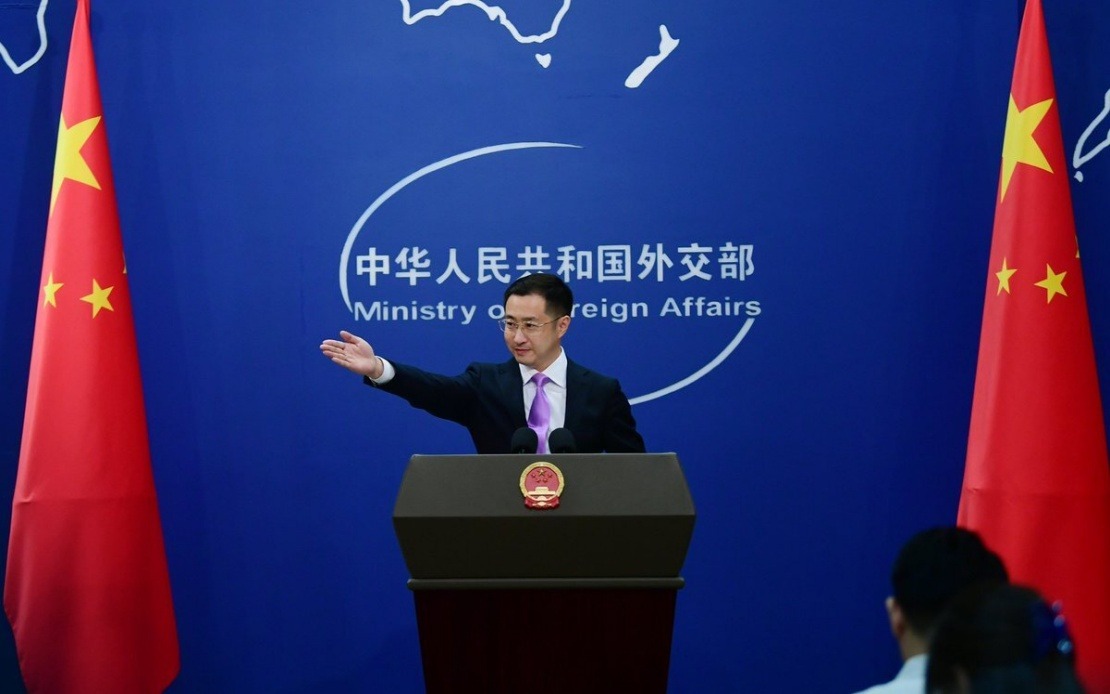
Beijing has formally acknowledged Malaysian Prime Minister Datuk Seri Anwar Ibrahim's principled stance on the one-China doctrine, signalling approval of Kuala Lumpur's diplomatic alignment on one of Asia's most sensitive geopolitical questions. China's Ministry of Foreign Affairs released a statement of commendation through official channels on Wednesday, explicitly recognizing Anwar's recent remarks regarding Taiwan and his consistent adherence to the foundational principle that underpins Sino-Malaysian relations and broader regional stability.
The timing of China's statement reflects the significance it attaches to Malaysia's position on cross-strait issues. By publicly endorsing Anwar's comments, Beijing underscores the importance it places on diplomatic support from Southeast Asian nations, particularly Malaysia, which maintains substantial economic and strategic ties with China whilst balancing relationships across the broader region. The formal acknowledgement serves multiple purposes: it rewards Malaysia for its clarity on a non-negotiable aspect of Chinese foreign policy, whilst also reinforcing to the international community that consensus on the Taiwan question extends beyond Beijing's immediate sphere.
During a regular media briefing in Beijing on Wednesday, Chinese Foreign Ministry spokesperson Lin Jian elaborated on the government's perspective with characteristic firmness. Lin asserted that there exists only one China in the world and that Taiwan constitutes an inseparable component of Chinese territory. This reiteration, whilst routine in Chinese diplomatic discourse, gains particular weight when issued in response to a Malaysian leader's public statements, effectively positioning Malaysia alongside Beijing on this contentious issue.
The Chinese position, as articulated by Lin, frames acceptance of the one-China principle as both a reflection of genuine popular sentiment and a position aligned with justice and international law. China continues to characterize national reunification as an unstoppable historical trajectory rather than a matter of political preference or strategic choice. This framing attempts to shift the debate away from contested political claims toward assertions of inevitability and popular will, a rhetorical strategy designed to delegitimize international support for Taiwan's separate status.
Anwar's specific comments, offered during an interview with Al Jazeera, represent a clear and unambiguous endorsement of Beijing's position. The Malaysian Prime Minister stated that he regards Taiwan as part of China and stressed that this reality enjoys universal acceptance across the international community. By invoking the notion of global consensus, Anwar lends weight to Beijing's claim that the one-China principle commands broad support and that recognition of Taiwan as a separate entity represents a minority position increasingly at odds with international practice.
For Malaysia, Anwar's articulation of this position reflects the country's diplomatic strategy of maintaining constructive relations with China whilst navigating complex regional security dynamics. Malaysia's significant economic dependence on Chinese trade and investment, coupled with its geographic proximity to areas of great power competition, necessitates careful management of bilateral relations. Anwar's clear statement on Taiwan suggests confidence in Malaysia's ability to pursue this delicate balance without sacrificing clarity on fundamental principles that matter to its major economic partner.
The broader regional implications merit careful consideration. Southeast Asian nations face mounting pressure to clarify their positions on Taiwan as cross-strait tensions occasionally flare and great power competition intensifies across the Indo-Pacific. Malaysia's explicit endorsement of the one-China principle, articulated at the highest political level and subsequently praised by Beijing, provides a model of how states in the region can maintain pragmatic engagement with China whilst avoiding the appearance of weakness or inconsistency in their foreign policy.
However, Anwar's remarks also reflect the considerable leverage that China possesses over Southeast Asian policymaking. Malaysia's reliance on Chinese investment and markets creates incentives for political leaders to articulate positions that align with Beijing's preferences. This dynamic, repeated across the region, has gradually shifted the balance of diplomatic advantage in China's favour, particularly on issues where Beijing has invested significant political capital and regards compromise as unthinkable.
The international response to Malaysian diplomatic positions on sensitive issues involving China remains consequential for regional stability. Statements favouring Beijing on Taiwan inevitably influence how other nations calibrate their own policies, whether through alignment or differentiation. The cascade of endorsements for the one-China principle from key regional actors potentially shapes the environment in which smaller or less assertive nations must formulate their own approaches to these fraught questions.
Looking forward, Anwar's continued emphasis on Malaysia's commitment to the one-China principle will likely feature prominently in bilateral engagements with Beijing. China will undoubtedly reference these statements when seeking Malaysian support in international forums or when coordinating regional positions on Taiwan-related matters. The Malaysian government, having made these statements, faces reduced flexibility in moderating its rhetoric without appearing inconsistent or bowing to outside pressure.
The exchange between Kuala Lumpur and Beijing demonstrates how diplomatic language operates as currency in international relations, particularly in Asia where face-saving and consistency carry profound weight. Anwar's clear positioning protects Malaysia from accusations of hedging or ambiguity that might provoke Chinese displeasure, whilst simultaneously anchoring Malaysia firmly within Beijing's preferred regional alignment on an issue that China considers existential to its future development.

