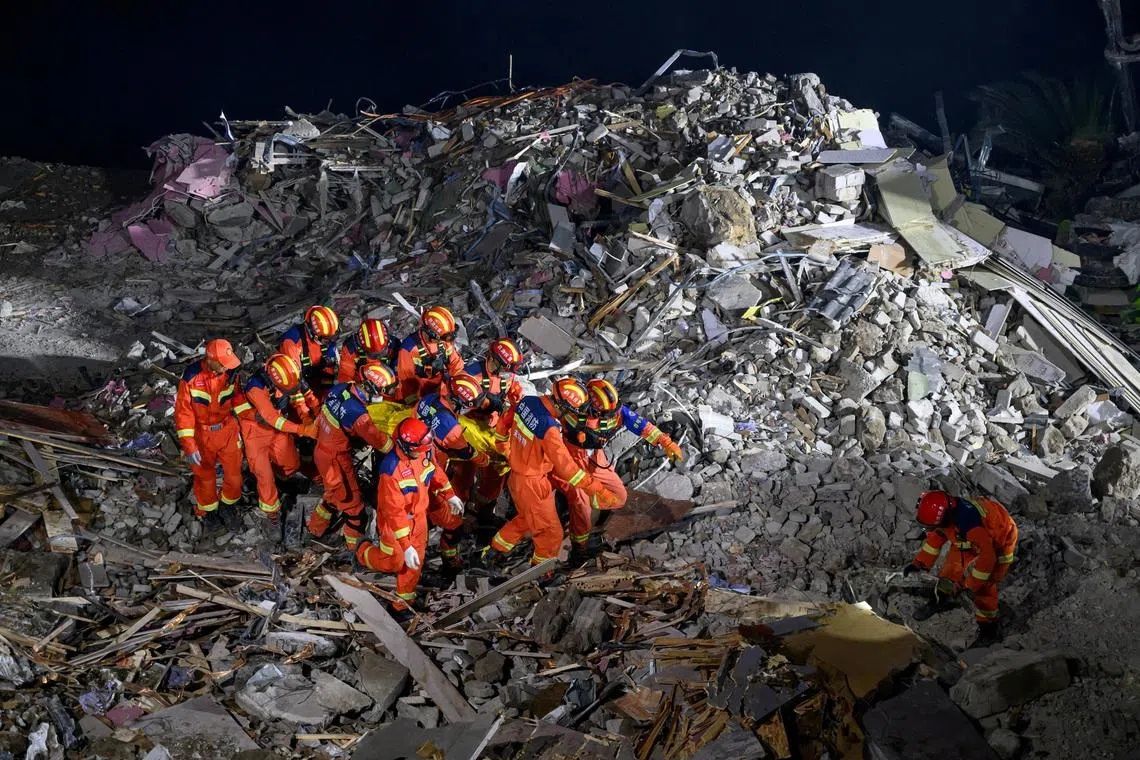
Rescue operations in southwestern China escalated dramatically on Monday as teams detonated explosives to shatter enormous boulders obstructing pathways to 34 individuals reported missing following a catastrophic landslide that struck during intense rainfall. The disaster, which occurred in Penghui County within the sprawling Chongqing municipality—approximately 270 kilometres from the urban core—has claimed at least eight lives since the initial collapse on Friday, underscoring the persistent vulnerability of mountainous regions to sudden geological upheaval.
The blasting campaign, captured on state television broadcast by CCTV, represented a critical turning point in the rescue timeline, marking what officials characterised as entry into the "deep rescue phase." While immediate specifics about the operation remained limited, the demolition of the substantial rock obstruction symbolised the determination of authorities to penetrate deeper into the collapsed terrain where survivors might still be located or where bodies could be recovered. The three-day window since the initial disaster heightened both urgency and the grim statistical likelihood that those missing faced diminishing prospects.
Penghui County, home to approximately 500,000 residents, occupies treacherous topography where numerous communities perch precariously along steep hillsides adjacent to the Wujian river. The geography itself proved both a factor in the disaster's severity and a complicating element in rescue execution. Photographic and video documentation from the immediate aftermath depicted entire sections of mountainside collapsing into the waterway below, obliterating the main thoroughfare of the narrow township and severing vital transportation links for local populations. This destruction illustrated how swiftly natural forces can restructure entire communities and isolate survivors from conventional rescue infrastructure.
Authorities responded to the emergency by evacuating more than 1,100 people from the surrounding region, a precautionary measure reflecting legitimate concerns about secondary collapses and cascading dangers common to post-landslide environments. The evacuation underscored how geological disasters frequently demand protection of the broader population, not merely those directly impacted by the initial event. Officials concurrently deployed specialised teams to assess additional geological hazards and establish monitoring systems to detect imminent secondary disasters, according to statements released through the official Xinhua news agency.
President Xi Jinping intervened directly in the crisis response, issuing directives mandating scientifically rigorous search and rescue methodologies alongside expedited investigation into the causal factors underlying the catastrophe. This top-level intervention reflected the political importance assigned to disaster management and the expectation that such incidents warrant comprehensive analysis to inform future prevention strategies. The presidential emphasis on investigation suggested concerns about whether poor land management, inadequate geological surveys, or structural deficiencies had contributed to the collapse.
China confronts extraordinary landslide vulnerability due to fundamental geographical and developmental characteristics. Mountains, hills, and plateaus constitute approximately two-thirds of the nation's landmass, creating inherent instability across vast territories. Compounding this natural susceptibility are accelerating urbanisation patterns, intensive construction activities, and abundant groundwater saturation that collectively destabilise hillsides. The forecast of heavy to torrential rainfall extending through multiple provinces heightened concern among authorities about potential additional disasters across vulnerable zones, prompting calls for intensified protective measures in high-risk areas.
The hydrological dimension of the crisis extended beyond Penghui County. State media reported that eight minor and medium-sized rivers across Yunnan, Guangxi, Guangdong, Anhui, and Shanghai provinces had already exceeded flood warning thresholds, indicating that precipitation patterns were generating widespread inundation risks beyond landslide hazards. This multi-provincial threat distribution demonstrated how meteorological events can generate cascading crises across geographically dispersed regions simultaneously.
Historical context reveals the recurring nature of such tragedies in the Chinese landscape. Over the preceding decade, at least five major landslide incidents had collectively killed approximately 294 people nationwide, establishing a sobering pattern of fatalities despite advancing rescue technologies and disaster response protocols. The most catastrophic single incident occurred in December 2015, when the collapse of an immense pile of construction waste at an industrial park in Shenzhen claimed more than 70 lives, illustrating how human activities and environmental factors can interact to generate unprecedented destruction.
The Chongqing disaster exemplifies how Southeast Asian nations sharing similar topographical and climatic conditions face comparable vulnerabilities. Malaysia, with its mountainous terrain and tropical rainfall patterns, alongside other regional neighbours, confronts identical risk factors emerging from rapid development combined with geological complexity. The Chinese experience offers instructive lessons regarding the necessity of rigorous geological surveying before construction, maintenance of early warning systems, and development of evacuation protocols that can be executed rapidly when conditions deteriorate. Furthermore, the integration of scientific methodology into rescue operations, as emphasised by Xi Jinping's directives, demonstrates how technical expertise and systematic planning enhance survival outcomes when disasters inevitably occur despite preventative efforts.

