China is deepening its scientific engagement with Iran through a collaboration focused on rare earth exploration and processing—a move that highlights Beijing's strategic positioning in global competition over materials essential to modern defence systems. The partnership, formalised through workshops funded by China's National Natural Science Foundation (NSFC) and Iran's National Science Foundation, comes as major powers scramble to secure supplies of these critical minerals amid geopolitical tensions and supply chain vulnerabilities.
The financial commitment underscores Beijing's seriousness about the venture. China will allocate 30,000 yuan, approximately US$4,200, for each workshop, with funds covering operational costs such as meeting arrangements, accommodation and domestic travel within Iran. The Iranian foundation will reciprocate by managing international travel logistics for Iranian scientists and providing lodging for Chinese researchers visiting Iranian facilities. This mutual support structure suggests a carefully orchestrated, long-term engagement rather than a casual scientific exchange.
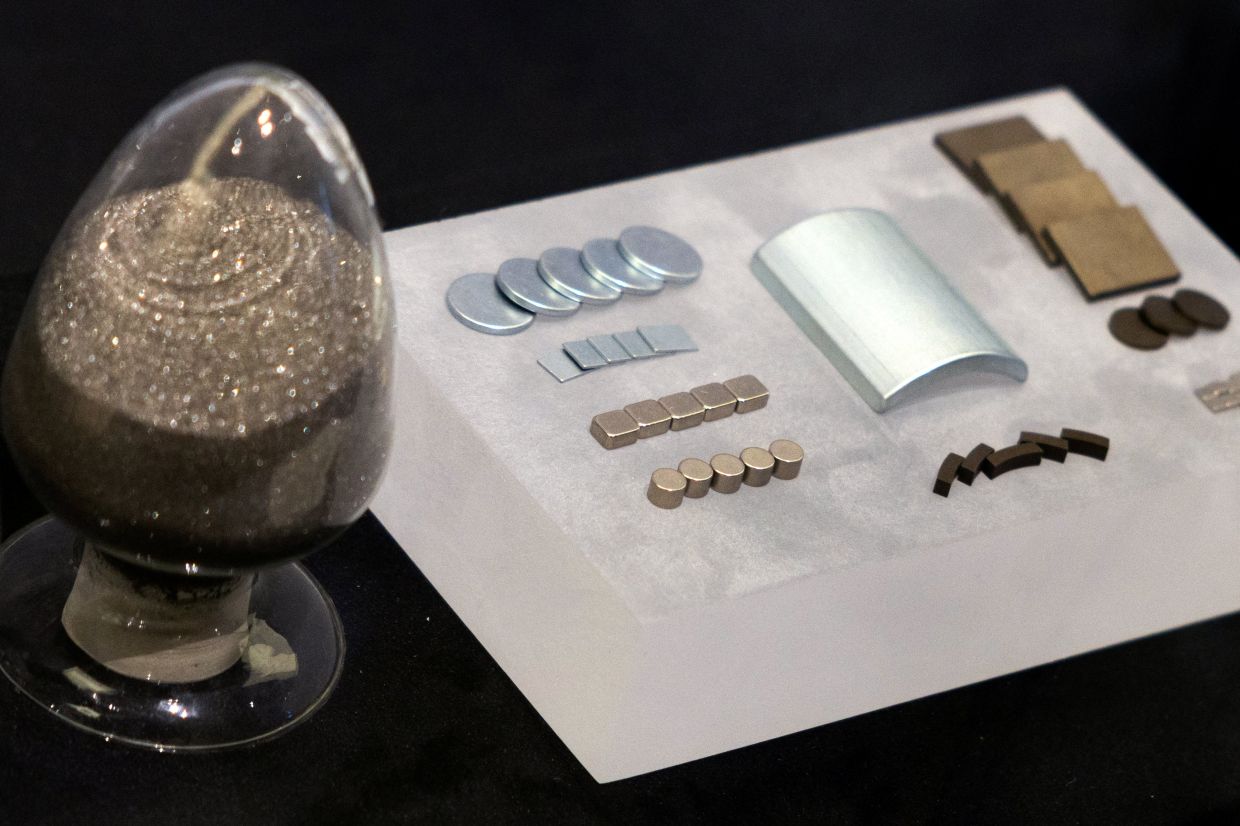
Rare earths represent a category of 17 metallic elements possessing extraordinary magnetic and electronic characteristics that render them indispensable for contemporary military applications. These materials form the backbone of sophisticated weapons systems ranging from guided missiles and fighter aircraft to sophisticated radar installations and electronic warfare equipment. Control over rare earth supply chains therefore translates directly into military advantage, making Beijing's outreach to Tehran particularly significant from a strategic perspective.
The timing of this collaboration carries considerable geopolitical weight. Recent developments underscore how critical these materials have become in great power competition. The Trump administration has signalled its determination to reduce American dependence on Chinese supplies by committing US$3 billion to domestic projects aimed at critical mineral extraction and battery production. This investment strategy explicitly targets the replenishment of military stockpiles while reducing vulnerability to potential Chinese export restrictions. Washington's concern is not theoretical—Beijing demonstrated its willingness to weaponise rare earth exports during the trade tensions of recent years, imposing controls that disrupted supplies to American manufacturers and exposed the depth of American reliance on Chinese production.
China's dominance in this sector remains overwhelming. The country possesses the world's largest known rare earth reserves and controls a substantial portion of global production and processing capacity. More significantly, Beijing has increasingly tightened restrictions on exporting rare earth technology abroad, consolidating its competitive advantage. This dominance has created a strategic vulnerability for other nations, particularly the United States, and explains Washington's urgent efforts to develop alternative sources and domestic capabilities.
Iran's potential in rare earth extraction remains largely unquantified but could prove strategically valuable. Geological surveys have identified rare earth anomalies scattered across approximately 7,000 square kilometres of central Iranian territory, according to analysis from the Netherlands-based Hague Research Institute released in February. The country's iron ore and phosphate formations present geological characteristics favourable for harbouring rare earth deposits. However, Iran remains far from realising this potential—current extraction and processing infrastructure operates at rudimentary levels, with industrial-scale production still a distant prospect requiring substantial technological advancement and capital investment.
The scientific partnership between the two nations extends well beyond rare earths. The formal relationship began in 2017 when both science foundations signed a memorandum of understanding in Beijing. The NSFC has characterised Iran as a crucial participant in China's Belt and Road Initiative, framing scientific cooperation as mutually beneficial development strategy. Since the initial agreement, collaborative research has expanded across diverse fields including mathematical sciences, biological research, medical applications, renewable energy technologies, advanced materials, climate science and artificial intelligence. This breadth suggests that rare earth cooperation represents merely one component of a comprehensive strategic partnership.
The current workshop initiative gained momentum in 2024, establishing a structured mechanism for joint research projects. The initial phase allocated 150,000 yuan per workshop and focused on climate change, artificial intelligence, advanced materials and manufacturing processes. The expansion announced this year maintains this budgetary framework while broadening thematic scope to encompass nano materials for medical diagnostics, environmental pollution monitoring systems, earthquake-resistant construction techniques and sustainable manufacturing approaches. Each addition reflects genuine dual-use applications with both civilian and potentially military dimensions.
For Southeast Asian nations, this Sino-Iranian scientific deepening carries several implications worth monitoring. The rare earth dimension presents particular interest given regional industrial development trajectories and growing technological sophistication across ASEAN economies. Malaysia, with its own historical involvement in rare earth processing, and Vietnam, which possesses rare earth reserves, may find themselves navigating between competing pressures as global supply chains realign. The pattern of Chinese engagement through scientific cooperation channels suggests Beijing's strategy extends beyond traditional trade and investment into deeper technological and knowledge transfer arrangements that may lock partner nations into dependency relationships. Understanding these mechanisms becomes increasingly relevant as regional economies make critical infrastructure and industrial policy decisions.

