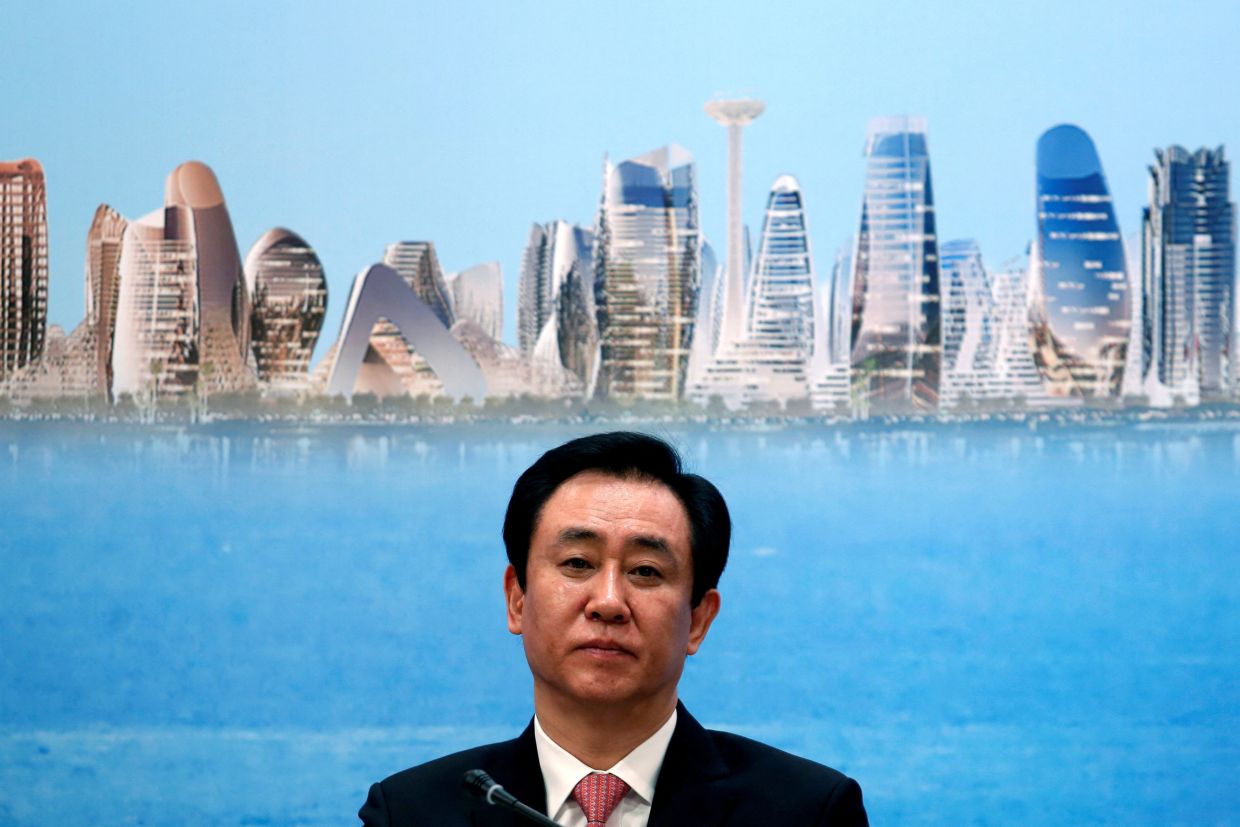
Hui Ka Yan, once celebrated as Asia's wealthiest entrepreneur, has been condemned to life imprisonment by a Shenzhen court, drawing a stark conclusion to one of the world's most dramatic corporate collapses. The 67-year-old founder of China Evergrande Group pleaded guilty in April to eight serious offences spanning misuse of funds, fraudulent fundraising, unlawful deposit-taking, illegal lending practices, securities fraud and bribery. His conviction represents not merely the downfall of a single business titan but symbolises a broader reckoning within China's property sector, which has functioned as a drag on the nation's economic trajectory for years.
Evergrande's implosion five years ago sent shockwaves through financial markets worldwide and destabilised the Chinese economy in unprecedented ways. The developer, which once ranked as the nation's premier construction enterprise, accumulated the staggering sum of approximately $300 billion in liabilities before entering default. This collapse transcended corporate failure, affecting ordinary Chinese citizens who had invested their savings in wealth-management products linked to Evergrande, many of them from lower-income backgrounds who stood to lose everything. The resulting social unrest prompted authorities to treat the matter with exceptional severity, reflecting concerns about financial stability and public confidence.
The sentencing, delivered in the southern metropolis of Shenzhen, proved comprehensive in its scope. Beyond Hui's life sentence, the court ordered confiscation of all his personal property and imposed substantial financial penalties on both Evergrande and its principal subsidiary Hengda Real Estate. Authorities fined Evergrande 8.82 billion yuan—equivalent to $1.31 billion—while Hengda faced a separate fine of 7 billion yuan. Five additional senior executives received prison sentences ranging from six to eighteen years alongside financial penalties. In total, fifty-six individuals connected to Evergrande received criminal sentences on the same day, demonstrating the scale of institutional wrongdoing that Chinese prosecutors identified throughout the company's operations.
The court's formal statement underscored the severity with which authorities viewed the case, emphasising that the criminal activities demonstrated "particularly huge amounts and egregious circumstances" that produced substantial economic losses and serious social consequences. This language reflects the Chinese legal system's assessment that corporate fraud at Evergrande's scale warranted maximum punishment. Court photographs showed a noticeably aged Hui, his hair grey and his demeanour subdued, flanked by uniformed officers as the verdict was announced—a stark visual contrast to his earlier status as a billionaire industrialist. He had remained absent from public view since his detention by Chinese authorities in 2023, following Evergrande's formal default.
Hui's trajectory from obscurity to extraordinary wealth encapsulates both the opportunities and dangers inherent in China's rapid development over recent decades. Beginning his career as a steel technician in rural Henan province, raised by his grandmother in humble circumstances, Hui founded Evergrande in 1996 and methodically transformed it into China's largest property developer measured by contracted sales volume. By 2017, his personal net worth had reached an extraordinary $45.3 billion, ranking him as Asia's wealthiest individual according to Forbes. This ascent reflected not merely entrepreneurial skill but also aggressive debt accumulation strategies that ultimately proved unsustainable and, prosecutors argued, involved systematic fraud at multiple levels.
The liquidation process initiated following Evergrande's collapse has proceeded with frustrating slowness for creditors seeking recovery. A Hong Kong court formally ordered Evergrande's liquidation in 2024, with the Hong Kong Stock Exchange subsequently delisting the company shares, terminating its decades-long corporate existence. However, the actual asset recovery process has stalled dramatically. Liquidators report having sold only approximately $255 million worth of assets as of August of last year, representing merely a fraction of the $45 billion in total creditor claims. This yawning gap between liabilities and recoverable assets illustrates the magnitude of losses that Evergrande's collapse imposed upon investors worldwide.
Creditors' recovery prospects remain grimly limited, particularly regarding substantial sums transferred offshore. Legal representatives for Evergrande's liquidators are currently engaged in litigation across multiple jurisdictions attempting to freeze and recover offshore assets held by Hui and his former spouse. These legal battles focus on retrieving approximately $6 billion in dividends and executive compensation that prosecutors contend were improperly distributed to Hui and other former company leaders during the period of fraudulent operations. The success of these recovery efforts remains uncertain, as such cross-border asset litigation typically encounters significant legal and practical obstacles.
Sentiments expressed by Evergrande's domestic creditors—primarily ordinary homeowners and investors—reveal deep frustration with outcomes that many regard as inadequate justice. Comments circulating on social media platforms included bitter observations that "all ordinary citizens have paid the cost" for the company's collapse and sardonic suggestions that imprisonment might paradoxically offer Hui protection from creditors seeking physical retribution. Many victims explicitly questioned whether the criminal sentence would ultimately result in meaningful financial recovery for themselves. These grievances underscore the profound social dimensions of Evergrande's failure, which extended far beyond conventional corporate bankruptcy to strike at ordinary people's life savings and retirement security.
Evergrande's crisis has reverberated throughout China's broader property sector, which for decades functioned as a primary engine driving economic growth and urban development. The developer's troubles exposed structural vulnerabilities within China's real estate industry, where aggressive leveraging and speculative practices had become normalised. Multiple large developers subsequently encountered similar difficulties, suggesting that Evergrande represented merely the most visible manifestation of systemic instability rather than an isolated failure. This property sector weakness has significantly constrained China's economic dynamism, contributing to slower growth rates and dampening investment confidence both domestically and internationally.
The Chinese securities regulator delivered additional punishment to Hui through separate enforcement actions. In 2024, authorities imposed a fine of $6.6 million and barred Hui permanently from securities markets after concluding that Evergrande's principal subsidiary had systematically inflated financial earnings and perpetrated securities fraud. These regulatory sanctions complemented the criminal proceedings and reflected the multi-layered scrutiny applied to Evergrande's operations. Such comprehensive enforcement action signals Beijing's determination to prosecute financial malfeasance aggressively and deter future corporate fraudsters from pursuing similar strategies.
For Malaysian investors and regional observers, Evergrande's collapse offers instructive lessons regarding financial system resilience and the dangers of concentrated risk within property sectors. Several Malaysian developers have faced criticism for debt levels that some analysts consider excessive, and the Evergrande precedent illustrates consequences of aggressive leveraging strategies. Additionally, Malaysian institutional investors and pension funds suffered losses through Evergrande-linked investments, making the developer's failure directly relevant to domestic financial stability concerns. The case demonstrates that even corporations dominating their home markets face existential risks if management pursues unsustainable growth strategies financed predominantly through debt accumulation.
Looking forward, Hui's conviction and life sentence appear unlikely to provide the resolution many victims seek. While the criminal proceedings delivered severe personal punishment to the founder, the broader task of recovering funds for creditors faces formidable obstacles given Evergrande's depleted asset base and the ongoing complexity of international asset recovery litigation. Liquidators acknowledge that years of further proceedings likely await, suggesting that final distributions to creditors may remain minimal even after protracted legal battles conclude. The Evergrande saga ultimately represents a cautionary narrative about the perils of financial excess and the limited capacity of criminal justice systems alone to remedy the consequences of massive corporate fraud on thousands of ordinary investors.

